





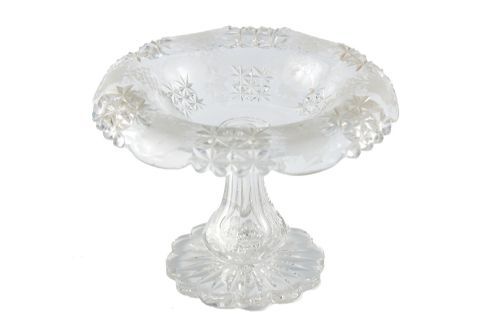


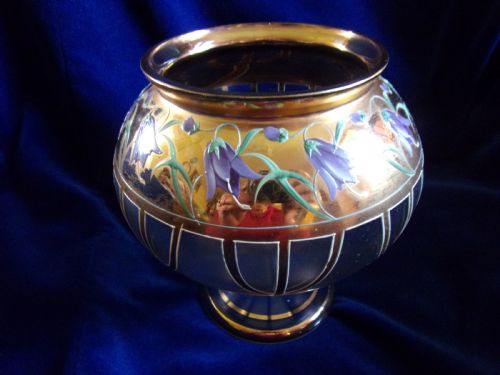


Vintage Footed Glass Bowl
These vintage footed glass bowl pieces elevate any table, offering raised pedestals and bases that display fruit, desserts and floral arrangements with classic distinction.
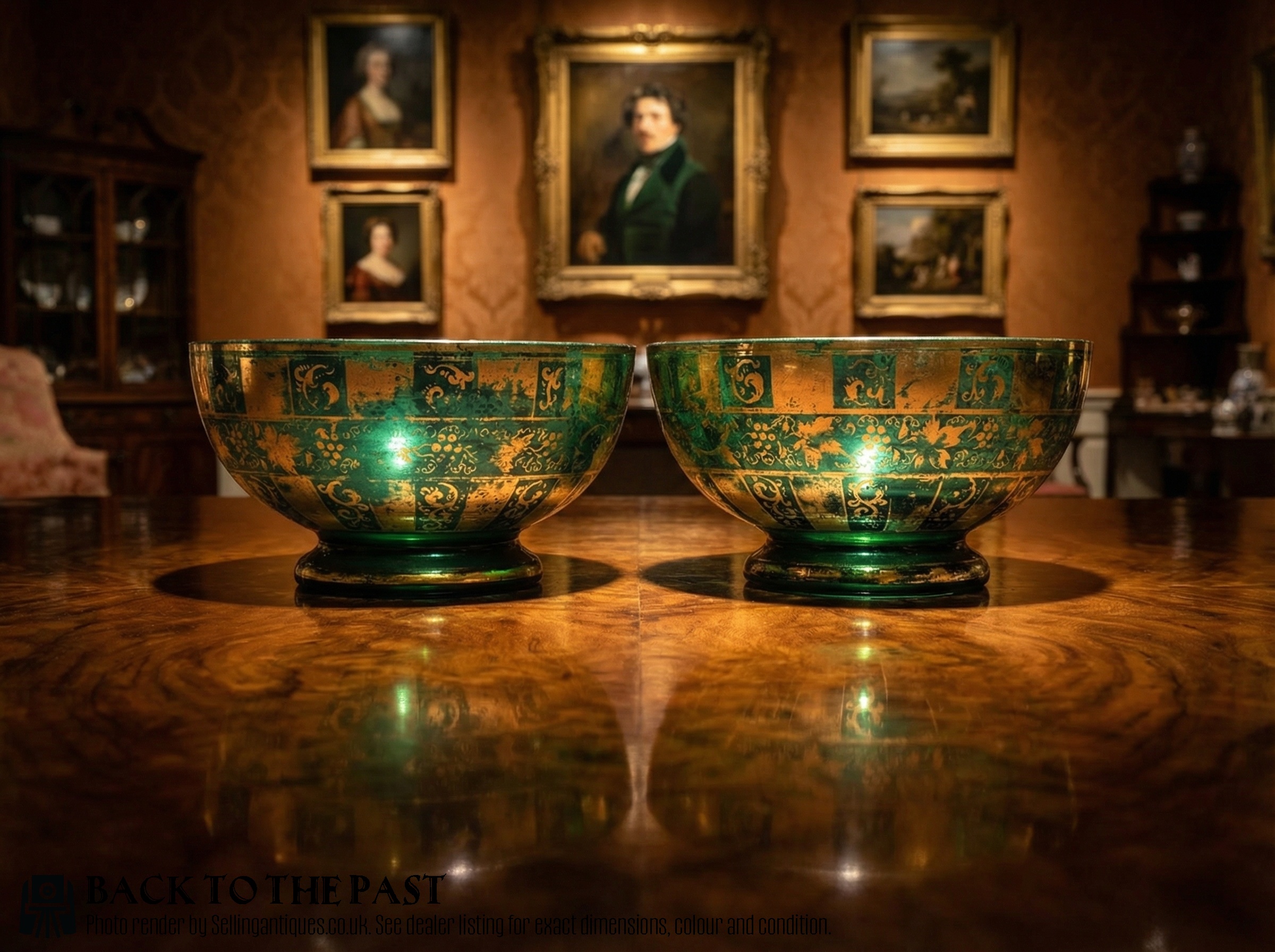
Vintage Footed Glass Bowl
A vintage footed glass bowl sits upon a raised pedestal, a stem, or ball feet, lifting the vessel above the table surface for display and service. When exploring vintage footed glass bowl examples, buyers encounter varied forms from grand nineteenth century pedestal comports and centrepieces down to smaller sweet dishes, jelly glasses, and custard cups.
The selection spans numerous periods, including eighteenth century Georgian vessels, Victorian cut glass, Edwardian tableware, and twentieth century Art Nouveau and Art Deco creations. Makers and workshops from England, Bohemia, and France contributed distinct regional styles, utilising clear lead crystal alongside coloured and enamelled glass.
While many listings present substantial fruit bowls and table centrepieces designed to hold displays, others offer specialised vessels like champagne coupes or sugar bowls featuring a distinct footed base. Each period brings its own characteristic weight, depth, and decorative treatment to the footed glass bowl form.
Distinctions in quality and execution
The refinement of the glass matrix itself sets superior pieces apart, with high clarity, minimal internal bubbles, and substantial weight indicating careful raw material selection and skilful melting. In cut and engraved examples, the crispness and depth of the wheel work determine quality, where sharp, evenly spaced facets reflect light cleanly without blurring.
Artistic execution dictates the upper tier of decorative vessels, particularly where skilled enamelling, gilding, or iridescent surface treatments are harmoniously integrated with the moulded form. Furthermore, the stability and symmetry of the foot or pedestal base reflect the maker's technical precision during the hot-working stage.
Vintage Footed Glass Bowl Retail Price Guide 2026
Typical asking prices for vintage footed glass bowl among the pieces listed under this phrase on Sellingantiques today, from the lower quarter to the upper quarter. They describe what is for sale here now, not the wider market.
The available selection spans multiple eras, incorporating Georgian, Victorian, Edwardian, Art Nouveau, and Art Deco design movements.
St Louis glassworks·Loetz·Rene Lalique·Waterford
The Vintage Footed Glass Bowl Glossary
- Pedestal bowl
- A vessel elevated on a central supporting column or foot. This form raises the bowl above the table for decorative or service purposes.
- Comport
- A shallow dish or bowl raised on a high foot, traditionally used for serving fruit or sweetmeats at the table.
- Hobnail pattern
- A raised, pointed decorative motif resembling the heads of old hobnails, often cut into the exterior surface of heavy glass bowls.
- Custard cup
- A small, sturdy individual cup, frequently featuring a handled or footed design, utilised in the eighteenth and nineteenth centuries for serving custards and creams.
- Over crystal
- A glassmaking technique where a coloured layer of glass is overlaid onto a clear crystal base, then partially cut away to reveal the contrasting layer beneath.
Vintage Footed Glass Bowl: Frequently Asked Questions
What were footed glass bowls used for?
These vessels served various dining functions depending on their scale and depth, ranging from table centrepieces and fruit bowls to individual sweet dishes and jelly glasses.
Larger pedestal versions held table displays or desserts at formal meals, while smaller footed cups accommodated custards or sugar.
How do I distinguish Victorian from Georgian glass?
Georgian pieces often display heavier lead metal with simpler, broader cutting or delicate hand-etched details typical of eighteenth century drinking vessels and jelly glasses.
Victorian production frequently introduced heavier press-moulded techniques alongside deep, complex hobnail cutting and elaborate pedestal comports.
Can I use these antique bowls daily?
While durable lead crystal and heavy glass can handle careful everyday use, their age and hand-finished decoration suggest gentle handling and hand washing.
Harsh detergents and mechanical dishwashers should be avoided to protect delicate gilding, enamelling, and polished surfaces.
What is the difference between crystal and glass?
Crystal contains a proportion of lead oxide, which increases the weight, refractive index, and acoustic resonance of the material compared to standard glass.
This lead content allows artisans to execute deeper, sharper cuts and brilliant facets that catch the light more intensely.