
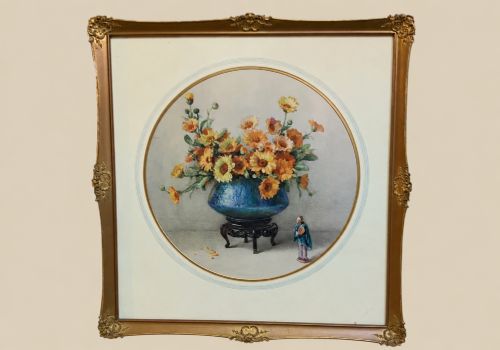
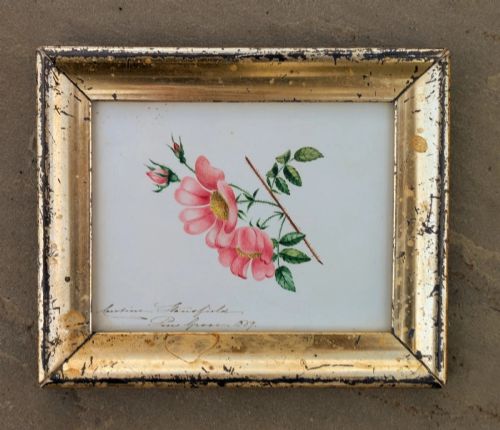
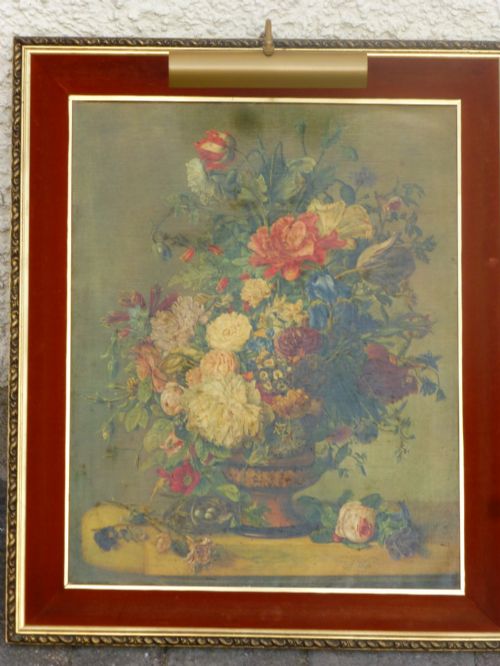
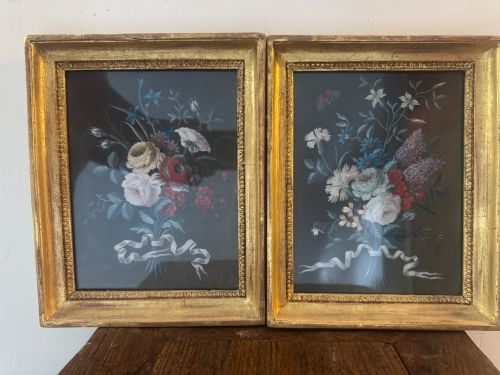


Vintage Flower Print
A vintage flower print brings natural colour to a room through botanical studies and painted still lifes.
Vintage Flower Print
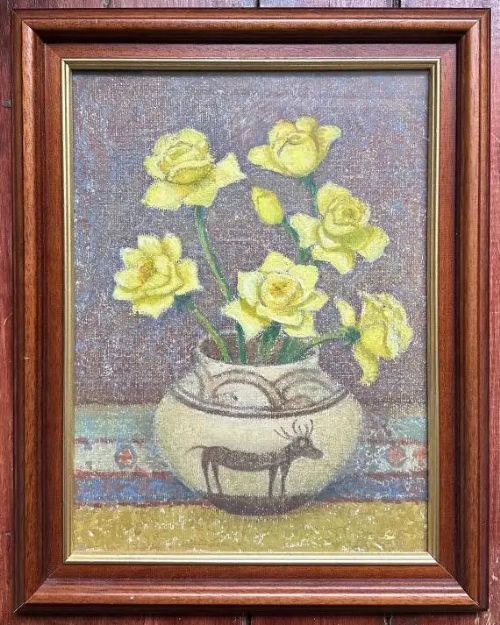
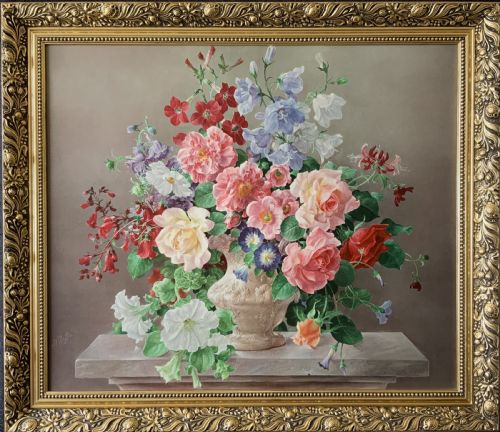
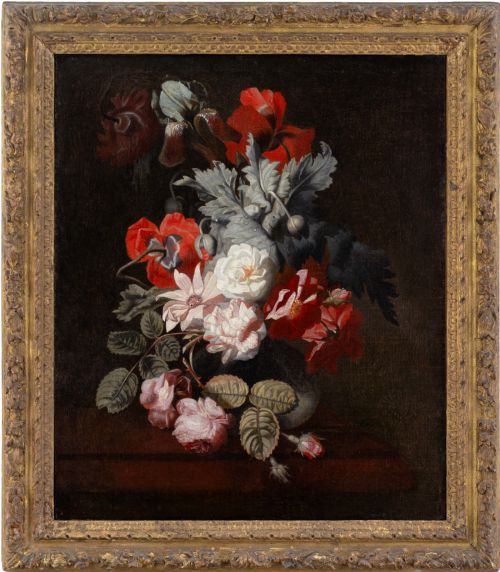
A vintage flower print encompasses wall art, framed prints and engravings, and paintings spanning from the eighteenth century to the mid-twentieth century. Buyers encounter works rendered in watercolour, gouache, oil, and hand-coloured engraving.
The selections range from nineteenth-century botanical specimens and Victorian botanical studies to Dutch Golden Age style compositions and traditional still lifes. Pieces appear on paper, canvas, and board, often housed in wood or gilt wood frames.
Originating across periods including the nineteenth century, 1800, 1920, 1930, and 1960, these works record floral subjects such as marigolds, fuchsias, wild roses, and spring flowers.
How they were made
Makers utilised paper and canvas as primary supports for watercolours, gouache, and oil paintings, alongside engraved plates finished with hand colouring. Wood and gilt wood provided traditional framing for these artworks.
Techniques combined fine brushwork in watercolours and gouache with layered oil on canvas or board, complemented by meticulous hand-applied pigment on engraved botanical plates.
The selection includes oil paintings, framed prints, gouache studies, and botanical specimens in wood and gilt wood frames.
What varies in quality
Quality rests in the precision of botanical observation and the handling of pigment across paper and canvas. Skilled brushwork in watercolours and oils separates accomplished studies from simpler decorative productions.
The refinement of the supporting frame, whether simple wood or gilt wood, contributes to the overall character and preservation of the work.
Anton Weiss·Emma Fordyce MacRae·Harold Clayton·Simon Pietersz Verelst·Terence Loudon·Charlotte Isa James·Margaret Evangeline Wilson·Georg Wolfgang Knorr·M.K Rhodes·Lilian Stannard·Owen Bowen·George Dionysius Ehert
The Vintage Flower Print Glossary
- Watercolour
- A painting method where fine pigment is suspended in a water-based solution on paper. This technique creates transparent washes suited for delicate botanical studies.
- Gouache
- An opaque water-based paint that provides solid areas of colour and distinct detail. It appears frequently in nineteenth-century floral still lifes.
- Oleograph
- A mechanical colour print produced to simulate an oil painting on canvas. These prints capture the texture of traditional brushwork.
- Engraving
- An intaglio printing process where an image is incised into a metal plate. Subsequent impressions are often hand-coloured with water-based pigments.
Vintage Flower Print: Frequently Asked Questions
How are vintage flower prints framed?
Many examples are preserved in traditional wood or gilt wood frames that complement the period of the artwork.
Original or period-appropriate framing helps protect the paper, canvas, or board from environmental exposure.
What mediums are used in these botanical works?
Artists employed watercolour, gouache, and oil paints on paper, canvas, or board.
Engravings finished with hand colouring also appear among the selections.
Which periods do these floral artworks represent?
The selection spans from eighteenth-century engravings through nineteenth-century botanical studies to mid-twentieth-century oil paintings.
Styles range from Neoclassical and Dutch Golden Age traditions to Victorian botanical art.
What subjects feature in these paintings and prints?
Depictions include specific botanical specimens, spring flowers, roses, fuchsias, and still life arrangements.
Some compositions incorporate vases and objects alongside the floral elements.