


Vintage Botanical Leaf Art
Vintage botanical leaf art brings together natural foliage and period craftsmanship, offering framed engravings, oil paintings, and gold jewellery that collectors prize for their intricate detail.
Vintage Botanical Leaf Art
When you search for vintage botanical leaf art, you encounter a diverse selection of pieces ranging from framed engravings and oil paintings to gold jewellery shaped like leaves and vines. These objects span from the Victorian and Edwardian eras through the mid-twentieth century, capturing natural forms across different mediums.
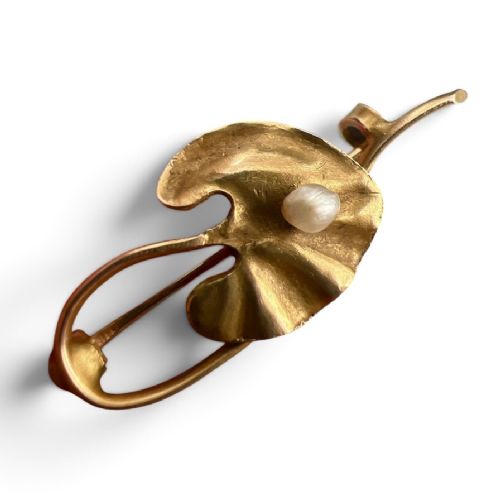
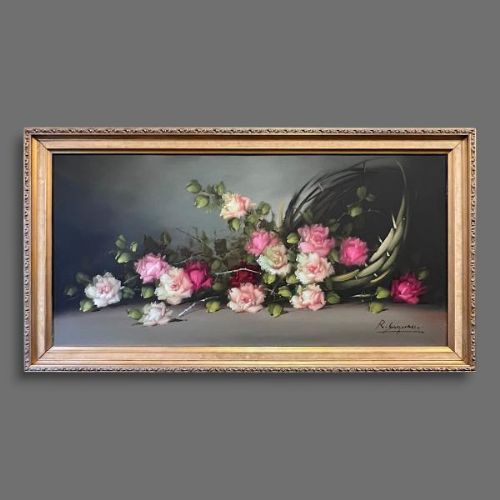
The wall art includes hand-coloured engravings by makers such as Georg Wolfgang Knorr, foliage prints from horticultural publications, and abstracted still life oil on canvas works. Jewellery takes the form of brooches, earrings, rings, and cufflinks cast in gold or silver gilt.
You are most likely to meet pieces adhering to Art Nouveau or Victorian aesthetics, where natural motifs dominate both decorative ornaments and wearable items. Examples incorporate specific plant studies, including chestnut leaves, mistletoe, vines, and acorns.
How they were made
Paper and canvas serve as the primary media for prints and oil paintings, often enhanced by hand-colouring or textured brushwork. Engravings rely on precise printing techniques onto paper, whilst oil paintings utilise pigment applied to canvas.
Metalwork utilises yellow gold, silver gilt, and platinum, frequently combined with gemstones such as diamonds, pearls, and moonstones. Techniques include casting, carving, and plique-à-jour enamelling to render delicate leaf structures in precious materials.
Listings feature paper, glass, gold, wood, platinum, diamond, oil paint, and canvas across multiple decorative forms.
What varies in quality
The fidelity of the natural rendering and the fineness of the execution distinguish the superior examples from standard items. In jewellery, the crispness of the leaf veining and the secure setting of stones dictate distinction.
Paper works rely on the preservation of the original hand-colouring and the clarity of the printed line. Paintings and framed herbariums depend on the integrity of the canvas, frame, and pigment stability over time.
Georg Wolfgang Knorr·Meyle & Mayer
The Vintage Botanical Leaf Art Glossary
- Plique-à-jour
- An enamelling technique where the enamel is applied without a backing, allowing light to shine through the transparent or translucent cells much like stained glass or a real leaf.
- Dormeuse
- A type of earring originally designed to be comfortable enough to wear whilst sleeping, frequently featuring secure lever-back fastenings holding decorative motifs such as vine leaves.
- Herbarium
- A collection of preserved plant specimens scientifically arranged and mounted, often housed within decorative folk art frames for display on walls.
- Silver gilt
- Sterling silver that has been coated with a thin layer of gold, providing the rich colour of gold whilst utilising a silver base for detailed metalwork.
Vintage Botanical Leaf Art: Frequently Asked Questions
How do I display botanical leaf art?
Framed engravings and oil paintings suit wall placement in studies or hallways where lighting enhances the paper and canvas textures. Herbariums and wall art look effective grouped together or hung individually against neutral backgrounds to emphasise the natural subjects.
Ensure works on paper are kept away from direct sunlight to prevent the fading of hand-coloured details and pigments. Secure heavy frames properly to wall studs, especially older pieces with substantial wooden or folk art surrounds.
What periods do these pieces come from?
The pieces span from the nineteenth century through the mid-twentieth century, encompassing Victorian, Edwardian, and Art Nouveau movements. Mid-century examples also appear, reflecting modernist interpretations of natural leaf forms in oil and canvas.
Art Nouveau items predominantly date from the turn of the twentieth century, showcasing characteristic organic curves and plant motifs. Earlier engraved botanical plates date back to the eighteenth century.
How do I care for gold leaf jewellery?
Gold brooches, rings, and cufflinks require gentle cleaning with a soft cloth to remove dust from intricate leaf crevices and settings. Avoid harsh chemical dips, particularly when pieces incorporate pearls, moonstones, or delicate enamel work like plique-à-jour.
Store items individually in lined boxes to prevent scratching against other jewellery. Check settings periodically to ensure small diamonds or pearls remain secure within their gold claws.
What is the difference between prints and paintings?
Prints and engravings are mechanically produced or hand-pulled impressions on paper, sometimes finished with hand-applied watercolours. They offer precise botanical documentation of leaves and foliage as seen in historical horticultural publications.
Paintings utilise oil on canvas, capturing the artist's expressive interpretation of light and colour upon foliage and still life arrangements. They provide heavier texture and painterly depth compared to flat paper prints.