
Vintage Flower Painting
A vintage flower painting brings the quiet presence of botanical studies and oil still lifes into any room.
Vintage Flower Painting
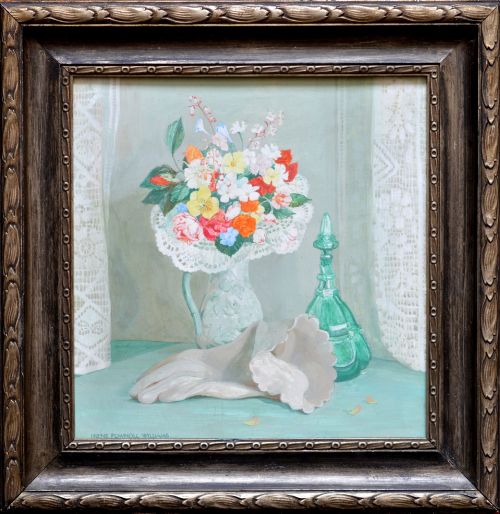
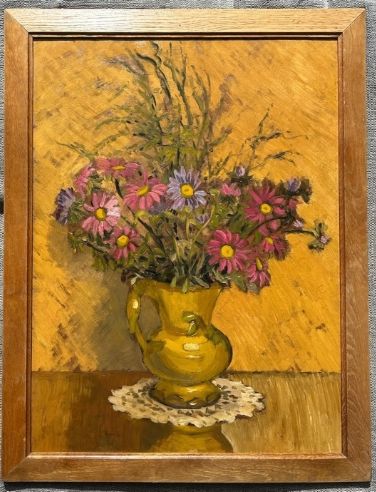
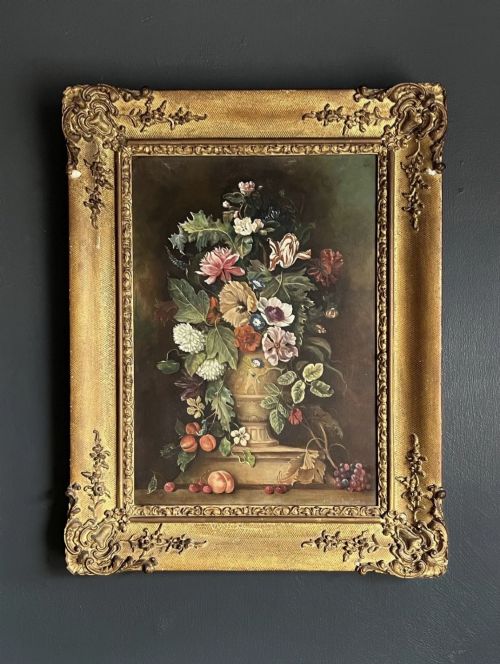
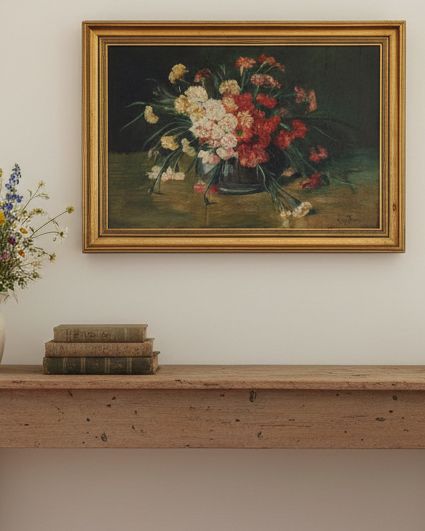
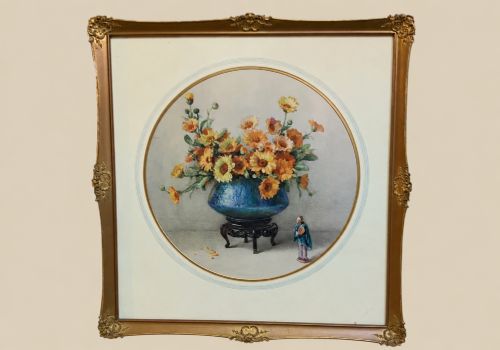
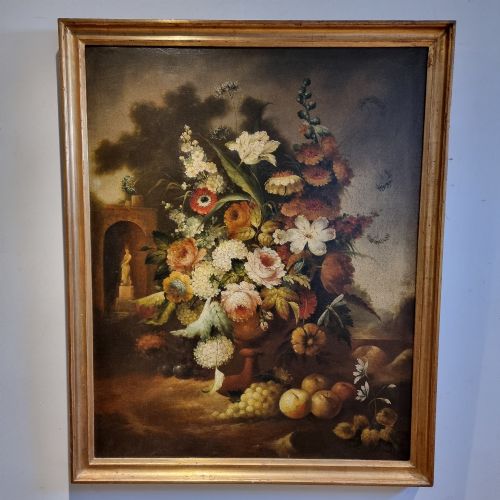
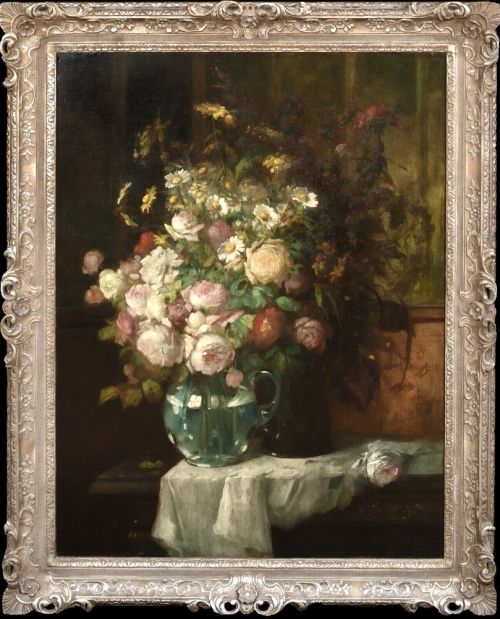
A vintage flower painting captures floral subjects across various decades, featuring canvases, wood boards, and paper mediums. These works frequently depict arrangements in vases, baskets, or natural settings.
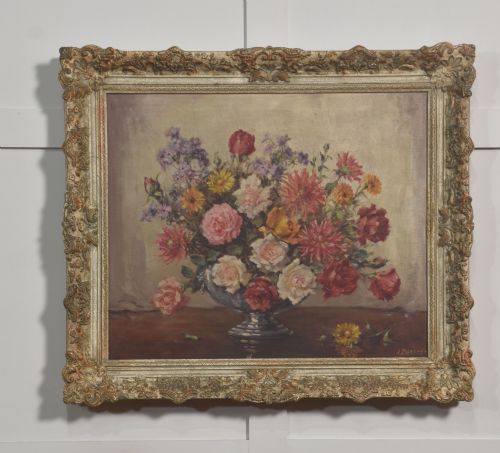
The selection ranges from detailed nineteenth-century watercolours to mid-century impressionist oil paintings. Buyers regularly encounter signed compositions displaying roses, dahlias, and mixed seasonal blooms.
Beyond standard framed artwork, the category encompasses gouache studies and botanical watercolours from the Victorian and Edwardian eras. Many pieces retain their original frames, including gilt gesso and wood mouldings.
Materials and Techniques
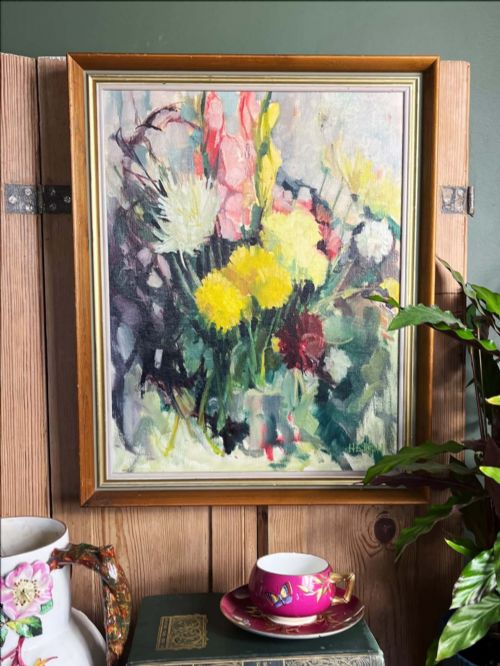
Artists painted these floral studies using oil paint, watercolour, and gouache applied to canvas, wood board, paper, and silk. Oil works often build up texture through impasto layers, while watercolours rely on delicate washes.
Frames play a structural role in presentation, utilising carved wood, gold leaf, and gilt gesso. Selected works incorporate glass glazing to protect paper and watercolour surfaces from environmental moisture.
Vintage Flower Painting Retail Price Guide 2026
Typical asking prices for vintage flower painting among the pieces listed under this phrase on Sellingantiques today, from the lower quarter to the upper quarter. They describe what is for sale here now, not the wider market.
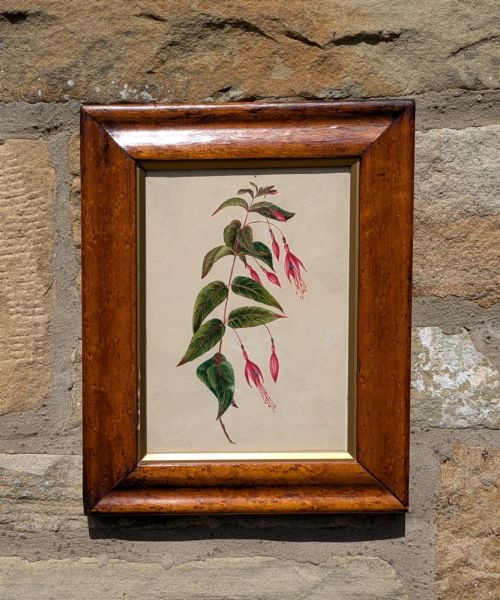
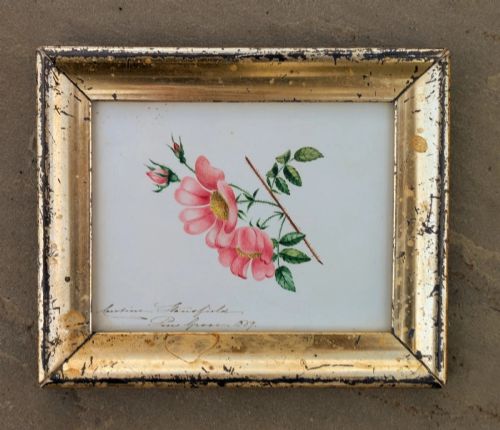
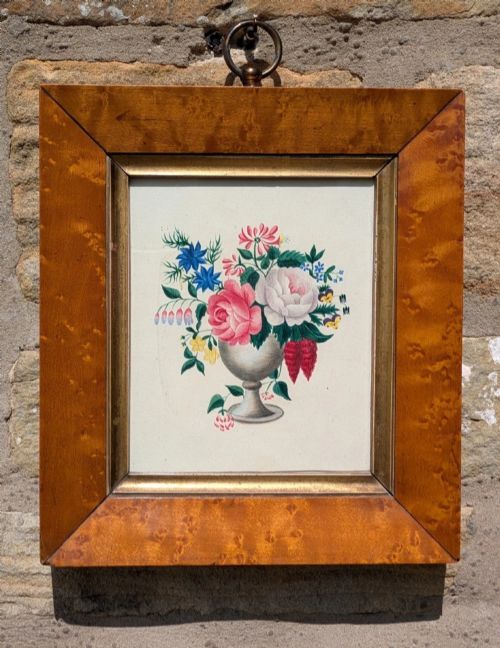
Floral subjects span simple botanical studies of wild roses and fuchsias to elaborate arrangements in ceramic vases and wicker baskets.
Distinctions in Quality
Quality rests upon the confidence of the brushwork and the harmony of the palette. Superior examples demonstrate a precise control of light and shadow over the petals and the interior of the vessel.
The integrity of the original support and the condition of the paint layer dictate the longevity of the piece. Works retaining their period frames without structural alterations command greater appreciation from collectors.
Kenneth Cozens·I. Berezny·Konstantin Stoitzner·Emma Fordyce MacRae·Harold Clayton·Edwin Steele·Moses Webster·D Hardy·Manuela Bonati·Catherine Thomas·Charles Vyse·Owen Bowen·Albert E Jackson·William H Barnes·C Lawrence·John Burns Robertson·Tom Whitehead·Thomas Sherlock Evans·Albert Henrich·Florence R Walker·Eleanor Plumpton
The Vintage Flower Painting Glossary
- Gouache
- An opaque water-based paint that dries to a matte finish, allowing for vibrant colour blocks in botanical studies.
- Impasto
- A technique where paint is laid onto a surface in thick layers, creating a textured, three-dimensional effect on the canvas.
- Gilt Gesso
- A plaster-like material applied to wooden frames and covered with gold leaf to create ornate decorative mouldings.
- Still Life
- An artwork depicting mostly inanimate subject matter, typically featuring natural objects such as cut flowers in vases.
- Botanical Watercolour
- A detailed painting on paper focusing on the accurate scientific or aesthetic representation of plant forms.
Vintage Flower Painting: Frequently Asked Questions
What periods do these paintings cover?
The available selection spans from the nineteenth century through the mid-twentieth century, including Victorian, Edwardian, and post-impressionist eras.
Specific dates on boards and canvases often point to the 1920s, 1930s, and 1950s as particularly common decades for these floral works.
How should I hang a framed oil painting?
Select a wall away from direct sunlight and steady moisture to protect both the canvas and the original gilt frame.
Ensure the hanging wire and wall fixings match the weight of the wooden support and glass where fitted.
Are watercolours different from oil paintings here?
Watercolour and gouache works are painted on paper or silk surfaces and generally require protective glass framing to prevent surface damage.
Oil paintings utilise wood board or canvas supports, presenting a heavier paint layer that usually remains unglazed.
How do I identify a Victorian floral piece?
Victorian botanical works often lean towards detailed watercolours of individual flowers or structured nineteenth-century compositions.
Signatures, framing styles, and paper types help date these older studies relative to later mid-century canvases.