


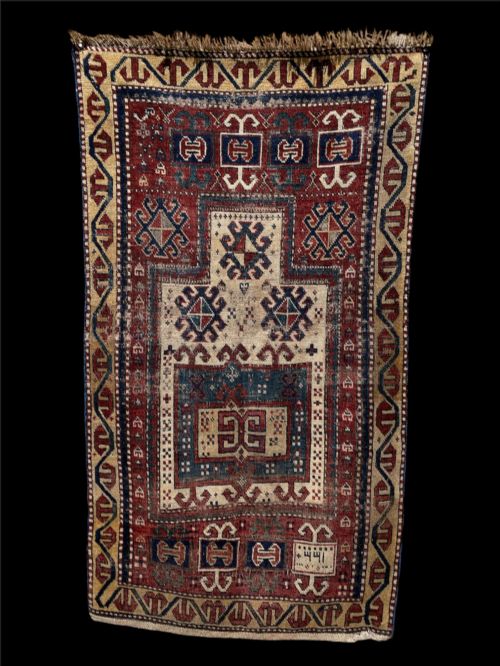


Vintage Floor Mat Runner
A vintage floor mat runner offers a practical way to bring historical woven textiles and tribal character into narrow hallways.
Vintage Floor Mat Runner
A vintage floor mat runner encompasses hand-woven rugs and hallway runners originating from traditional weaving centres across Persia, the Caucasus, Anatolia, and Central Asia. Buyers searching for a vintage floor mat runner will find room-specific formats adapted into elongated proportions suitable for corridors, alongside smaller village and tribal carpets. The selection spans the nineteenth century through to the early decades of the twentieth century, bringing regional patterns into domestic circulation.
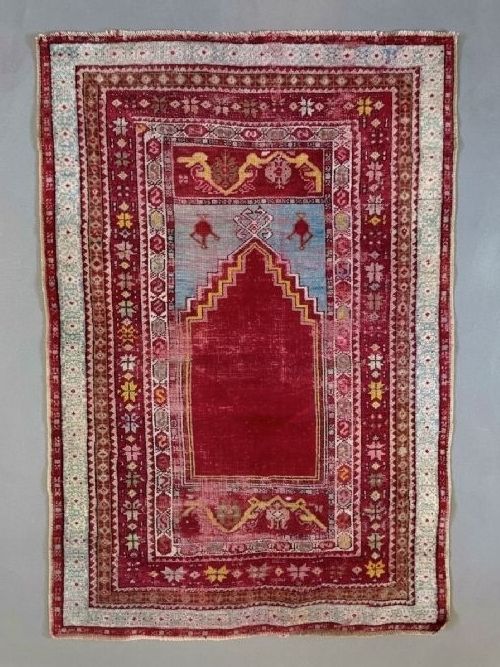
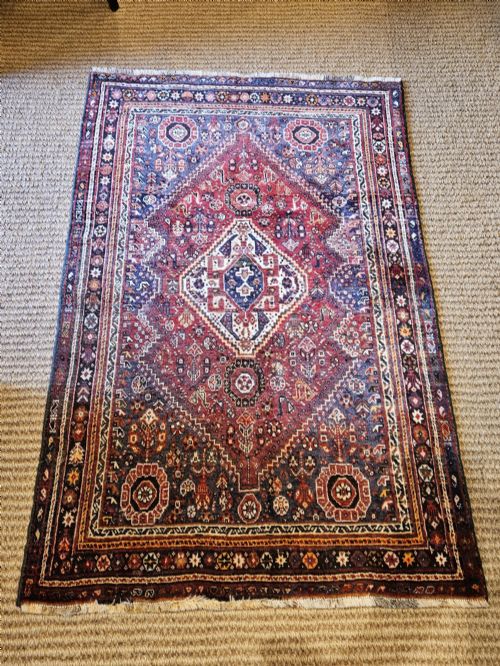
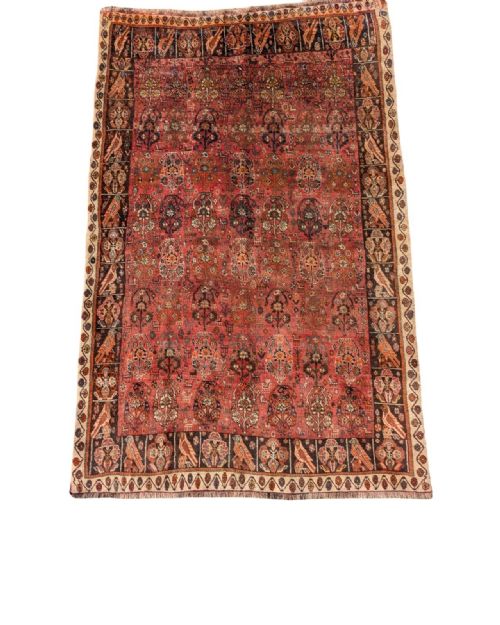
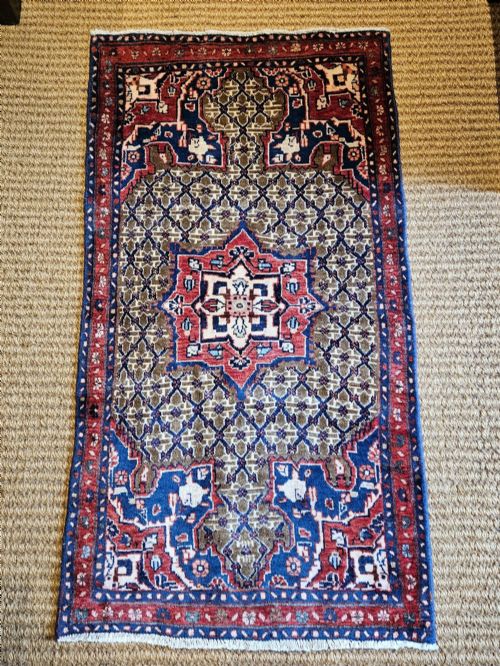
The inventory on this page primarily surfaces traditional Persian and tribal formats, including Heriz, Kashan, Bidjar, and Baluch pieces, alongside Caucasian prayer rugs and Anatolian kilims. These examples arrive from specific nomadic and village traditions, displaying geometric medallions, prayer mihrabs, and repeating floral lattice motifs. Each piece functions as a durable floor covering shaped by the utilitarian requirements of its original makers.
Materials and construction methods
These floor coverings rely heavily on wool and cotton foundations, utilising hand-spun wool for the pile to ensure resilience against heavy foot traffic in corridors. Weavers tied pile knots or employed flatweave techniques such as soumak and kilim construction, binding the fibres securely across sturdy warp and weft threads.
Natural dyeing traditions dictate the palette, yielding deep rusts, indigos, and earth tones derived from local plant and mineral sources. The combination of hand-spun wool and tight knotting techniques accounts for the survival of these textiles across generations.
Listings feature pieces spanning the nineteenth century through the 1930s, constructed primarily from wool and cotton across Persian, Caucasian, and Anatolian traditions.
Distinctions in execution and longevity
Quality rests in the density of the knotting and the precision of the wool preparation, which together determine how sharply the geometric or floral motifs resolve. Tighter foundations and carefully sorted hand-spun wool yield greater resilience against wear, ensuring the pile retains its structural integrity along high-traffic corridors.
Design execution separates standard village production from master-woven examples, with superior pieces displaying balanced proportions, harmonious natural colour palettes, and crisp drawing in the borders and medallions. The integrity of the original kilim ends and selvedges further indicates the care taken during initial creation and subsequent preservation.
The Vintage Floor Mat Runner Glossary
- Runner
- A long, narrow carpet format specifically proportioned for corridors, hallways, and staircases. These pieces direct movement through domestic spaces while protecting wooden floors.
- Prayer Rug
- A small rug featuring a central mihrab arch design that historically indicated the direction of Mecca during prayer. These portable textiles often display intricate niche patterns.
- Kilim
- A flatwoven carpet produced by tightly interleaving warp and weft strands without creating a pile. This technique results in a lightweight, reversible textile with sharp geometric motifs.
- Medallion
- A central ornamental design motif placed in the field of a rug, often geometric or floral in structure. It anchors the symmetrical composition of the textile.
- Soumak
- A flatweaving technique involving wrap-threads that produce a textured, braided surface on the face of the rug and loose threads on the reverse. This method adds substantial durability to the finished textile.
Vintage Floor Mat Runner: Frequently Asked Questions
Where should I place a runner?
Runners suit narrow spaces such as hallways, corridors, entryways, and beside beds where linear floor coverage is beneficial. Their elongated proportions guide movement and introduce warmth to transitional areas.
Ensure the chosen width allows doors to clear the pile easily. Placing a suitable underlay underneath helps keep the textile securely positioned on hard flooring.
How do I clean these wool textiles?
Regular gentle vacuuming without a rotating brush roll helps remove embedded dust and grit from the wool pile. Prompt blotting of spills with a dry cloth prevents moisture from settling into the natural fibres.
Professional specialist cleaning is recommended for deep maintenance to protect the historic dyes and foundation threads. Avoid harsh chemical detergents and excessive water immersion.
Are these pieces durable for daily use?
Hand-spun wool construction and dense knotting provide natural resilience that withstands regular walking traffic. Traditional nomadic and village weaving traditions designed these textiles for practical, everyday domestic duty.
Using a quality rug pad underneath cushions the foundation and reduces friction against the floor. This simple addition significantly extends the working life of older woven runners.
How are tribal designs identified?
Tribal designs typically feature repeating geometric patterns, hooked polygons, and stylised animal or plant motifs rather than court-designed floral curves. Specific weaving groups, such as the Baluch or Kashgai, employed distinct colour palettes and border structures passed down through generations.
Reference books and comparative studies of regional weaving traditions assist in pinpointing the likely origin of specific motifs. Subtle variations in wool texture and knotting direction also offer clues to the producing tribe.