
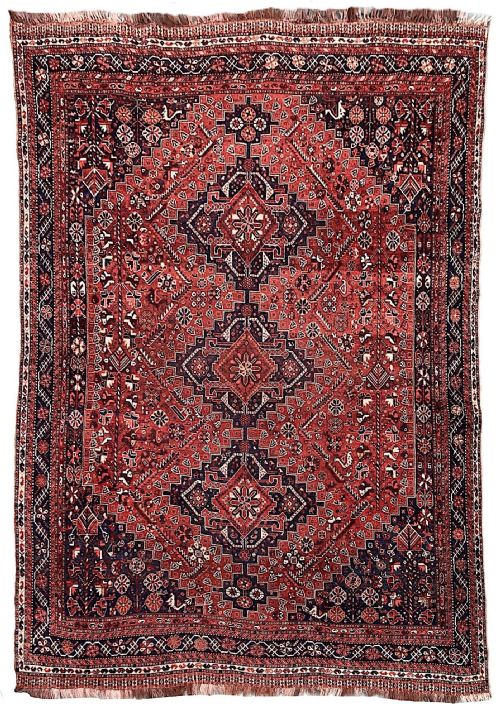


Qashqai Hand Knotted Rug
A qashqai hand knotted rug brings the rich tribal heritage of South-West Persia into a room through vibrant wool work and traditional motifs.
Qashqai Hand Knotted Rug
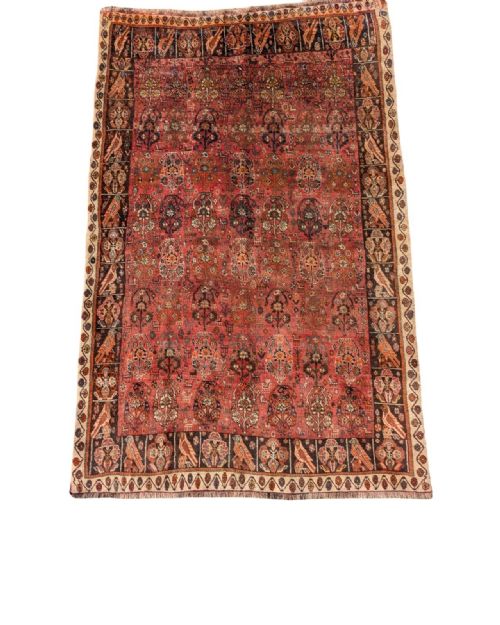
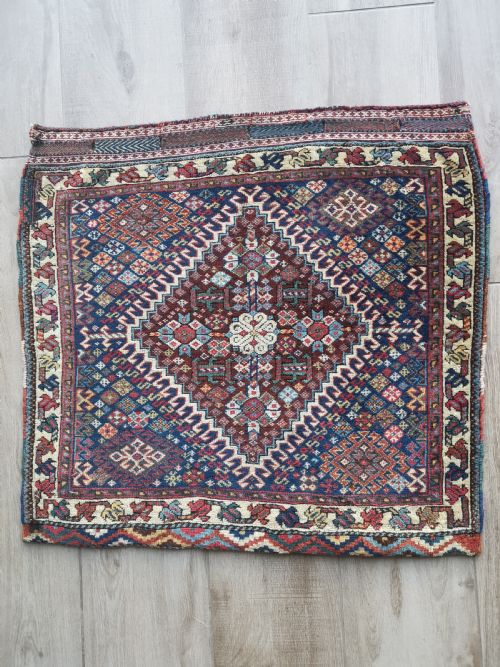
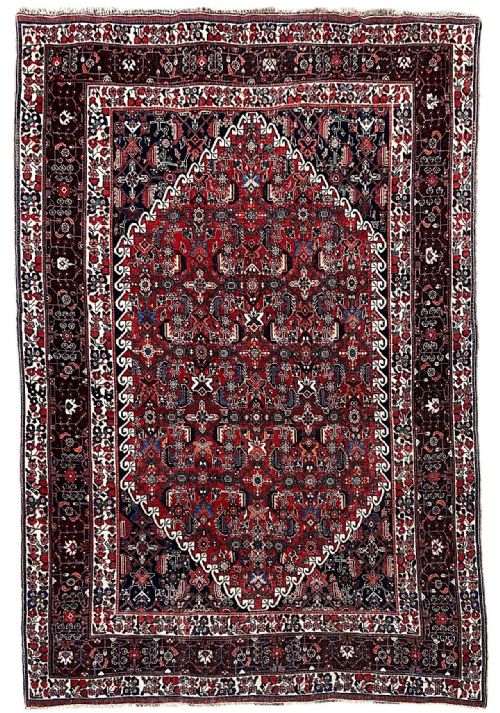
A qashqai hand knotted rug represents the nomadic and village weaving traditions of the Fars province in Persia. Buyers encountering these pieces on this page will frequently see room-sized carpets, smaller area rugs, runners, and functional bag faces dating from the nineteenth and early twentieth centuries.
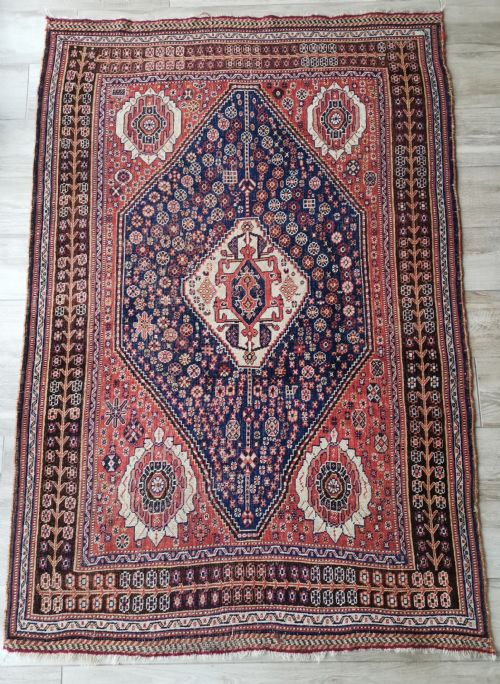
The aesthetic falls firmly within Persian tribal and Khamseh traditions, often incorporating geometric medallions, tree of life patterns, or stylized birds. These floor coverings reflect generations of tribal artistry passed down among weavers in the region.
Formats range from compact bag faces measuring under a metre to large carpets exceeding three metres in length. This variety allows collectors to select pieces suited for intimate spaces or expansive open floors.
How They Were Made
The construction relies on durable wool and hand-spun wool pile knotted onto cotton foundations. Artisans utilised natural dyes to achieve deep colour palettes that retain their character over decades of use.
Weavers working within nomadic frameworks produced dense structures capable of withstanding heavy daily foot traffic. The combination of resilient animal fibres and traditional knotting techniques ensures structural longevity.
What Varies in Quality
Knot density and precision of design execution distinguish finer examples from standard village work. Superior pieces display crisp geometric lines and highly detailed pictorial elements such as peacocks or elaborate medallions.
The vibrancy and depth of the natural dyes significantly influence the overall desirability of a textile. Examples retaining rich, saturated colour palettes without muddiness sit at the upper end of the range.
The Qashqai Hand Knotted Rug Glossary
- Gabbeh
- A thick, coarsely knotted tribal rug featuring sparse, open field designs with minimal ornamentation. These utilitarian floor coverings were traditionally woven for domestic floor use by nomadic women.
- Bagface
- The decorative front portion of a nomadic storage sack or saddlebag detached from its plain wool back. These smaller square formats often display concentrated miniature medallion designs.
- Khamseh
- A confederation of five distinct tribes in South-West Persia sharing closely aligned weaving styles with their neighbours. Their carpets frequently overlap in imagery and wool characteristics with regional tribal pieces.
- Kashkuli
- A specific sub-group of the Qashqai confederation known for producing particularly fine, closely woven textiles. These pieces are often prized by collectors for their delicate execution and superior materials.
- Medallion
- A central ornamental design motif placed in the middle of the rug field. This focal element often anchors symmetrical geometric or floral repeats.
Qashqai Hand Knotted Rug: Frequently Asked Questions
How do I clean an antique rug?
Gentle surface brushing and professional specialist washing help preserve delicate natural wool piles. Avoid harsh chemical immersion that can strip natural dyes.
Regular light vacuuming without rotating brush heads prevents dust accumulation between the knots. Specialist care ensures the wool and cotton foundations remain stable over time.
Can I place these rugs in hallways?
Runner formats and robust village weaves fit narrow corridors and high-traffic entryways effectively. The dense wool pile handles daily walking while adding warmth to transitional spaces.
Placing a proper underlay beneath the textile prevents slipping and reduces friction against hard flooring. This simple addition extends the working life of older foundations.
How do I date a tribal carpet?
Examining the wool consistency, dye palette, and structural wear patterns provides reliable clues regarding age. Pieces from the nineteenth century often exhibit softer, hand-spun textures compared to later production.
Stylistic shifts in medallion geometry and border arrangements also help specialists narrow down the decade of origin. Comparing structural edge finishes aids in distinguishing nineteenth-century weaving from early twentieth-century examples.
What is a bag face used for?
Nomadic tribes originally utilised woven bags for transporting possessions across seasonal migration routes. The decorative front panels were later separated and preserved as small decorative mats or wall hangings.
Today these compact textiles function well as table mats, small accent pieces, or framed wall art. Their diminutive size makes them accessible entry points for new collectors.