
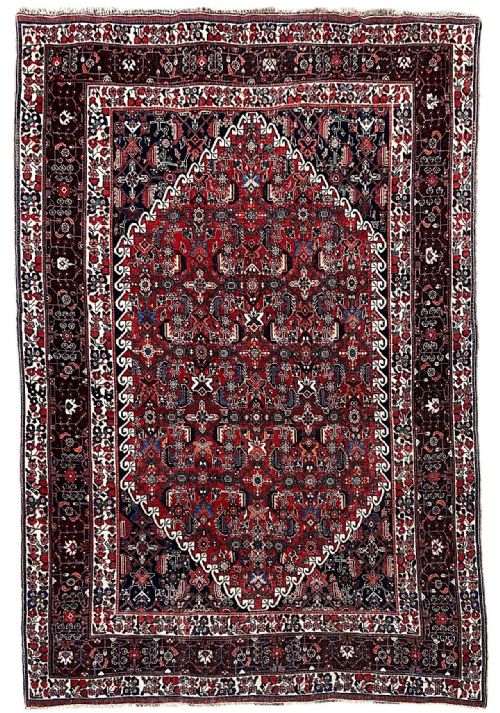
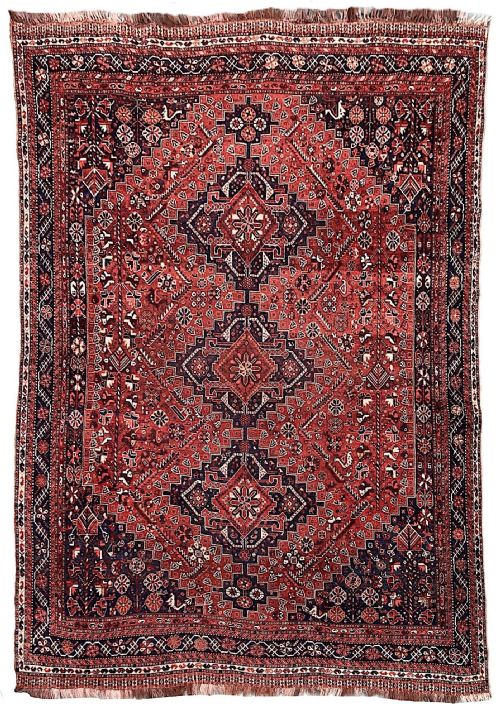


Red Qashqai Carpet
When you search for a red qashqai carpet, you are looking at tribal floor coverings woven by nomadic confederations in south-west Persia.
Red Qashqai Carpet
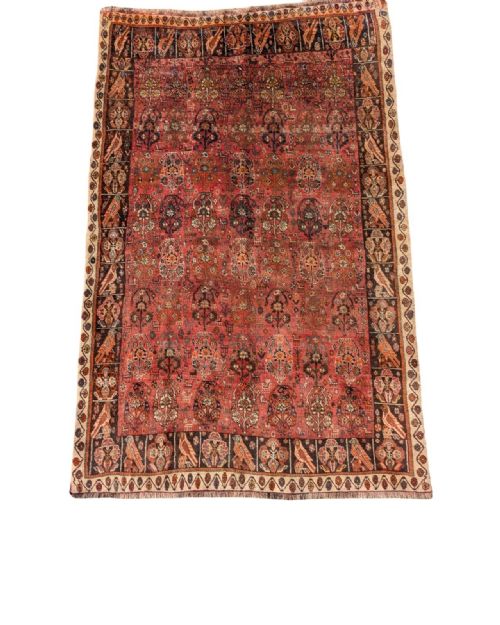
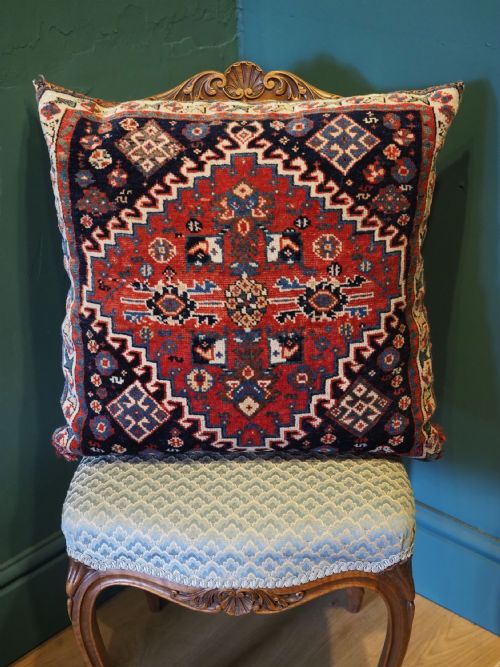
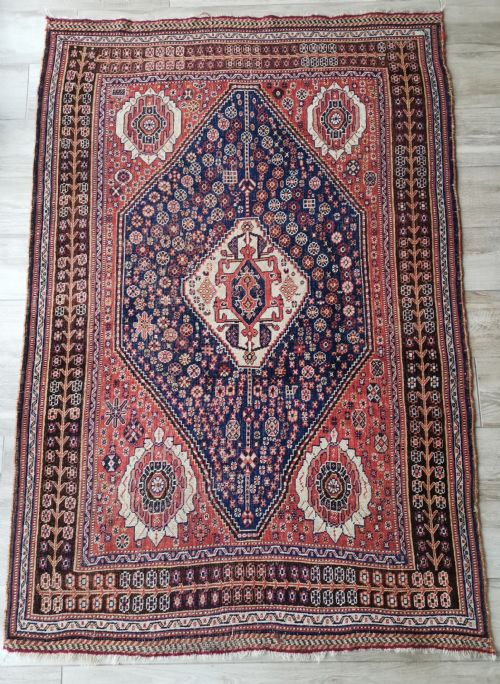
A red qashqai carpet represents the traditional weaving of nomadic tribes from south-west Persia, dating from the late nineteenth century into the early decades of the twentieth century. These textiles encompass varied formats, including full-piled carpets, smaller rugs, kilims, saddle bag cushions, and runner formats.
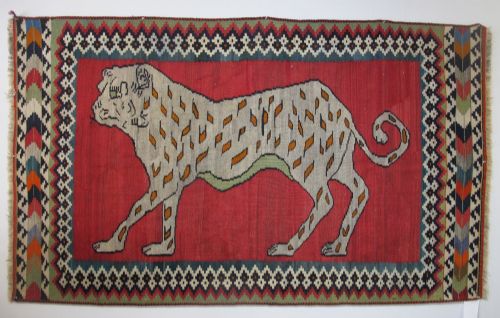
The most common examples encountered on this page are antique tribal rugs and kilims showcasing traditional geometric motifs, medallions, and pictorial elements such as lions, peacocks, or trees of life. Related tribal weaving traditions from the same geographic sphere, including Khamseh, Luri, and Shekarlu pieces, frequently share aesthetic traits with these works.
Nomadic weavers produced these floor coverings for practical use within tents and village homes, relying on deep crimson and madder red grounds to frame intricate symbolic designs. Collectors value them for their authentic tribal character and connection to nineteenth and early twentieth-century Persian weaving culture.
How they were made
These textiles rely primarily on wool and hand-spun wool foundations and pile, combined with cotton used structurally in various pieces. Artisans utilised natural dyes to achieve rich red ground colours alongside contrasting tones of blue, yellow, and ivory.
The construction involves handwoven techniques executed on portable vertical or horizontal looms set up by nomadic and village weavers. This traditional loop and knot construction results in dense, durable piles and flat-woven kilim structures designed for daily endurance.
Object types span full-piled carpets, small rugs, kilims, saddle bag cushions, and runner formats from south-west Persia.
What varies in quality
The finesse of a tribal weaving depends significantly on the tightness of the knotting and the quality of the hand-spun wool utilised in the pile. Superior examples display crisp graphic definition within complex medallions and animal motifs, reflecting the weaver's precision.
Depth and variation in natural dyes separate exceptional pieces from simpler production, as subtle shifts in colour indicate artisanal dyeing methods. Overall condition, pile preservation, and structural integrity also influence the standing of an individual carpet or rug.
The Red Qashqai Carpet Glossary
- Kilim
- A flat-woven carpet or rug produced without a pile, relying on interlocking weft threads to create geometric patterns. These pieces were traditionally used as floor coverings, covers, or storage bags by nomadic groups.
- Medallion
- A central ornamental motif positioned in the middle of the field, often diamond, hexagonal, or star-shaped. It serves as the visual anchor for the composition of the rug.
- Gabbeh
- A coarse, thick-piled rug woven by nomadic tribes with minimal geometric designs and broad fields of colour. They are prized for their spontaneous artistic expression and heavy wool texture.
- Kelleh
- A large, elongated rectangular carpet format designed for specific room proportions in Persian interiors. These runner-like proportions accommodate narrow spaces while retaining full tribal field designs.
- Tree of Life
- A symbolic motif depicting a branching tree rising from a vase or ground, representing eternal life and fertility. It appears frequently in tribal and village weaving traditions.
Red Qashqai Carpet: Frequently Asked Questions
What is a Qashqai carpet?
A Qashqai carpet is a handwoven textile created by the nomadic confederation of the same name in south-west Persia. These works are distinguished by rich red wool grounds and geometric tribal patterns.
They reflect the cultural heritage and lifestyle of nomadic weavers from the nineteenth and early twentieth centuries.
How do I identify a tribal rug?
Tribal rugs are recognised by their spontaneous geometric designs, animal motifs, and asymmetric village craftsmanship. They often feature hand-spun wool and natural dye palettes dominated by deep reds and indigos.
Unlike urban workshop carpets, tribal pieces display charming irregularities that reveal the hand of the individual nomad.
Where were these carpets made?
These floor coverings were produced in the south-west region of Persia, primarily by nomadic tribes moving through the Zagros mountains. The Qashqai, Khamseh, and Luri groups all inhabited this territory.
Weavers created them on portable looms during seasonal migrations or within permanent village settlements.
How should I care for an antique rug?
Antique wool rugs require gentle maintenance, including regular vacuuming without a beater bar and professional cleaning when necessary. Placing a quality underlay beneath the carpet prevents sliding and reduces fibre wear.
Keeping the textile out of direct sunlight preserves the natural dyes and prevents the red wool from fading over time.