





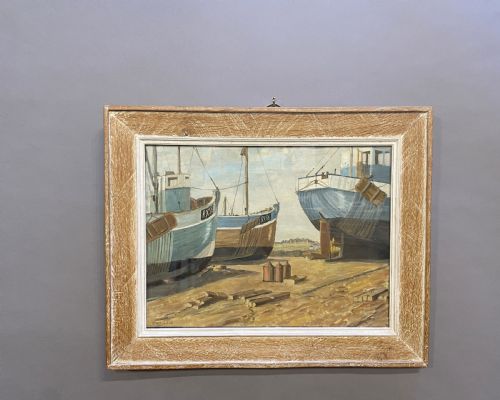
Vintage Fishing Landscape
Vintage fishing landscape works capture maritime life and inland waters through oil and watercolour, offering a direct view into working coastal communities.
Vintage Fishing Landscape
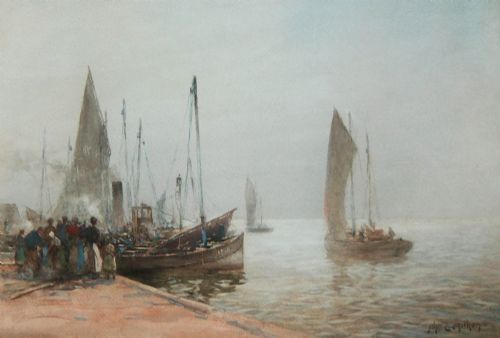
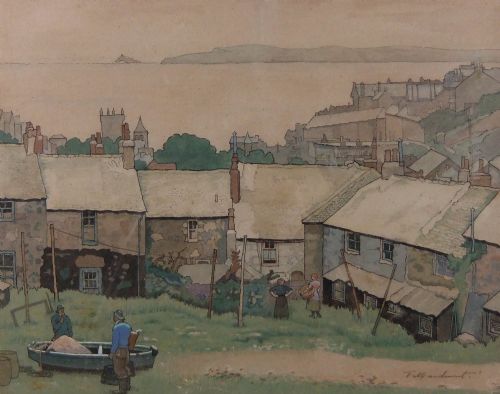
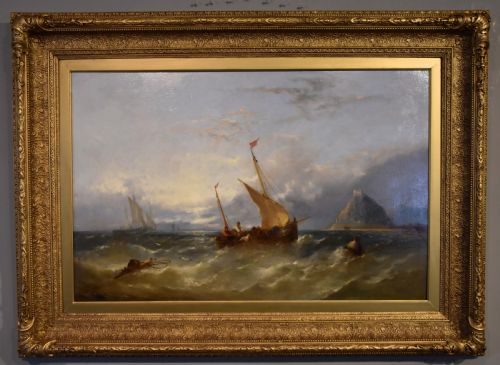
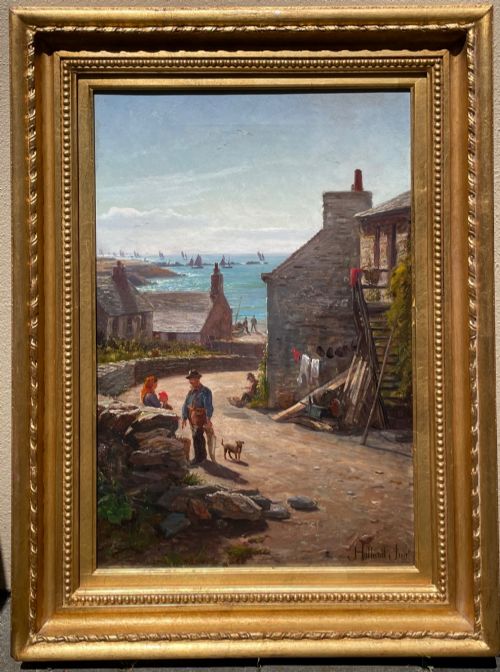
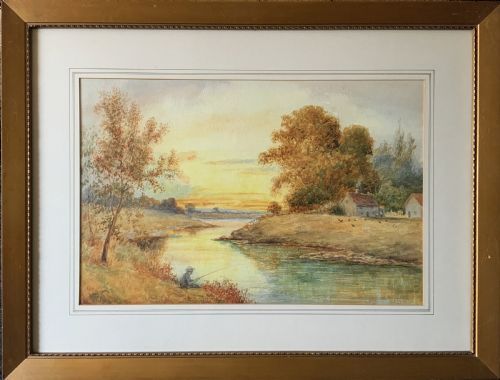
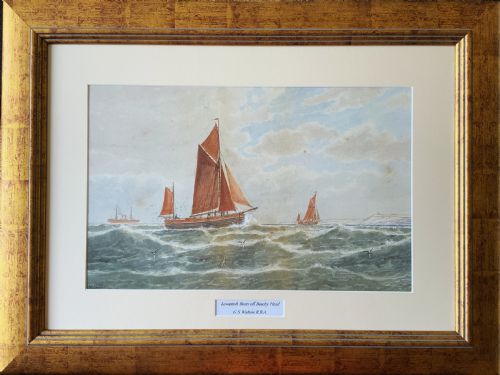
A vintage fishing landscape encompasses framed paintings and watercolours depicting harbours, coastal docks, and riverbanks with boats or figures angling. These pieces range from Victorian portrayals to mid-century modern interpretations of British and continental ports.
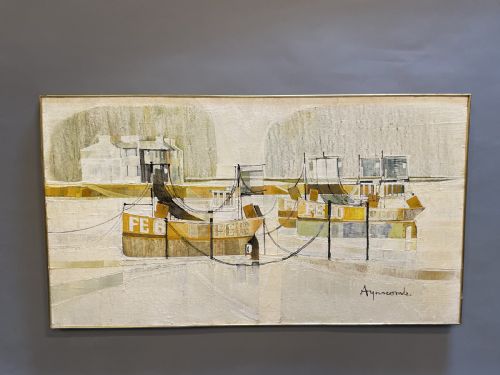
The most common examples on this page are oil and watercolour paintings on canvas, board, or paper showing scenes from locations like St Ives, Whitby, and Polperro. Works span from the nineteenth century through the 1960s, reflecting changing regional artistic movements.
Materials and technique
Artists utilised oil paint on canvas, panel, or board to build textured surfaces that captured the shifting light of the sea and sky. Watercolours on paper offered a more fluid medium, frequently used to render transparent washes of coastal harbours and atmospheric weather.
Support materials varied according to the period and scale, with nineteenth-century works typically employing heavy woven canvas while later twentieth-century pieces often utilised prepared boards or heavy paper sheets.
Geographical subjects concentrate heavily on Cornish fishing villages, Yorkshire ports, and international coastal harbours.
Distinctions in quality
Quality rests in the handling of light, atmospheric depth, and the convincing depiction of maritime movement rather than mere subject matter. Superior examples demonstrate a confident control of pigment, whether through thick impasto in oils or delicate transparency in watercolours.
The strength of composition and the artist's ability to render the specific character of a harbour or coastal view distinguish finer works from standard topographical records.
George Graham·James E. Aitken·Thomas Maidment·William Henry Williamson·Florence Adelina Hess
The Vintage Fishing Landscape Glossary
- Impasto
- Paint applied thickly to a canvas or board, leaving visible brush or palette knife marks that add tactile texture.
- Watercolour
- A painting method in which fine pigment is suspended in a water-based solution, typically applied to paper.
- Provenance
- The documented history of ownership surrounding a work of art, providing context for its origin and authenticity.
- Seascape
- A work of art depicting the sea, coastal views, ships, or maritime activity.
- Canvas
- A closely woven heavy fabric stretched across a wooden frame to serve as a foundation for oil painting.
Vintage Fishing Landscape: Frequently Asked Questions
What subjects appear in vintage fishing landscapes?
These works typically show coastal harbours, fishing boats in choppy seas, dry docks, and figures by rivers or piers. Locations span British fishing ports alongside continental European harbours.
Scenes often record daily maritime labour, from returning fleets to vessels laid up at low tide.
How do oils and watercolours differ in these works?
Oil paintings utilise heavy pigments suspended in medium, allowing for textured brushwork and deep layers of colour on canvas or board. Watercolours employ translucent washes on paper, capturing lighter atmospheric effects.
Both media were used extensively across the nineteenth and twentieth centuries to record maritime views.
Which periods do these paintings represent?
The works span from the Victorian era and the nineteenth century through the early twentieth century, extending into mid-century modern and 1960s interpretations. Stylistic approaches shift from traditional academic marine painting towards impressionist and post-impressionist handling.
Earlier pieces often focus on detailed topographical accuracy, while later examples emphasise light and painterly surface.
How should these framed pieces be displayed?
Framed paintings and watercolours require placement away from direct sunlight and excessive humidity to protect the canvas, paper, and pigments. Proper wall space allows the atmosphere and scale of maritime scenes to read clearly.
Original frames, where present, often complement the period and aesthetic of the artwork.