

Vintage Fireside Log Bin
When you search for a vintage fireside log bin, you find sturdy metal and wooden hearth vessels designed to store fuel.
Vintage Fireside Log Bin
A vintage fireside log bin is a practical hearth accessory designed to hold wood, coal, and kindling near a fireplace.
The pieces appearing on this page span the Victorian, Edwardian, and Georgian periods, showcasing traditional forms built for everyday domestic use.
These items double as decorative planters or storage vessels, reflecting the shift from utilitarian coal storage to ornamental fireside furnishing.
How they were made
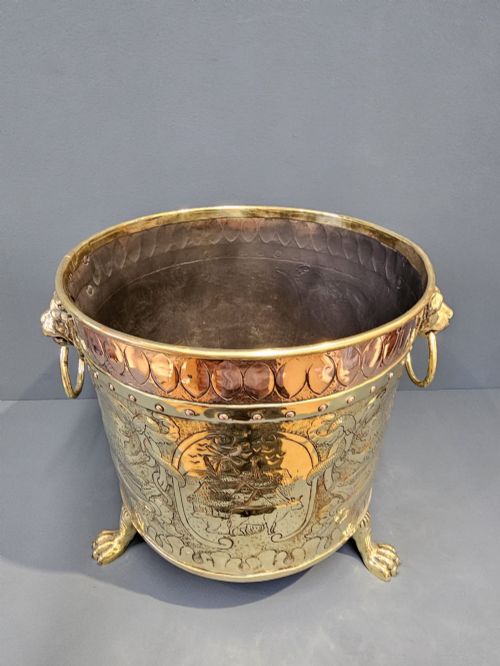
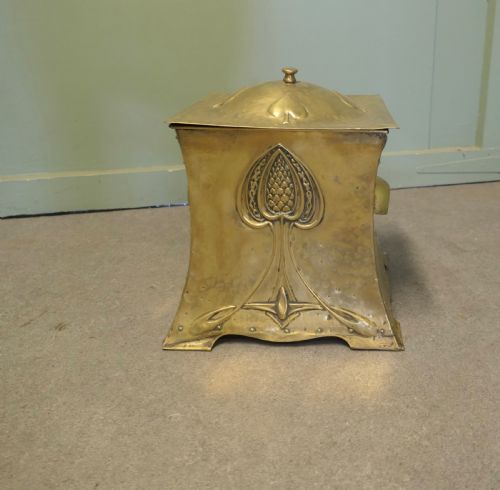
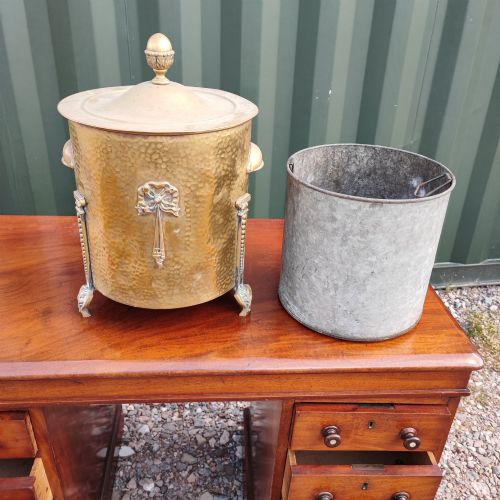
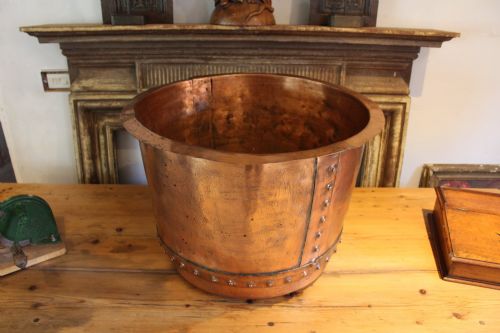
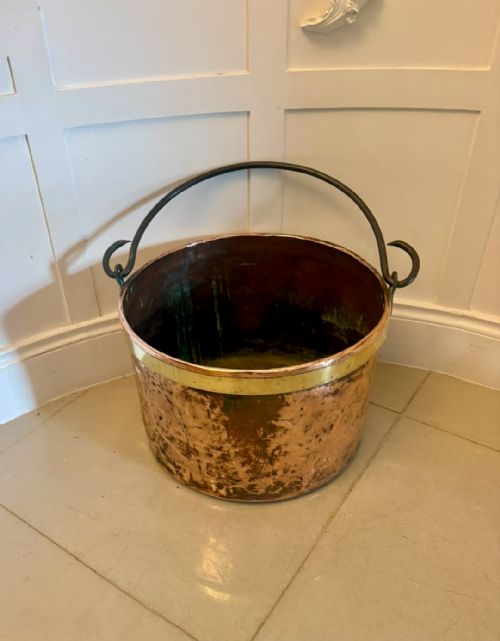
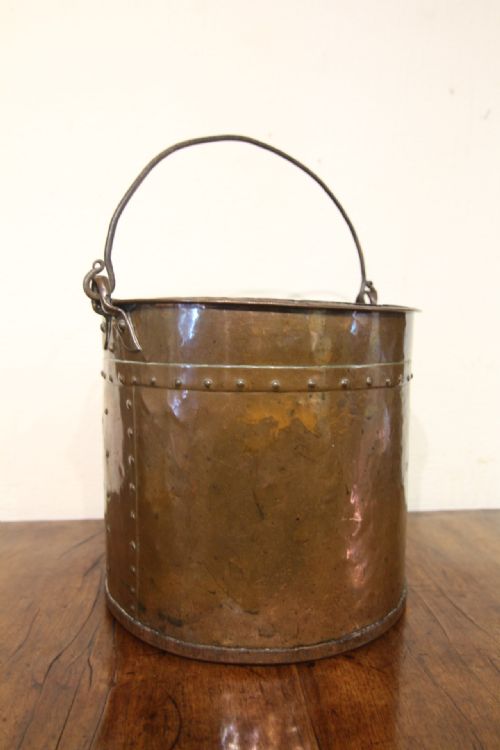
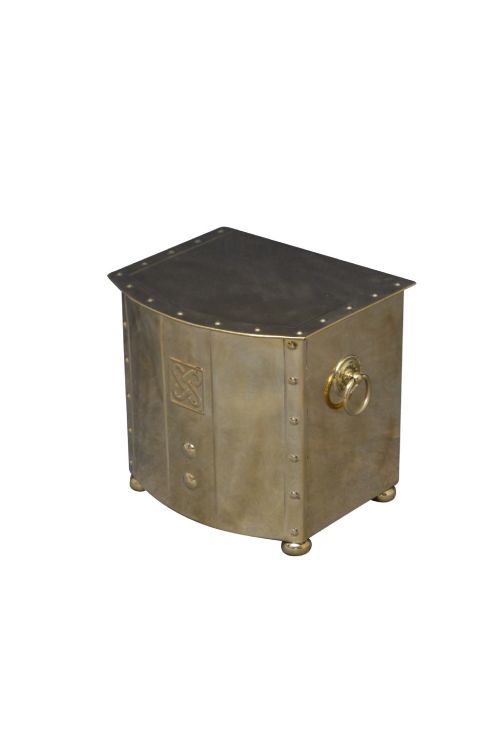
Metal vessels utilise sheet brass and copper, frequently joined with visible rivets and finished with hand-beaten or embossed surface details.
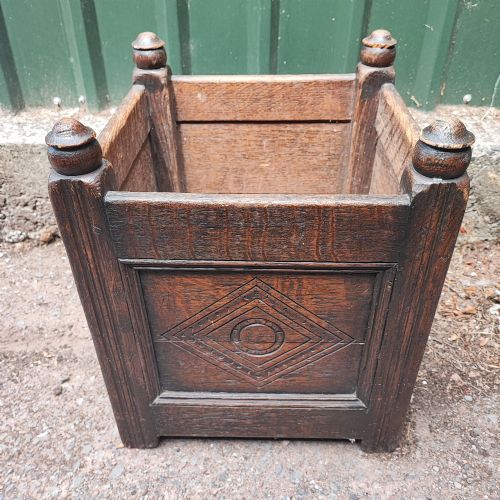
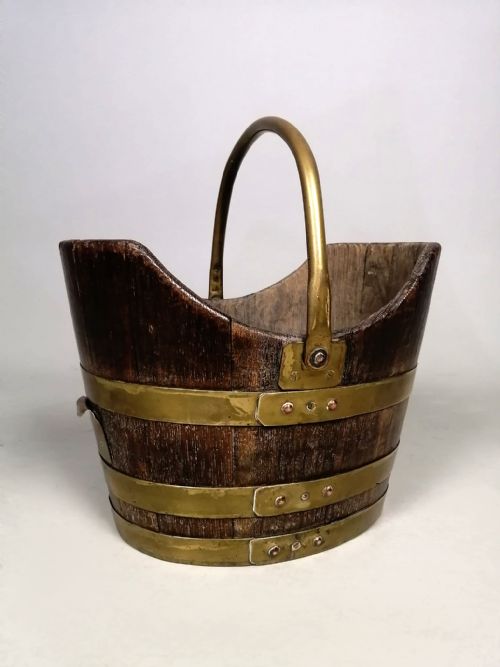
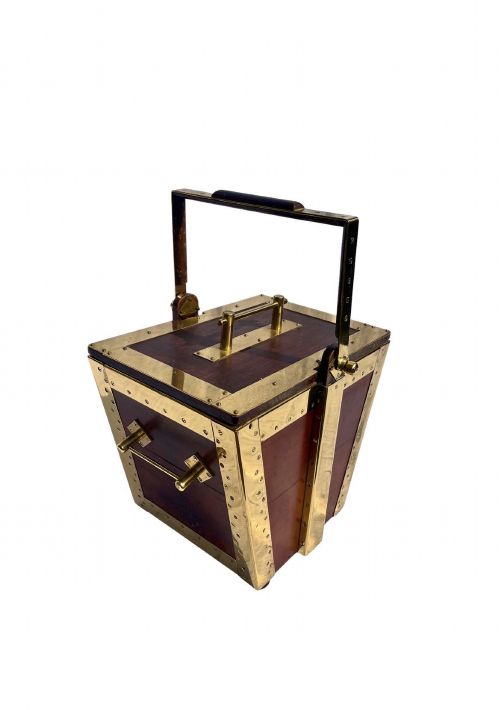
Wooden bins rely on traditional coopering and joinery techniques, combining solid oak, mahogany, or pine with metal bands and handles.
Wrought iron frames and swing handles provide structural support and a contrasting texture against polished copper and brass bodies.
Listings feature metals including copper, brass, iron, and wrought iron, alongside woods such as oak, mahogany, walnut, and pine.
What varies in quality
The standard of craftsmanship shows in the thickness of the metal sheet, the crispness of embossed patterns, and the integration of handles and bands.
Superior examples display careful hand-beating, robust dovetailed or coopered joints, and well-preserved original hardware rather than modern replacements.
Artistic styling also distinguishes individual pieces, with Arts and Crafts and Art Nouveau designs offering more deliberate decorative intent than standard utility items.
The Vintage Fireside Log Bin Glossary
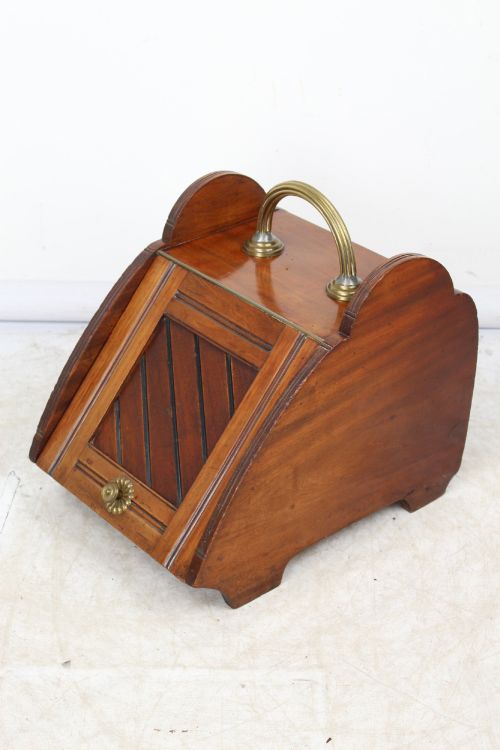
- Coal purdonium
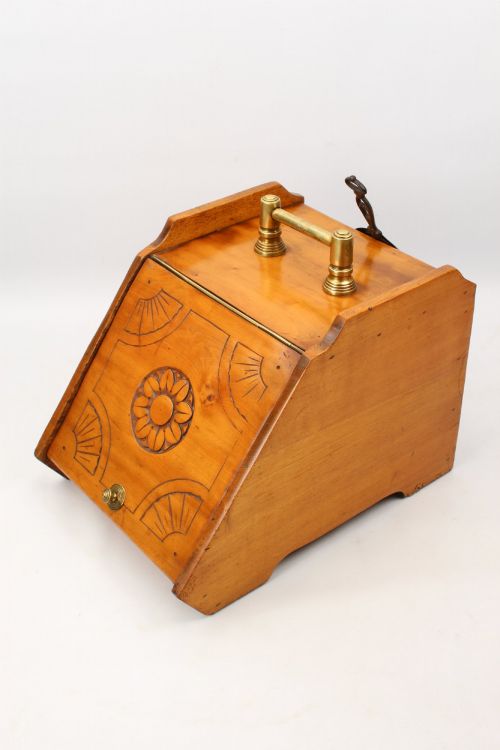
- A specialised cabinet or box designed to hold coal, typically featuring a sloping front and an internal metal liner. They often include a matching scoop stored in a back or side compartment.
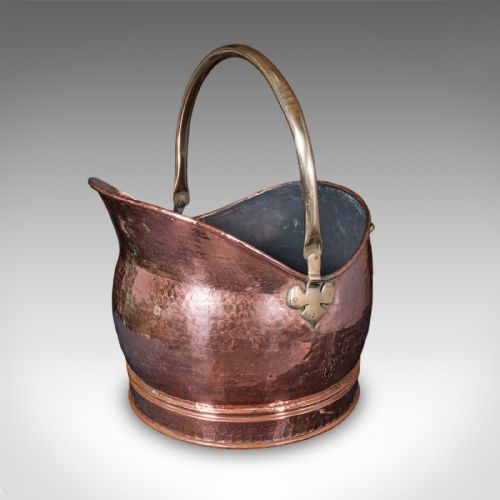
- Helmet bucket
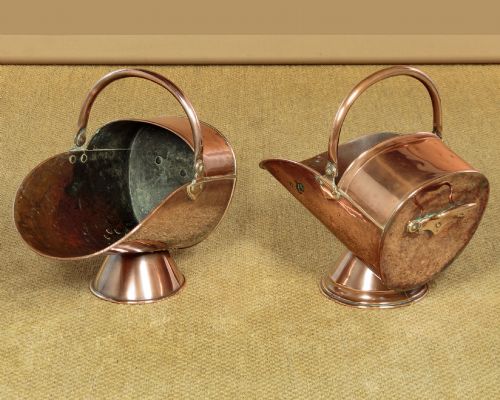
- A coal bucket shaped like a traditional helmet, featuring a wide flared lip at the front and a raised handle at the back for controlled pouring. This form became particularly popular during the Victorian period.
- Coopered
- A construction method utilising vertical wooden staves bound together by metal hoops, similar to barrel making. This technique allowed wooden buckets to withstand heavy loads of fuel without splitting.
- Arts and Crafts
- A design movement emphasising handcraftsmanship, natural materials, and simple forms. Pieces from this tradition often feature hammer-beaten copper surfaces and stylized decorative motifs.
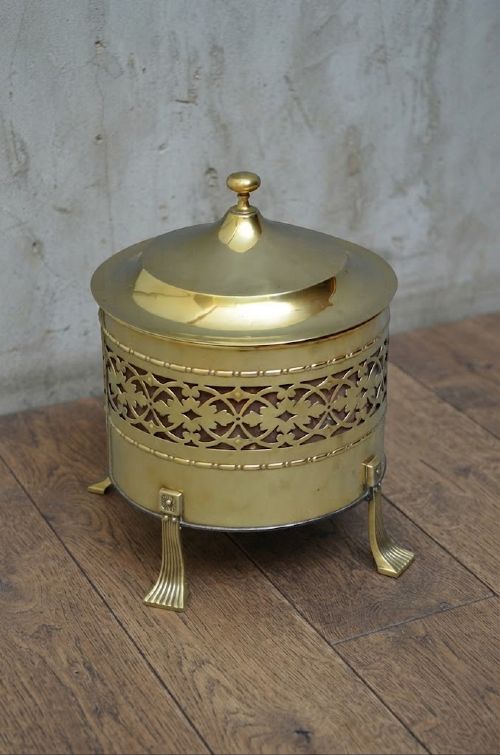
- Fretwork
- An ornamental design created by cutting intricate patterns through metal or wood sheets. It appears frequently on Edwardian coal buckets and planters to add visual lightness to heavy metal forms.
Vintage Fireside Log Bin: Frequently Asked Questions
What is a vintage fireside log bin used for?
These vessels serve as practical containers for holding firewood, logs, and kindling directly beside an active hearth or fireplace.
Beyond functional fuel storage, many owners utilise them as decorative indoor plant pots or general storage containers in living spaces.
How do I clean a copper log bin?
Copper surfaces benefit from gentle dusting with a soft cloth to remove everyday debris without scratching the metal.
Harsh chemical polishes can strip away desirable historical patinas, so cleaning should remain minimal unless the removal of active tarnish is strictly necessary.
Can I burn real logs in these bins?
These items function primarily as dry storage containers for fuel rather than direct burning receptacles.
Placing wood directly into metal or wooden bins is standard practice, provided the logs are dry to prevent moisture damage to the interior.
How do I date a brass log bucket?
Dating relies on observing manufacturing techniques, material choices, and prevailing stylistic movements such as Arts and Crafts or Art Nouveau.
Examining construction methods like hand-riveting, dovetailing, and the wear patterns on handles also helps establish the approximate period of origin.