
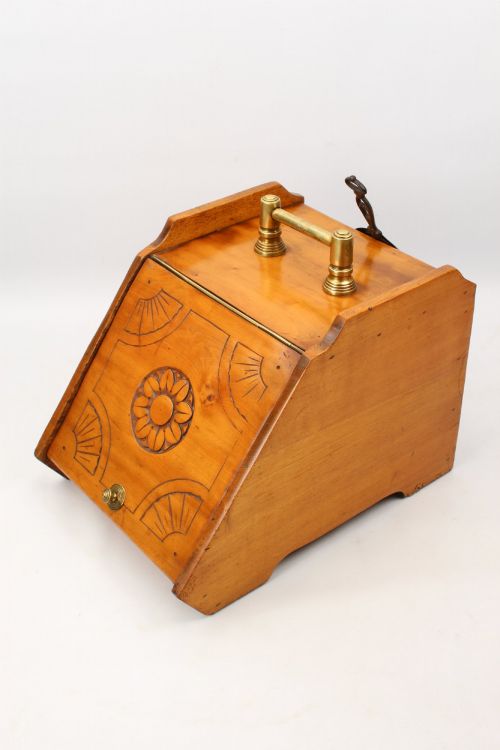


Victorian Coal Box Shovel
These Victorian coal box shovel sets combine practical hearth management with period metalwork and timber.
Victorian Coal Box Shovel
A victorian coal box shovel serves the fireside by scooping fuel into grates and grates alike, accompanying scuttles, bins, and purdoniums. Buyers seeking this combination encounter wooden boxes with sloping lids alongside metal bins and helmets.
The selections span the Victorian period through to Edwardian years and the Arts and Crafts movement, utilising timber and metal forms. Oak and mahogany boxes appear alongside brass, copper, and iron vessels designed for daily domestic use.
Materials and construction methods
The pieces rely on sturdy timbers like oak and mahogany for wooden coal boxes and purdoniums, often housing metal liners to contain the fuel. Metal versions utilise brass, copper, wrought iron, and painted metal shaped into helmets, bins, and scuttles.
Joinery and metalwork define the construction, with carved wooden fronts, hinged lids, and attached handles pairing with metal shovels. Copper and brass components show polished or beaten finishes typical of Arts and Crafts production.
Listings span from the Victorian era into Edwardian times, incorporating Arts and Crafts items made from brass, copper, oak, mahogany, and iron.
Judging quality and craftsmanship
Quality rests in the integrity of the original liners, the matching of the shovel to the box, and the crispness of any carved decoration on wooden purdoniums. Substantial gauge metal and robust hinges separate durable working pieces from lighter domestic items.
Design expression elevates certain examples, particularly where Arts and Crafts copper work or detailed Victorian carving displays deliberate artisan effort. Survival of original components indicates how well the set endured active fireside service.
The Victorian Coal Box Shovel Glossary
- Purdonium
- A specialised coal box featuring a sloping drop-front door and a shovel stored in an internal compartment. This form gained popularity in late nineteenth-century homes to conceal fuel.
- Coal Scuttle
- A deep metal or wooden bucket fitted with a swinging handle for carrying fuel to the hearth. Many designs include a matching shovel held in a side bracket.
- Liner
- The removable metal insert housed inside wooden coal boxes to protect the timber from moisture and dirt. Original liners add authenticity to surviving sets.
Victorian Coal Box Shovel: Frequently Asked Questions
What is a purdonium?
A purdonium is a specific type of Victorian coal box designed with a hinged drop-front and a dedicated internal slot for the shovel. It kept domestic fuel neatly enclosed beside the fireplace.
These pieces typically combine timber frames, such as oak or mahogany, with metal liners and brass handles for daily hearth maintenance.
Are the shovels original?
Many listings include shovels that match the period materials and metal finishes of the associated coal box or scuttle. Original items show consistent wear and matching patination.
Buyers should examine the metal type and manufacturing style to determine whether the shovel belongs to the same era as the box.
How do I clean copper coal boxes?
Copper and brass elements benefit from gentle dusting and occasional cleaning appropriate for historic metalwork. Aggressive polishing removes the aged patina that collectors value.
Wooden sections require simple conditioning suitable for period oak or mahogany without introducing excess moisture.
How do I date these pieces?
Dating relies on stylistic clues, timber choices, and construction methods associated with Victorian, Edwardian, and Arts and Crafts periods. Carved wooden fronts and painted metal finishes point to specific decades.
Makers often utilised distinct hardware like brass handles and liners that correspond to manufacturing practices between eighteen-fifty and nineteen-ten.