


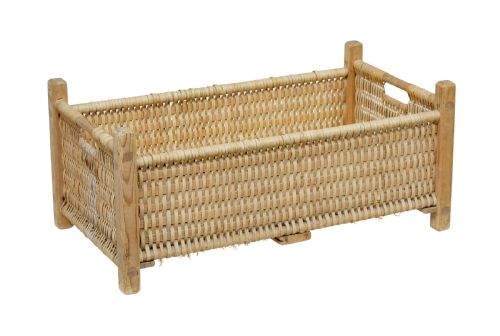


Antique Wooden Hearth Storage
Antique wooden hearth storage comprises practical vessels designed to hold fuel by the fireplace, offering both functional utility and period character.
Antique Wooden Hearth Storage
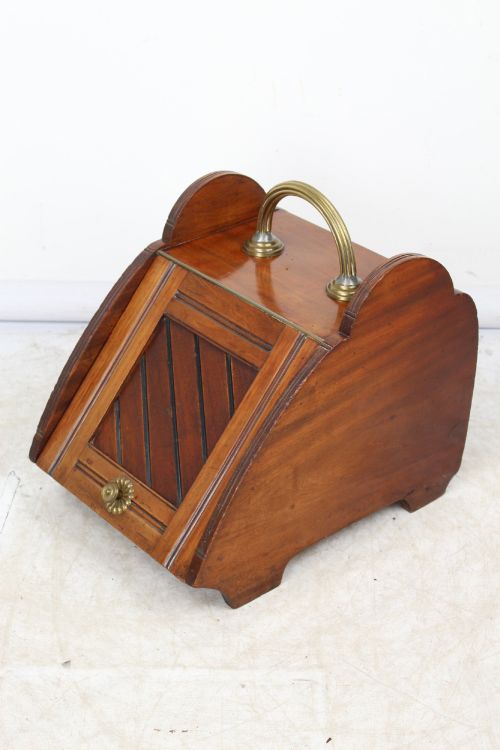
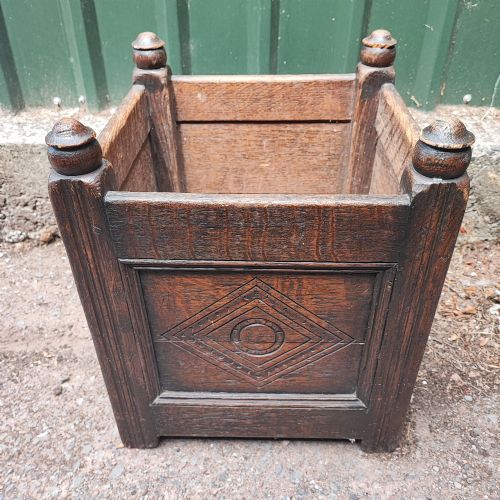
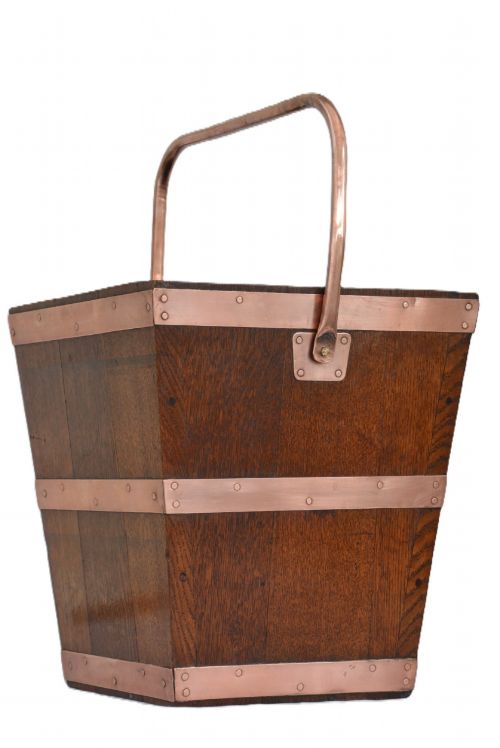
The most common forms on this page include oak coal scuttles, purdoniums with fitted shovels, coopered peat buckets, and pine log boxes. You will also find walnut storage boxes and country baskets made from woven pine.
Originating from English, Scottish, and Scandinavian workshops, these items were built for daily use in domestic hearths. Their survival reflects robust construction methods and enduring utility in the home.
How they were made
The construction of these hearth vessels relies on traditional timber framing, coopered stave work, and woven basketry. Woods such as oak, pine, mahogany, and walnut provide the primary structure, often shaped into bins, buckets, and boxes.
Metal components reinforce the wooden bodies against heavy loads of fuel. Iron bands, brass handles, hinges, and liners protect the timber and assist with carrying coal and logs to the fire.
Listings span Victorian, Edwardian, and 18th Century periods, utilising oak, pine, walnut, mahogany, brass, and iron in log bins and coal scuttles.
What varies in quality
Quality in these pieces rests upon the selection of timber and the integrity of the joinery. Fine examples display choice grains in walnut or mahogany, tight coopered staves, and well-fitted metal liners that survive from the period of manufacture.
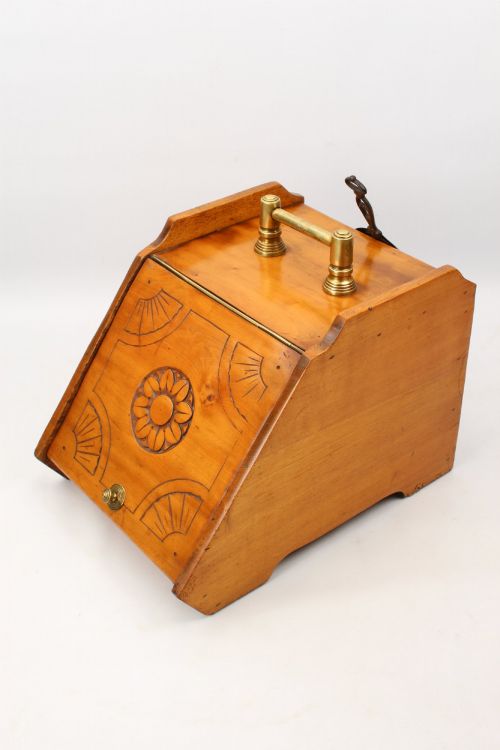
Decorative detailing further separates standard utility items from finer examples. Carved wooden fronts, inlaid rosewood, and substantial brass mounts indicate pieces commissioned for formal rooms rather than basic service areas.
The Antique Wooden Hearth Storage Glossary
- Purdonium
- A specialised coal box designed with a hinged front flap and a tilt-forward compartment. This form conceals the fuel and usually stores a matching metal shovel inside.
- Coopered
- A method of construction where curved wooden staves are bound together with metal hoops, traditionally used for water buckets and peat bins.
- Slipper box
- A lidded wooden box with a sloping top, traditionally used for storing hearth slippers or fuel.
- Liners
- The removable metal inserts, typically made of zinc or tin, placed inside wooden coal buckets to contain ash and moisture.
Antique Wooden Hearth Storage: Frequently Asked Questions
What is a purdonium?
A purdonium is a dedicated hearth storage box featuring a downward-tilting front door that reveals a metal-lined interior for coal.
These pieces typically include a matching shovel stored inside a compartment at the back or side, keeping fuel tidy beside the fireplace.
How do I care for wooden hearth storage?
Keep wooden bins and buckets away from direct, intense heat sources to prevent the timber from drying out and splitting over time.
Apply a traditional wax polish occasionally to nourish the wood and maintain the surface finish of oak, walnut, or mahogany.
Are these pieces suitable for logs?
Many larger vessels, such as pine log boxes and coopered peat buckets, were built specifically to hold larger pieces of wood.
Smaller scuttles and purdoniums suit denser fuels like coal rather than bulky logs due to their internal dimensions.
What woods were commonly used?
Oak and pine appear most frequently, reflecting sturdy domestic utility in English, Scottish, and Scandinavian country settings.
Finer urban examples utilise mahogany, walnut, and rosewood to match formal nineteenth-century interior furnishings.