



Edwardian Fireside Purdonium
An Edwardian fireside purdonium brings practical coal storage to the hearth inside a neat wooden cabinet or metal bin.
Edwardian Fireside Purdonium
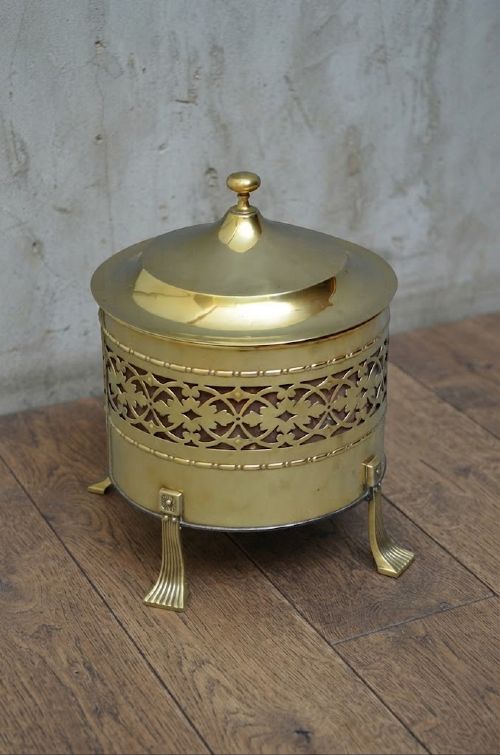
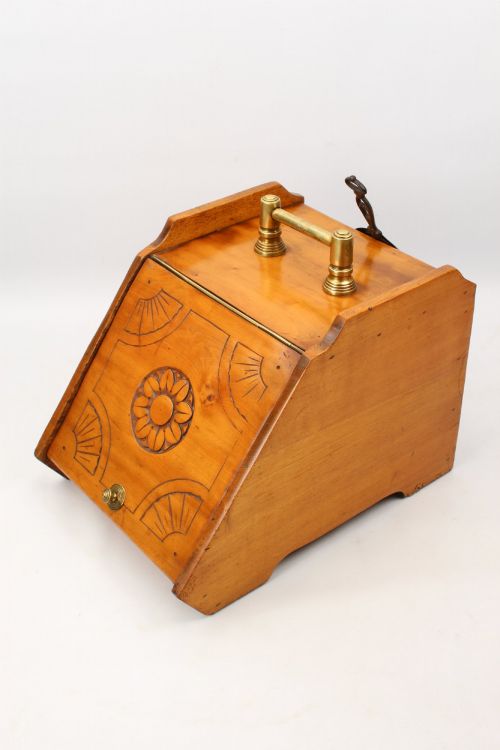
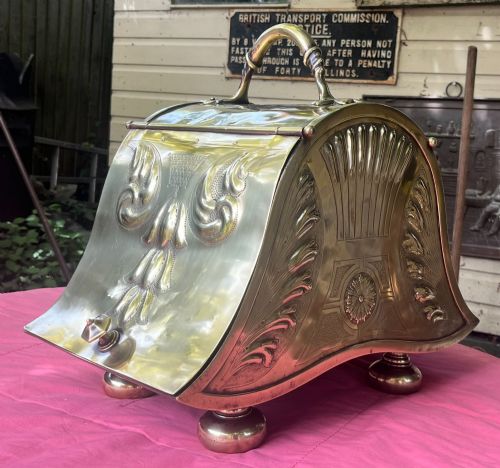
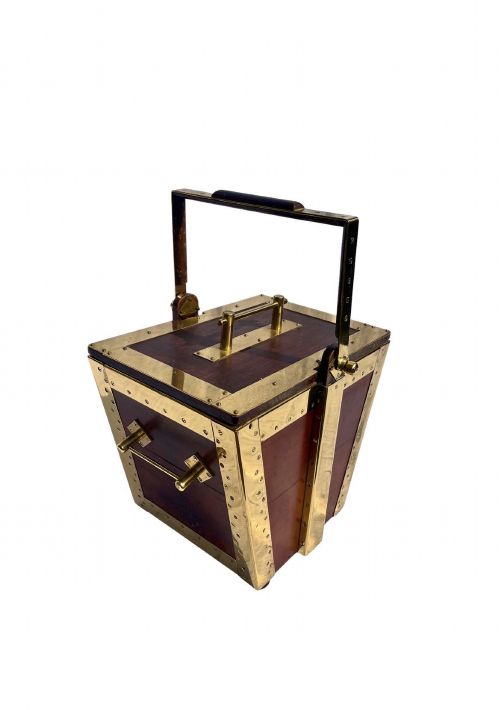
An Edwardian fireside purdonium is a dedicated domestic container designed to hold coal, logs, or kindling neatly beside a fireplace. These hearth accessories take several forms, appearing as traditional lidded wooden boxes, drop-front cabinets, and open metal buckets or scuttles.
The versions most common on this page date primarily from the Edwardian period and the late nineteenth century, built to serve the daily demands of coal fires in period rooms. Many examples include internal metal liners to protect the wood and dedicated scoops or shovels stored inside.
Materials and construction methods
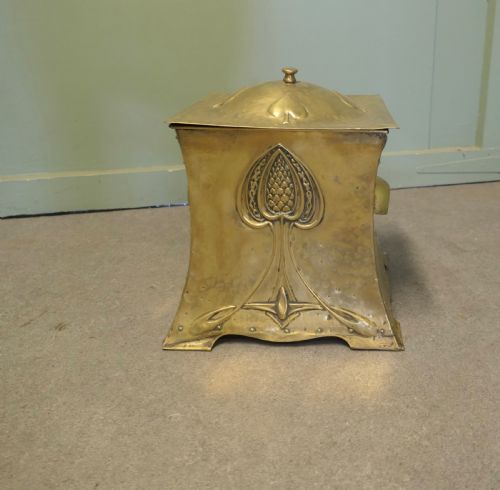
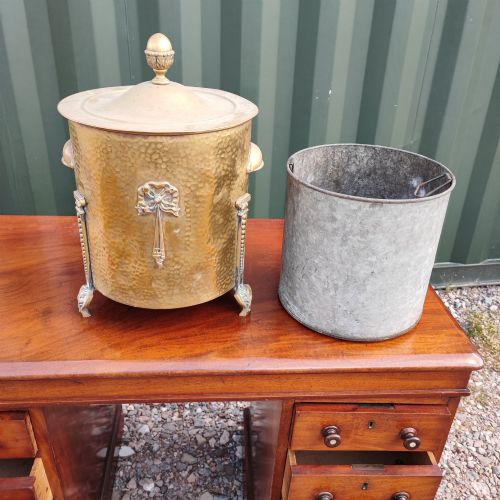
Cabinetmakers utilised solid and veneered timbers including oak, mahogany, walnut, and rosewood, frequently incorporating decorative brass handles, hinges, and pierced fretwork panels. Copper and brass feature heavily across freestanding buckets and scuttles, often beaten or styled with characteristic Art Nouveau and Arts and Crafts motifs.
Internal construction typically combined robust wooden frames with removable metal liners to catch coal dust and dross. Inlaid decoration, carved fronts, and ormolu mounts added refined detail to the sturdier timber cabinets.
A few lucky coal boxes still harbour the original shovel tucked quietly inside.
Distinctions in quality and execution
Quality rests in the selection of cabinet timbers, the crispness of any carving or marquetry inlay, and the weight of the brass or copper work. Finer purdoniums employ substantial timber framing, dovetailed joints, and heavy gauge metal liners rather than thin sheet construction.
The presence of matching shovels, original ceramic or metal liners, and well-cast handles separates standard utility coal boxes from finer cabinet examples designed to sit visibly in formal reception rooms.
The Edwardian Fireside Purdonium Glossary
- Purdonium
- A specialised coal container, usually built as a cabinet with a sloping drop-front door or a pivoting drawer to dispense fuel cleanly.
- Coal Scuttle
- A bucket-shaped vessel with a hinged handle and a tapered lip designed for carrying coal to the grate.
- Marquetry
- The art of applying pieces of veneer to a structure to form decorative patterns, frequently seen on rosewood and mahogany Edwardian lids.
- Fretwork
- Ornamental design created by cutting patterns through thin timber or sheet metal, common on brass panels and gallery backs.
- Liners
- The removable internal metal buckets inserted into wooden coal boxes to contain soot and protect the surrounding wood.
Edwardian Fireside Purdonium: Frequently Asked Questions
What is a purdonium?
A purdonium is a specialised coal container, typically designed as a lidded box or cabinet that keeps fuel tidy beside a fireplace.
They emerged during the Victorian and Edwardian eras to replace open coal buckets with more decorative furniture for the hearth.
How were these used?
These vessels stored coal or logs within easy reach of the hearth while containing loose dust and small debris.
Many included a matching metal scoop or shovel stored in side brackets or interior compartments for daily tending of the fire.
Do they all have liners?
Many wooden coal boxes and purdoniums include removable metal liners to catch soot and prevent moisture from damaging the timber.
Open metal buckets and scuttles generally held coal directly without a secondary internal container.