
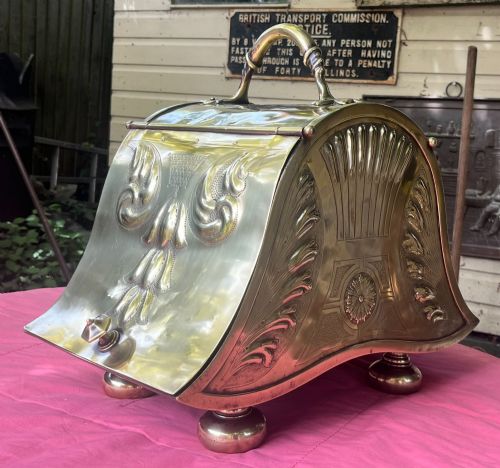


Hearth Coal Box
A hearth coal box is a practical fireside receptacle for fuel, pairing utility with period craftsmanship.
Hearth Coal Box
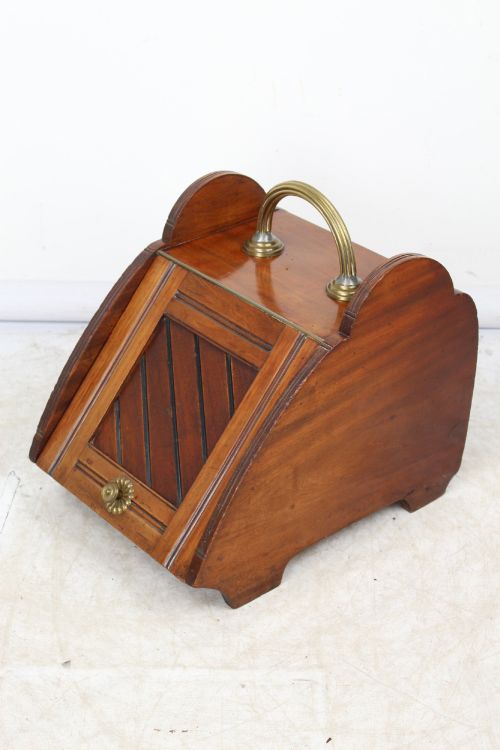
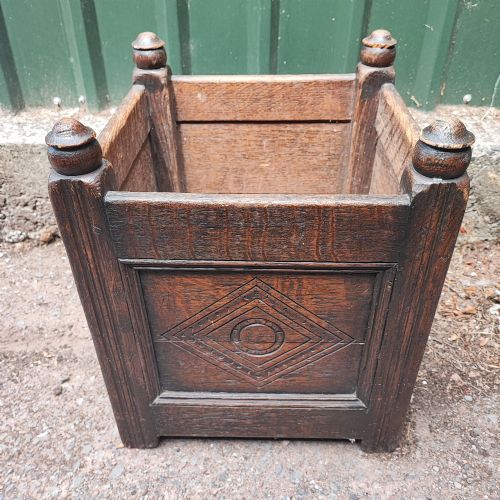
A hearth coal box serves as a functional fireside container for coal, logs, and fuel. These pieces appear across Victorian, Edwardian, and earlier periods, spanning styles from rustic country to Arts and Crafts.
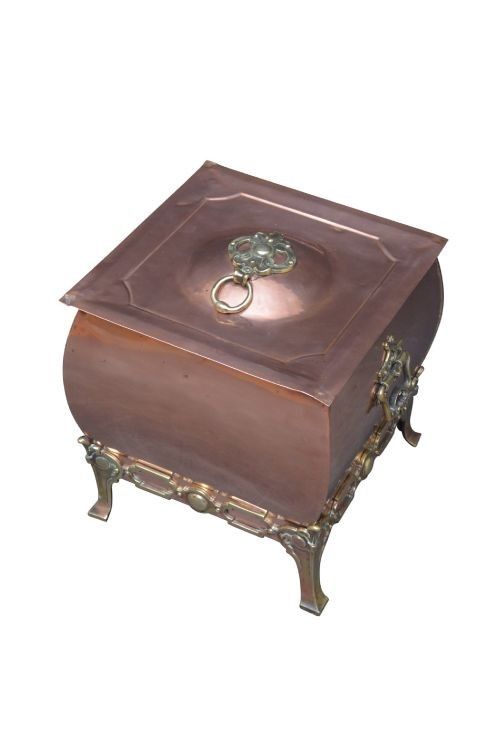
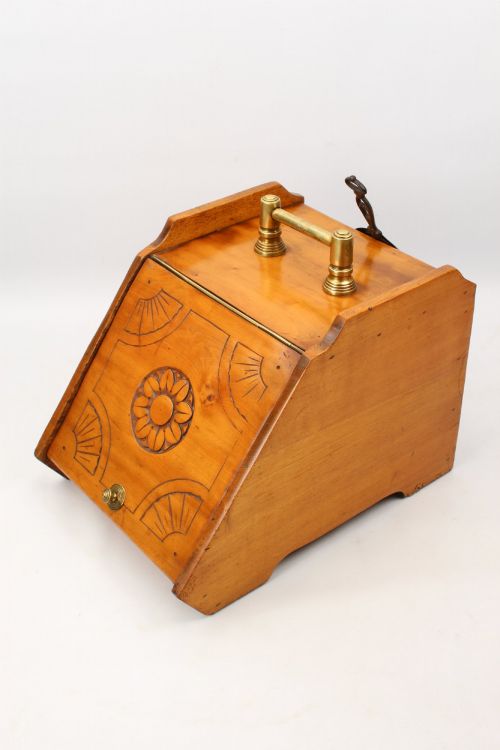
The most common examples on this page are Victorian and Edwardian wooden boxes and lidded metal scuttles, often constructed from oak, mahogany, walnut, brass, and copper.
Forms range from traditional sloped scuttles and lidded bins to dedicated purdoniums complete with interior metal liners and matching shovels.
Materials and Construction
Timber boxes utilise solid woods like oak, mahogany, walnut, and pine, frequently joined with traditional cabinetry techniques and fitted with brass handles, hinges, and decorative inlays.
Metal versions rely on hammered, spun, or cast brass, copper, and iron, sometimes featuring hand-beaten Arts and Crafts motifs, applied copper plating, or blacksmith-made wrought iron fittings.
Many surviving examples incorporate removable metal liners designed to contain coal dust and protect the outer timber or metal casing from moisture.
Some Victorian households deployed metamorphic coal boxes that doubled as gentleman's seats, quietly concealing soot behind polished rosewood.
Judging Quality
Quality rests upon the weight of the metal, the selection of timber grains, and the integrity of structural joints. Substantial gauge brass and solid hardwood construction distinguish finer work from lighter, utilitarian items.
Design sophistication also sets examples apart, seen in hand-hammered Art Nouveau details, crisp carved woodwork, and complete sets that retain their original zinc or tin liners and matching scoops.
Benham and Froud·Henry Loveridge
The Hearth Coal Box Glossary
- Purdonium
- A specialised coal box featuring a forward-tilting front door or chute designed for easy fuel retrieval. These boxes often include a built-in compartment for a shovel.
- Coal Helmet
- A traditional brass or copper bucket shaped with a flared, peaked rim resembling a classical helmet. This form usually has a swinging top handle and a fixed rear grip.
- Log Bin
- A large, open or lidded container intended for storing firewood rather than small coal pieces. They appear in oak, pine, and heavy metal variations.
- Metamorphic
- A descriptive term for furniture that transforms or serves multiple functions. In this context, it refers to coal boxes that double as decorative tables or seats.
Hearth Coal Box: Frequently Asked Questions
What is a purdonium?
A purdonium is a specific type of Victorian or Edwardian coal box featuring a sloping front door that drops forward to dispense fuel. They frequently house an internal metal liner and include a dedicated slot for a shovel on the side.
This form kept coal neatly contained beside the fireplace while offering a more refined appearance than an open bucket.
How do I use a coal box today?
These boxes function well beside modern wood-burning stoves or open fireplaces to store kindling, logs, or coal. Many people utilise the lidded compartments to hide hearth accessories out of sight.
Retaining the original metal liner allows for safe storage of solid fuel without damaging the surrounding wood or floor.
How do I tell Victorian from Edwardian boxes?
Victorian coal boxes often display heavier carved mahogany or oak detailing, deep inlays, and formal lines. Edwardian pieces tend to align with lighter Arts and Crafts or Art Nouveau aesthetics, favouring hammered copper and simpler geometric brass accents.
Examining the construction methods and metal patination helps clarify the manufacturing era.
Did all coal boxes come with shovels?
Many lidded bins and purdoniums included purpose-built wooden or metal scoops designed to fit into side brackets or interior compartments. Over the decades, these original shovels frequently became separated from their containers.
Finding a box that retains its matching shovel is a notable bonus for collectors.