


Vintage Fireplace Fender
A vintage fireplace fender grounds a hearth with metal and leather, protecting the room while framing the fire.
Vintage Fireplace Fender
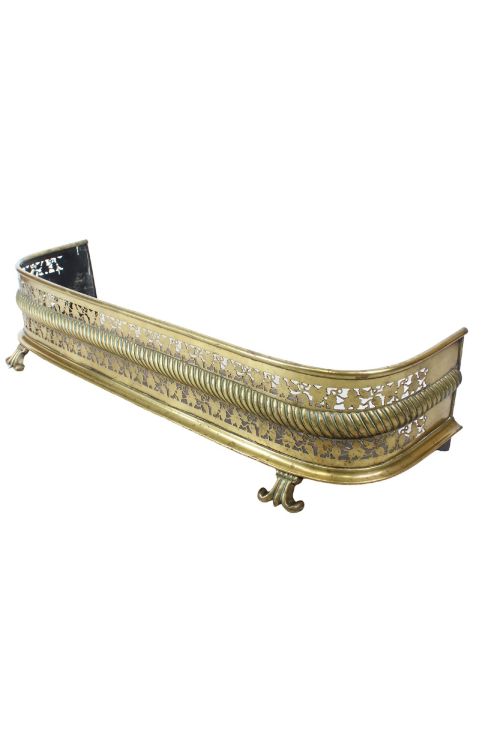
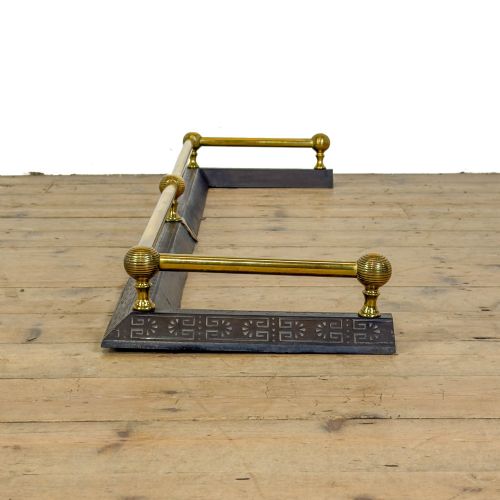
A vintage fireplace fender sits on the hearth to contain ash and embers while defining the fireplace surround. These pieces range from simple low curbs to substantial seating structures designed for the hearth.
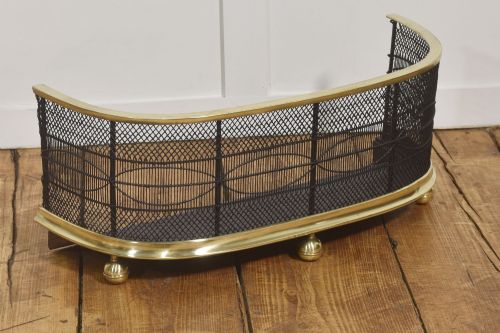
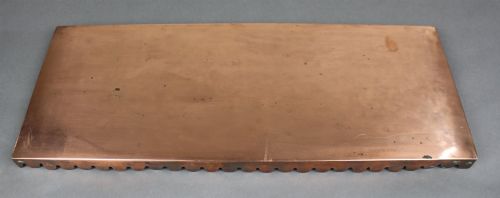
The most common examples on this page are brass and club styles originating from the Victorian and Edwardian periods. They appear alongside spark guards, nursery fenders, and copper hearth plates dating across the nineteenth and early twentieth centuries.
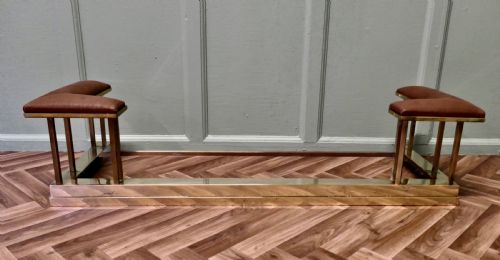
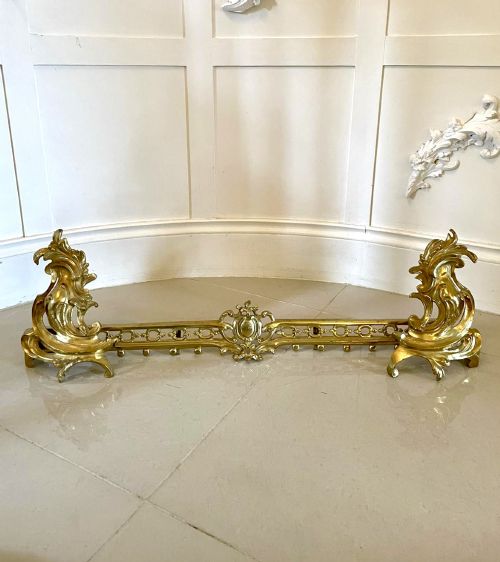
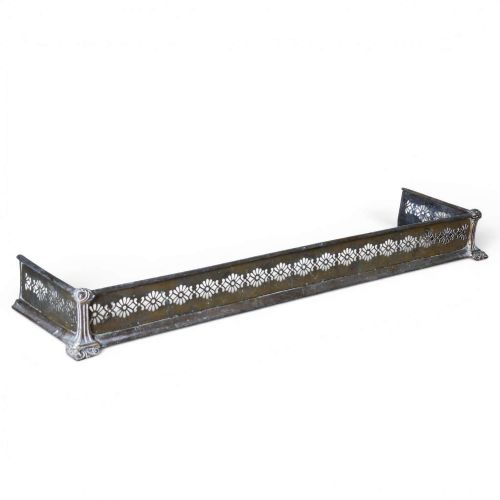
Makers produced these hearth accessories in forms extending from simple pierced brass channels to large club fenders with leather upholstered seats. Styles stretch from restrained Georgian and Regency shapes to ornate French Rococo and crisp Art Deco lines.
How they were made
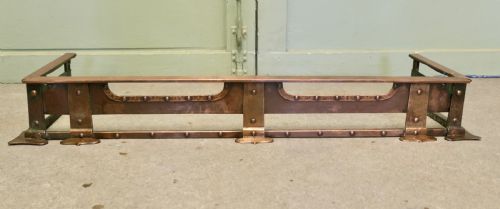
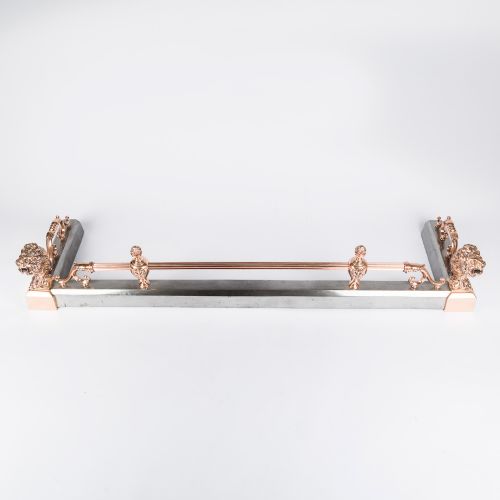
Makers constructed these items using rigid structural metals including brass, cast iron, steel, and bronze. Artisans shaped sheet copper and iron into pierced kerbs, riveting plates and beating metal surfaces by hand.
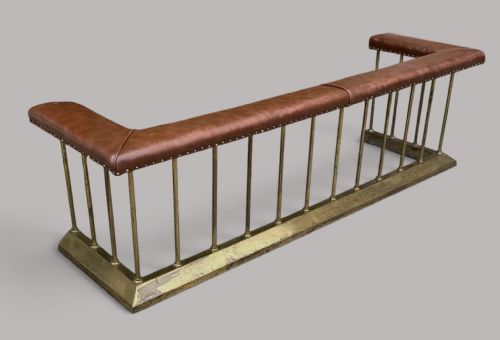
Upholstered seating versions incorporate mature tan leather fixed over internal padding and frames. Wire mesh and iron rods form folding spark guards and protective nursery barriers.
Listings feature periods spanning from Regency and Georgian eras through Victorian, Edwardian, and Art Deco times.
What varies in quality
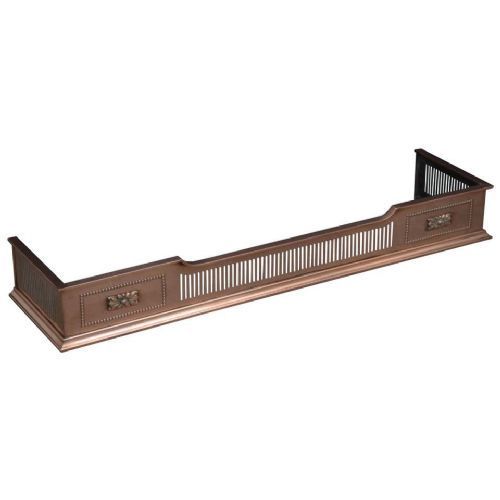
Quality rests on the weight of the metal and the crispness of decorative details such as flower patera, beaded decoration, and pierced brass work. Substantial frames with heavy gauge brass or iron demonstrate superior construction compared to lighter alternatives.
The execution of leather upholstery on club fenders, including the depth of buttoning and the maturity of the hide, separates standard pieces from finer examples. Intricate hand-beaten copper work and riveted joints also distinguish the better items.
The Vintage Fireplace Fender Glossary
- Club fender
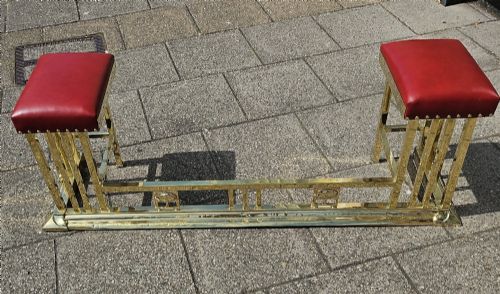
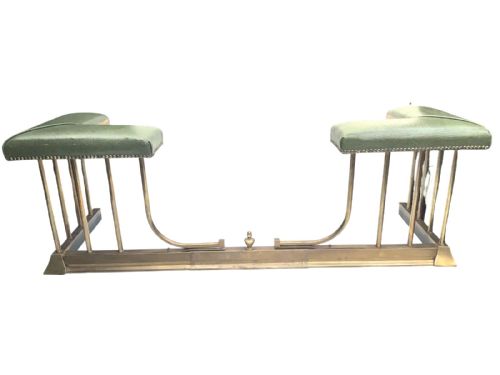
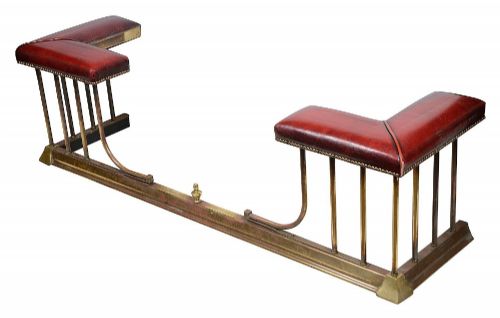
- A low fireside seat built around a metal frame with upholstered top rails. These pieces allow people to sit directly by the hearth.
- Nursery fender
- An tall protective metal barrier designed to keep children safely away from open flames. They often incorporate mesh panels and clothes rails.
- Patera
- A circular ornamental motif carved or stamped in relief to resemble a classical libation dish. They appear frequently on Victorian copper and brass frames.
- Spark guard
- A folding wirework or mesh screen placed in front of an open fire to catch stray embers. These guards usually comprise tripartite hinged sections.
- Kerb
- The low border or frame marking the perimeter of a hearth. Many brass fireplace fenders serve directly as decorative kerbs.
Vintage Fireplace Fender: Frequently Asked Questions
What is a club fender?
A club fender is a hearth accessory featuring upholstered top rails that function as seats beside the fire. These structures combine metal frames in brass, iron, or steel with leather cushions.
Victorian and Edwardian makers produced these pieces to provide comfortable seating directly around the fireplace opening. They remain practical additions to traditional hearths.
What metals were used?
Makers utilised brass, copper, cast iron, steel, and bronze to construct these hearth surrounds and guards. Brass appears most frequently, often paired with steel or iron components.
Arts and Crafts pieces frequently feature beaten copper with riveted details. French items often showcase gilded brass or ornate neoclassical castings.
How do I clean old brass?
Clean old brass gently using a soft cloth to preserve the historic patina built up over decades of use. Avoid harsh abrasive compounds that strip away the aged surface character.
Polished brass finishes require occasional light maintenance to maintain their brightness. Unpolished pieces benefit simply from dust removal.