
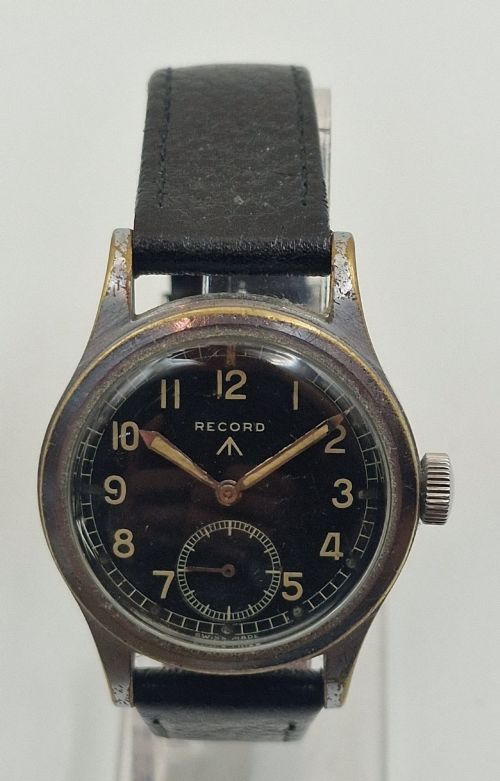
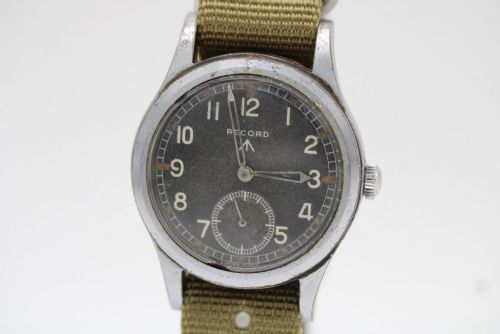
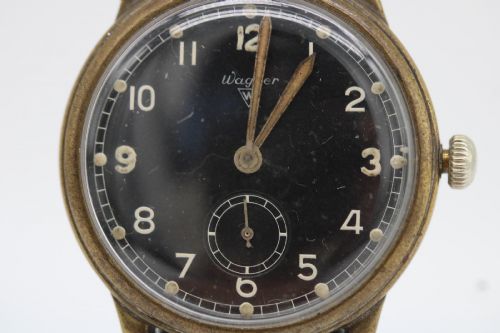


Vintage Field Watch
A vintage field watch brings utilitarian ruggedness to the wrist, offering reliable mechanical timekeeping forged in twentieth-century conflicts.
Vintage Field Watch
When you search for a vintage field watch, you encounter robust military issue timepieces and related navigational instruments designed for active service. The selection spans several decades, with items originating from the 1910s Edwardian period through to the 1940s WWII era and 1960s mid-century military designs.
You are most likely to meet wristwatches and navigational instruments featuring distinct military specifications, such as the 1940s military issue pieces and Army Trade Pattern variants. These instruments reflect the practical requirements of armed forces, utilising straightforward dial layouts built for legibility under harsh conditions.
The objects on this page bridge everyday historical wear with functional utility, representing manufacturers and contracts from British, German, Swedish, and English military service. Each piece carries the tangible marks of its era, from standard steel cases to specialised 24-hour dials.
What varies in quality
The distinction between pieces often lies in the originality of components such as dials, hands, and movement calibres. Watches retaining their matching military markings, original issue numbers, and authentic tactical dials sit at a different level from those with replacement parts.
Standard of movement finishing and the precision of the mechanical calibre also differentiate examples, with specialised jewelled movements representing higher production standards. The integrity of the case metal and the clarity of the crystal further influence the overall character of the piece.
Some military compasses from the 1910s still point true north after a century of service.
Record·Wagner·Belair·Revue Vertex·Omega·Tritona·Timor
The Vintage Field Watch Glossary
- Calibre
- The specific internal mechanical movement built by a manufacturer to power the watch. Collectors examine the calibre number to verify the authenticity and period of the mechanism.
- Army Trade Pattern
- A standardised specification used during the Second World War for British military issue watches. These ATP pieces provide reliable timekeeping under strict procurement guidelines.
- Dirty Dozen
- A group of twelve specific watchmakers commissioned by the British Ministry of Defence during WWII. These wristwatches display distinct military broad arrow markings on the case back.
- A.T.P.
- An abbreviation denoting Army Trade Pattern military issue timepieces. Pieces bearing this designation signify standard procurement for ground troops during the 1940s.
- Navigational Instrument
- A mechanical device used for plotting courses and direction in the field. These items share the robust construction principles found in military wristwatches.
Vintage Field Watch: Frequently Asked Questions
What is a field watch?
A field watch is a durable, legible timepiece originally commissioned for military personnel during active service. These watches prioritize clear dials and robust cases over decorative elements.
Such timepieces draw from strict government specifications to ensure reliability in harsh environments.
How do I date a military watch?
Dating relies on case back markings, serial numbers, military broad arrows, and specific movement calibres. Reference numbers often point to exact contract years.
Historical context and procurement patterns further narrow down the production decade of the item.
What does ATP mean on a watch?
ATP stands for Army Trade Pattern, designating standard military issue watches from the 1940s. These pieces were procured in large quantities for ground forces.
Such watches follow strict specifications set down by military departments.
Are these watches waterproof?
Vintage field watches generally lack modern water resistance due to their age and historical gasket technology. Exposure to moisture can easily damage the vintage mechanical movement.
Collectors treat these pieces as water-resistant only to their original period standards.
How should I wear a vintage military watch?
Pairing the watch with appropriate period straps like webbing or leather preserves its utilitarian aesthetic. Regular servicing keeps the mechanical movement functioning reliably.
Treating the watch with care ensures the delicate acrylic or glass crystal remains intact.