
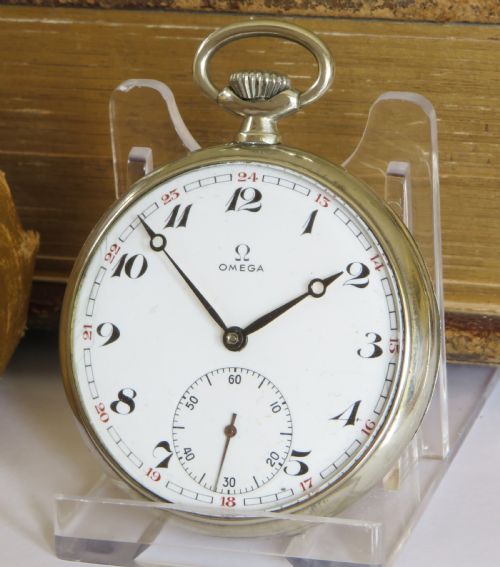


1940s Omega Watch
A 1940s omega watch offers durable mechanical reliability and mid-century horological design that collectors seek for everyday wear.
1940s Omega Watch
A 1940s omega watch encompasses wristwatches and pocket watches spanning mid-century military, utility, and classic styles. These pieces originate from the 1940s and reflect the horological production of that decade.
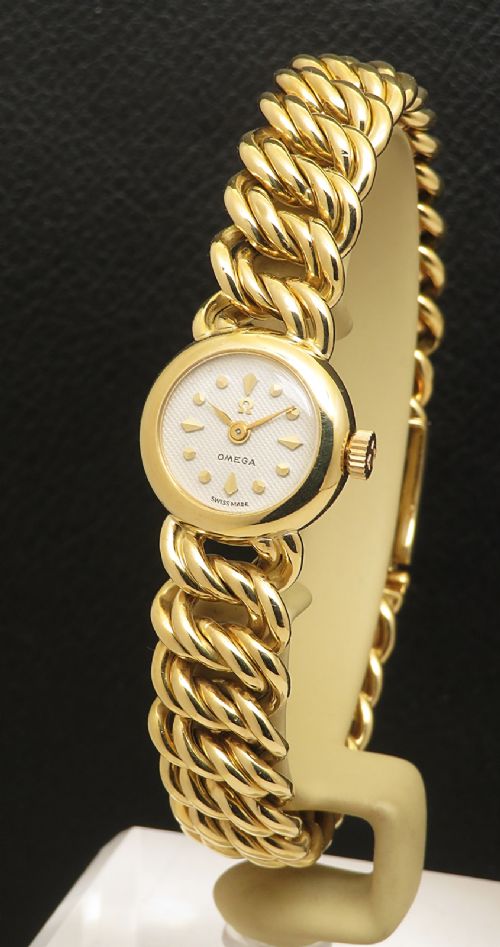
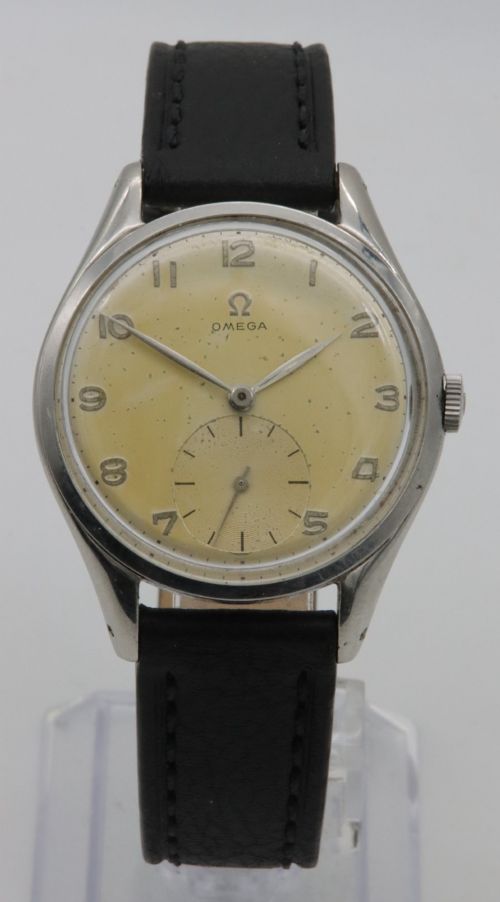
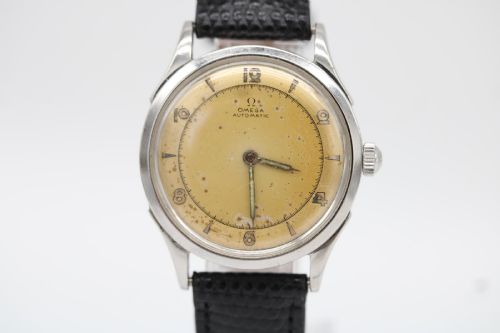
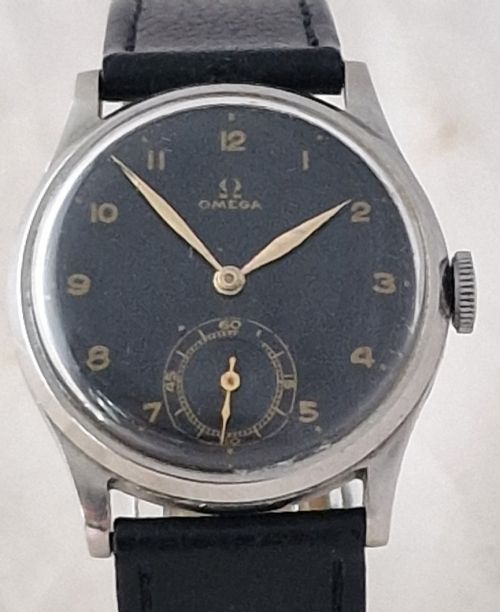
The wristwatches on this page appear most frequently in stainless steel, gold, and gold-plated forms, often featuring manual wind or bumper automatic movements. Military issues and jumbo-sized cases also feature among the wristwatches.
Pocket watches from the same period appear alongside wristwatches in the inventory. These comprise standard and military issue variants, sometimes accompanied by chains.
How They Were Made
Cases utilise stainless steel, 18ct yellow gold, 9ct gold, nickel-plated metal, and silver. Dials feature enamel elements paired with glass or acrylic crystals.
Movements rely on mechanical calibres such as the 30T2 and bumper automatic systems. Leather straps complete the construction of the wristwatches.
1940s Omega Watch Retail Price Guide 2026
Typical asking prices for 1940s omega watch among the pieces listed under this phrase on Sellingantiques today, from the lower quarter to the upper quarter. They describe what is for sale here now, not the wider market.
Materials span stainless steel, 18ct yellow gold, 9ct gold, nickel-plated metal, silver, leather, acrylic, and glass.
What Varies in Quality
Solid gold or jumbo stainless steel cases sit at the top of the range compared to standard plated metals. Original military issue pieces carry historical significance that influences desirability.
Internal mechanical complexity, such as calibre variations and bumper automatic mechanisms, distinguishes standard production models from specialised watches.
The 1940s Omega Watch Glossary
- Bumper automatic
- An early automatic wristwatch movement where the weighted rotor swings back and forth against springs rather than rotating fully. This mechanism creates a distinctive pulse felt on the wrist.
- Calibre
- The specific designation given by the manufacturer to an internal watch movement type. Identifying the calibre helps determine the mechanical lineage of the piece.
- Manual wind
- A mechanical watch movement powered by hand-winding the crown rather than through automatic wrist motion. Owners wind these daily to maintain operation.
- Military issue
- Equipment commissioned directly for armed forces personnel during wartime service. These pieces typically feature specific service markings on the case back.
- Jumbo
- A colloquial term used by collectors to describe wristwatches with larger-than-average case diameters for their era. These pieces measure broader across the wrist than standard period counterparts.
1940s Omega Watch: Frequently Asked Questions
How do I wind a manual watch?
Rotate the crown clockwise between your thumb and forefinger until meeting gentle resistance. Stop immediately once tension builds to avoid damaging the internal spring.
Perform this action at a consistent time each day to maintain steady timekeeping. Pulling the crown outward allows hands adjustment before pushing it flush again.
What is a bumper automatic movement?
A bumper automatic relies on a semi-circular weighted rotor that swings within a limited arc rather than spinning in a full circle. Springs cushion the rotor at each end of its travel, producing a noticeable knock against the wrist.
This early self-winding technology preceded the fully rotating rotor designs common in later decades. It represents a specific transitional phase in mid-century horology.
Are these watches waterproof?
Period timepieces lack modern rubber seals and screw-down gaskets. Exposure to moisture can easily compromise the delicate internal metal components and dials.
Keep these watches away from water, rain, and humidity. Professional servicing helps maintain what original resistance remains, but complete submersion should be avoided.
How do I identify military models?
Military issue pieces often feature specific government or armed forces engravings on the exterior case back. Dials may also display broad arrow symbols or simplified railway tracks for tactical legibility.
Such watches were issued to personnel in branches like the RAF or Swedish military. Documentation and serial numbers provide further confirmation of service origins.