


Vintage Expandable Dining Table
A vintage expandable dining table adapts to your room with clever mechanics, bringing period timber and effortless hosting to the dining room.
Vintage Expandable Dining Table
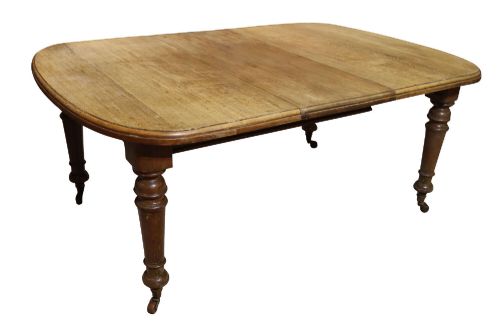
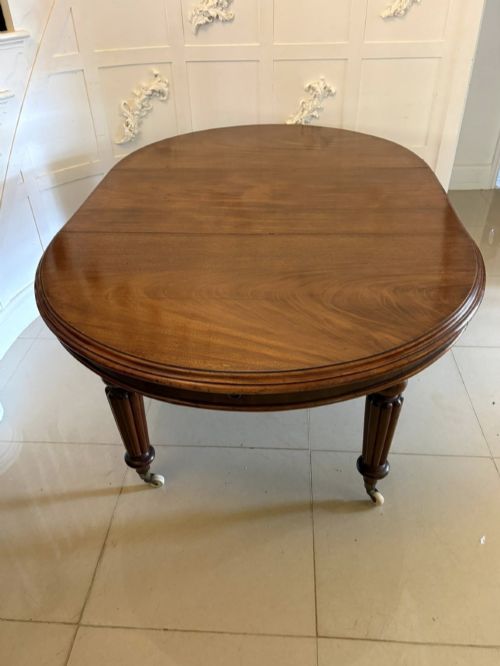
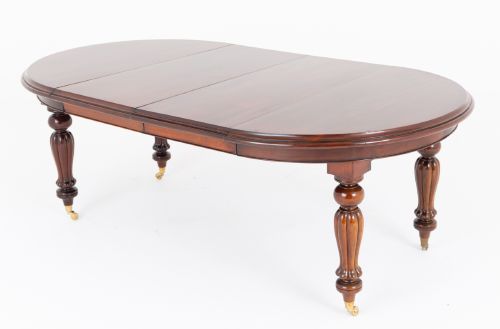
A vintage expandable dining table represents the ingenuity of nineteenth-century furniture design, where hosts needed furniture that could grow for feasts and shrink for daily life. The pieces on this page span the Victorian, Regency, and William IV eras, anchored predominantly by rich mahogany timbers.
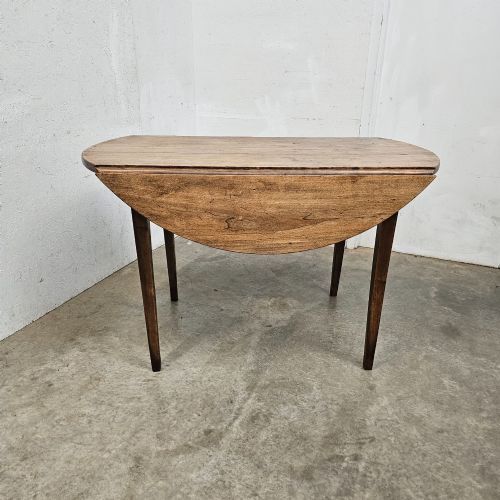
You will encounter wind-out mechanisms, drop-leaf D-end configurations, and pillar tables that accept extra leaves to seat anywhere from four to ten guests. These tables combine solid frames with clever folding or sliding mechanisms developed to make hosting simpler.
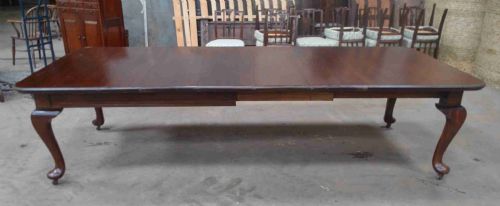
While earlier Georgian and Regency models favour clean architectural lines, later Victorian examples introduce robust carved details, cabriole legs with claw and ball feet, and heavy brass castors. Oak gateleg and walnut draw-leaf variants also appear, offering alternative woods and folding formats from different centuries.
Construction and materials
Cabinet makers relied heavily on solid mahogany and figured mahogany veneers, selecting timber for deep grain patterns and warm natural tones. Secondary woods provide structural strength beneath the polished surfaces, while brass components form the internal wind-out tracks and external castor wheels.
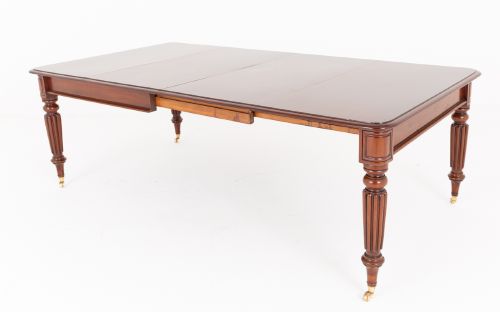
Extending mechanisms utilise precision metal winding screws or drop-leaf hinges that allow sections to glide smoothly apart. Table leaves drop into place along wooden alignment pins, ensuring the top remains flat and stable when fully extended.
Many tables retain their original winding handles, stored away for decades like forgotten keys to a mechanical feast.
Judging timber and mechanism quality
Quality rests on the choice of timber and the smoothness of the extending mechanism. Superior tables display densely figured mahogany across every added leaf, ensuring the grain matches seamlessly when the table opens to its full length.
The integrity of the internal winder and the sturdiness of the leg fixings dictate daily utility. Tables retaining original brass castors and smoothly operating screw mechanisms represent the higher tier of period craftsmanship.
Gillows·Thomas Treherne
The Vintage Expandable Dining Table Glossary
- Wind out
- A mechanical system using a long steel screw turned by a removable handle to pull the table halves apart for extra leaves. This innovation defined nineteenth-century extending tables.
- Drop-leaf
- A table design featuring hinged flaps on either side that fold down to save space when not in use. These flaps are supported by swing legs.
- D-end
- A table configuration where the ends form semicircles, resembling the letter D. When separated, these ends often serve as console tables or join with leaves to form a long dining surface.
- Draw leaf
- A clever mechanism where auxiliary leaves store beneath the main top and pull out from the ends when needed. This eliminates the need to store separate loose leaves in a cupboard.
Vintage Expandable Dining Table: Frequently Asked Questions
How do I operate the winding mechanism?
Insert the crank handle into the socket beneath the table rim and turn it steadily clockwise or anticlockwise. This rotates an internal screw thread that guides the two halves apart.
Once the gap is wide enough, drop the extra leaves into place and turn the handle in reverse to lock the top tight.
How should I care for a mahogany dining surface?
Dust the timber regularly with a soft, dry cloth and apply a quality beeswax periodically to nourish the grain. Avoid placing hot dishes directly on the polished wood by using thick mats.
Keep the table away from direct radiators and bright sunlight to prevent the timber from drying out or fading unevenly over time.
Can I seat ten people comfortably?
Many extended Victorian and William IV formats accommodate up to ten diners when fitted with their full complement of extra leaves. Check the length measurements and leg placements to ensure chairs fit easily underneath.
Tables with pillar supports or gateleg frames offer flexible leg room compared to standard four-leg designs.
How do I tell a Regency table from a Victorian one?
Regency tables typically display restrained classical proportions, slim pedestals, and brass toe caps inspired by ancient Greek and Roman forms. Mahogany surfaces are often paired with subtle brass inlay.
Victorian models tend to be heavier in scale, featuring carved cabriole legs, claw and ball feet, and elaborate mahogany figuring. The mechanisms also became more standardised with industrial production.