
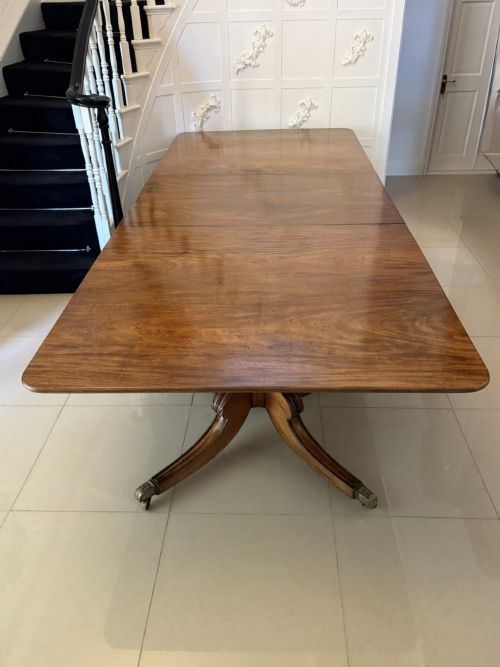
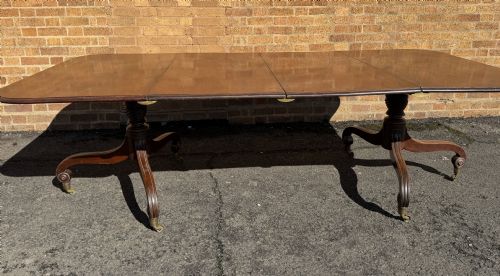
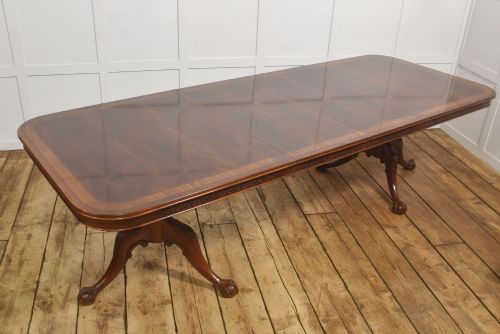
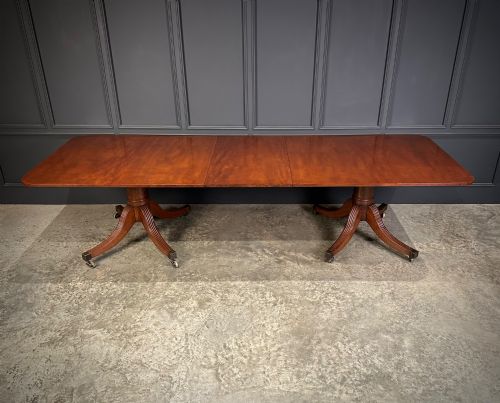
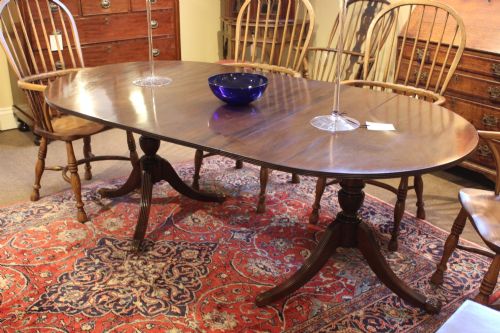
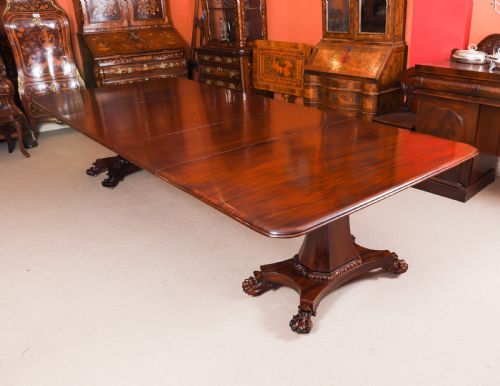
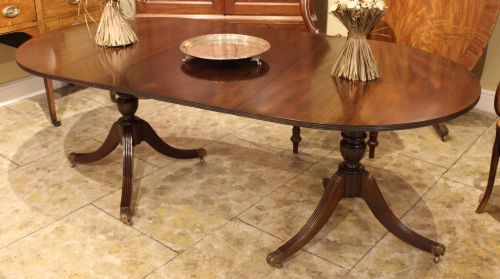


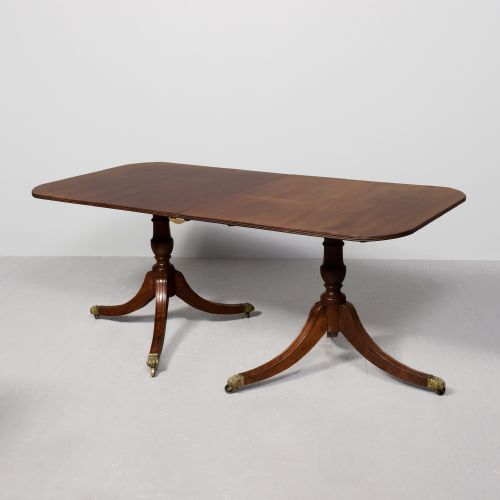


Twin Pedestal Conference Table
A twin pedestal conference table provides a commanding boardroom presence through solid timber construction and versatile extending leaves.
Twin Pedestal Conference Table
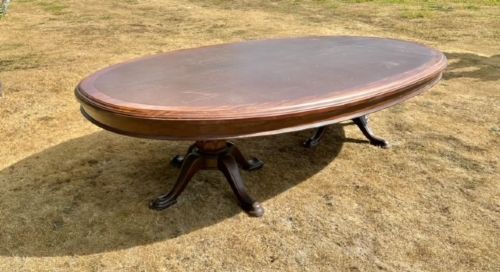
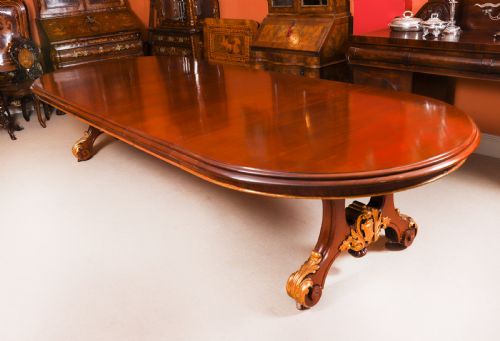
When searching for a twin pedestal conference table, buyers encounter formats originally designed for domestic dining during the Georgian, Regency, and Victorian periods alongside later revival pieces. These examples span the nineteenth century through to the early twentieth century, taking the form of two-pillar or twin-pillar dining tables that function equally well as boardroom surfaces.
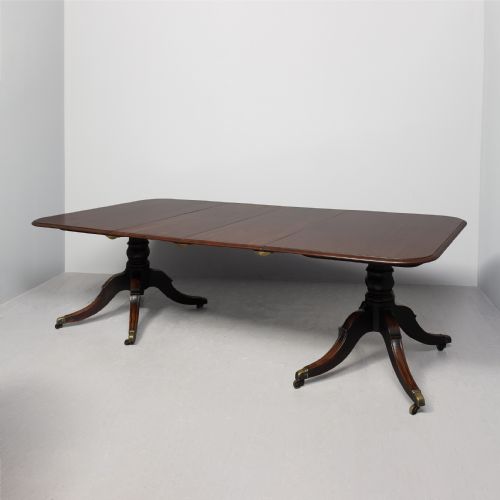
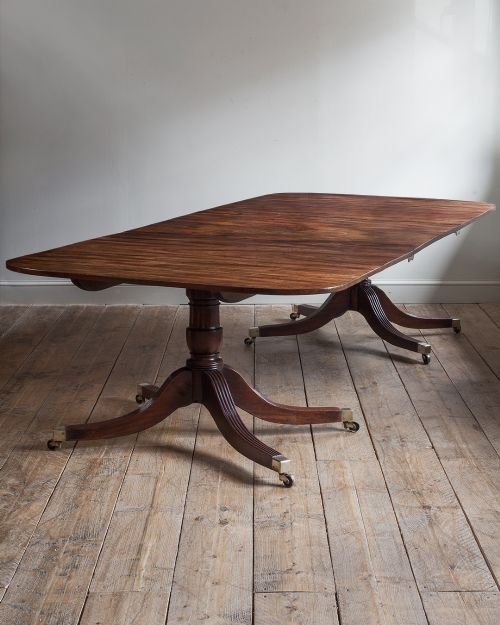
The standard configuration utilises two robust central pedestals supporting a long top, frequently augmented with extra removable leaves to accommodate larger gatherings. Pieces range from genuine early nineteenth-century examples originating around eighteen hundred to later Edwardian and revival iterations modelled on George III and Regency aesthetics.
Judging quality in twin pedestal conference tables
The distinction between standard examples and the finest works rests upon the selection of figured mahogany timber, the crispness of carved details on the pedestals, and the integration of extending leaves. Superior pieces demonstrate exceptional proportion and proportion across large seating capacities.
Maker attribution elevates certain tables, particularly those bearing the stamp or documentation of established workshops like Wylie & Lochead or William Trotter. The precision of the joinery in the pillar mechanisms and the richness of the polished timber finish further separate standard production from exceptional examples.
Current listings feature tables spanning the Georgian, Regency, Victorian, and Edwardian eras, constructed primarily from mahogany with brass and satinwood details.
Wylie & Lochead·William Trotter
The Twin Pedestal Conference Table Glossary
- Twin pedestal
- A table construction supported by two distinct central columns or pillars rather than four corner legs. This design allows maximum legroom for seated occupants.
- D end
- A table end shaped in the semi-circular outline of the letter D. These sections frequently detach or combine with centre leaves.
- Extending table
- A dining or boardroom table designed to accept additional leaves. This mechanism alters the overall length to suit varying numbers of guests.
- Satinwood
- A durable, lustrous exotic timber native to India and Sri Lanka. Makers utilised its pale yellow grain for decorative banding and inlay work.
- Brass castor
- A small swivelling wheel housed in a brass mount fitted to the base of table feet. It permitted effortless repositioning of heavy timber furniture across grand rooms.
Twin Pedestal Conference Table: Frequently Asked Questions
What is a twin pedestal conference table?
A twin pedestal conference table is a large dining or boardroom table supported by two central pillars rather than traditional corner legs. These tables often feature extending mechanisms and removable leaves.
Originally built during the Georgian, Regency, and Victorian eras, these tables now serve professional boardrooms and large dining spaces while retaining their historical character.
How do I seat people comfortably?
The dual-pillar construction eliminates corner legs, which allows chairs to fit freely around the entire perimeter of the table. Extra leaves adjust the length for larger groups.
Selecting a table with sufficient length and removable leaves ensures flexibility for daily meetings or expanded gatherings.
How do I identify a Regency table?
Regency tables date from the early nineteenth century and typically feature dark mahogany, brass castors, and robust central pedestals. Revival versions emerged later in the century.
Examination of the timber grain, construction joints, and hardware helps distinguish period pieces from later Edwardian or twentieth-century reproductions.
What materials were used?
Mahogany serves as the primary timber across these tables, often selected for its rich grain and durability. Satinwood banding and brass details frequently accent the main structure.
Some surfaces incorporate leather panels and gold leaf tooling, reflecting the formal interior styles of the nineteenth century.