



Vintage European Landscape Painting
A vintage european landscape painting brings the light and atmosphere of past centuries directly onto your wall.
Vintage European Landscape Painting
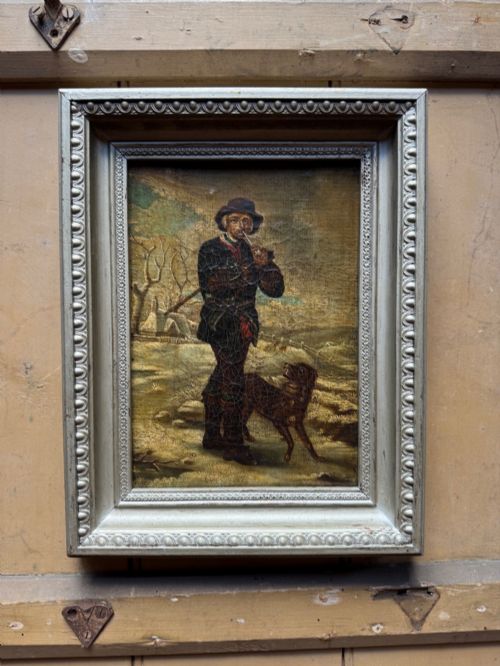
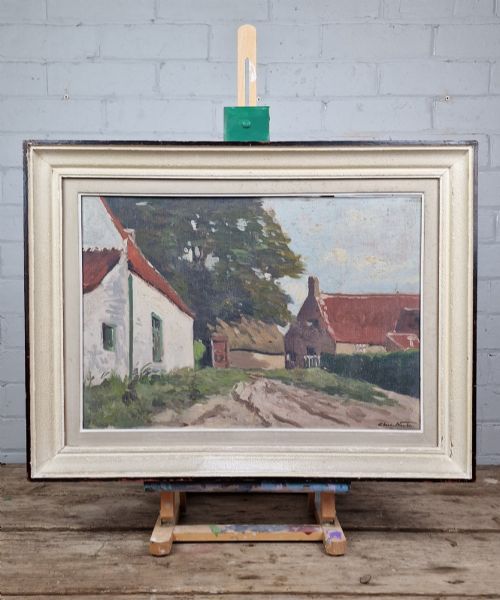
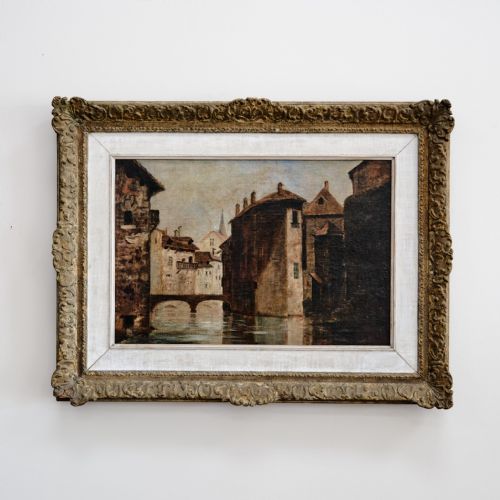
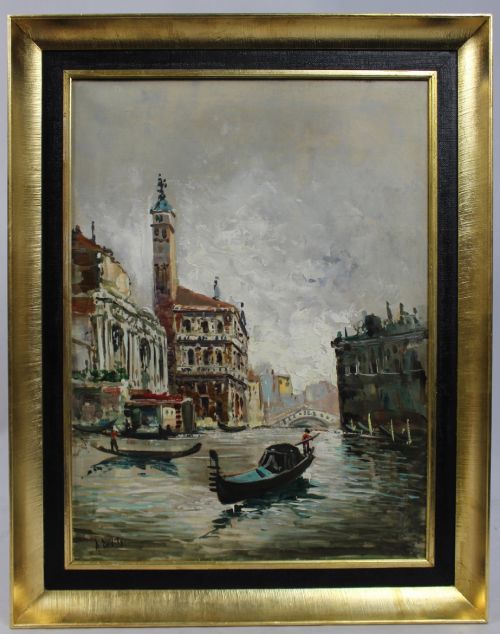
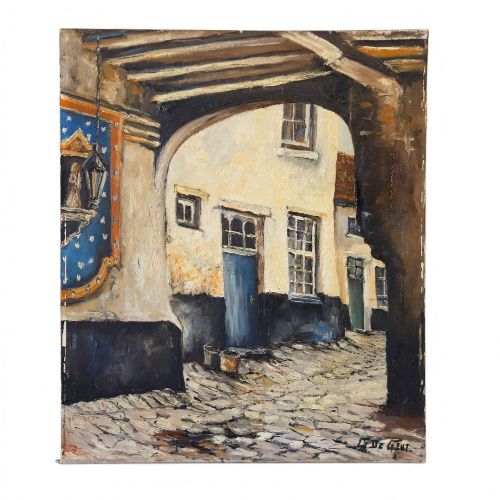
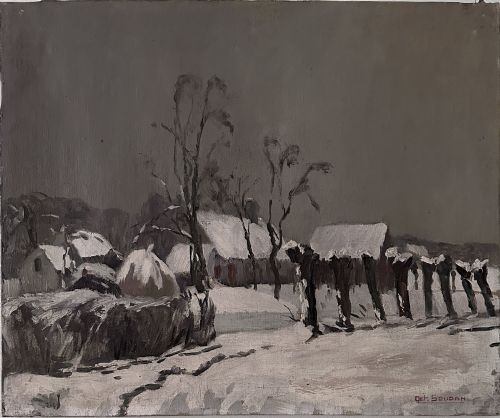
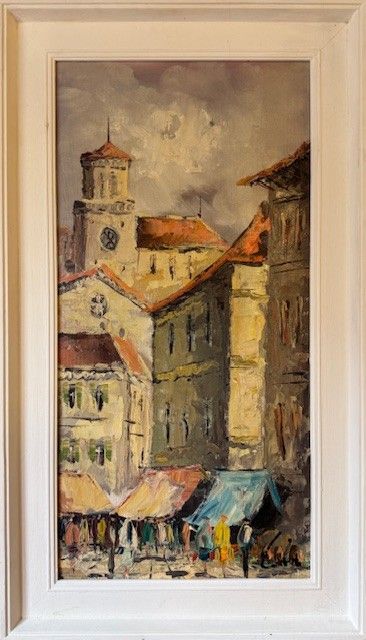
A vintage european landscape painting spans works executed in oil and watercolour across the nineteenth and twentieth centuries, capturing rural vistas, quiet farmyards, and urban street scenes. These pictures record the topography and daily life of regions from France and Italy to the Low Countries and Britain through changing artistic movements.
The most common examples on this page are oil paintings on canvas or board dating from the nineteen-thirties to nineteen-sixties, alongside nineteenth-century Romantic and Impressionist works. Subjects range from snow-capped alpine peaks and coastal views to Dutch lakes and continental market squares.
Collectors encounter diverse national schools, including French Post-Impressionism, German Expressionism, and British regional art. Each piece reflects the specific palette and brushwork characteristic of its period and geographic origin.
Materials and methods
Artists painted primarily with oil paint applied to stretched canvas, wooden panels, or heavy paper boards, often utilising gesso as a preparatory ground to seal the surface. Watercolours on paper appear frequently for lighter, more luminous topographical views.
Support materials shifted over time from traditional heavy wood panels and fine linen canvases towards commercially prepared boards and modern synthetic supports by the mid-twentieth century. Frames typically consist of wood, frequently ebonised or moulded, housing the composition.
Several artists packed watercolours into rucksacks to paint alpine streams while the snow still fell.
What determines quality
Quality rests upon the handling of light, atmospheric depth, and the confidence of the brushwork rather than the mere age of the canvas. Masterful command of tone separates evocative regional works from rigid or formulaic topographical records.
The integrity of the original paint layer and the harmony of the composition within its period frame dictate the overall success of the painting. Strong provenance or attribution to a documented artist elevates the historical interest of the piece.
Charles Houben·Antonio DeVity·Paul-Élie Gernez·Cecil Rochfort D'Oyly-John·Mercedes Legrand·Hendricus Joseph Dillens·Joseph W. Milliken·Job de Vogel·Noel Harry Leaver·Alois Arnegger·Franz Reder-Broili·Karel Frans Philippeau·Louis Smets·Henri Therme·William Dommersen
The Vintage European Landscape Painting Glossary
- Oil paint
- A slow-drying paint made of pigmented particles suspended in a drying oil, typically linseed oil. This medium allows for rich blending and textured impasto applications.
- Gesso
- A white paint mixture consisting of a binder mixed with chalk, gypsum, or pigment used to prepare a wooden panel or canvas for painting. It creates a smooth, absorbent working surface.
- Post-Impressionism
- A predominantly French art movement developing roughly between eighteen-eighty-six and nineteen-fourteen that extended Impressionism while rejecting its limitations. Practitioners relied on symbolic colours and heavier geometric forms.
- Impressionism
- A nineteenth-century movement characterised by relatively small, thin, yet visible brush strokes and an emphasis on accurate depiction of light. Artists aimed to capture a momentary sensory effect of a scene.
Vintage European Landscape Painting: Frequently Asked Questions
How do I date a vintage european landscape painting?
Dating relies on examining the stretcher frames, canvas preparation, and stylistic markers such as Impressionist or Post-Impressionist brushwork. Signatures, artist inscriptions on the reverse, and framing materials often narrow the decade of creation.
Comparative study of regional schools helps place undated works within the nineteenth or twentieth centuries.
Where were these landscape paintings produced?
These works originated across various European art centres and rural communities, including France, Italy, Belgium, Germany, the Netherlands, and Britain. Painters frequently travelled to capture specific topographical views such as alpine lakes and Venetian canals.
Local artist colonies also formed distinct regional styles, particularly in coastal and rural districts.
How should I care for an oil painting on canvas?
Keep oil paintings away from direct sunlight and dramatic fluctuations in humidity and temperature to prevent cracking in the paint layer. Dust the surface gently with a soft, dry brush without applying pressure.
Avoid using water or liquid cleaners on the canvas or exposed wooden panel.
What is the difference between oil paint and watercolour?
Oil paint uses an oil binder that dries slowly, allowing artists to blend tones and build thick, textured layers known as impasto. Watercolour uses water-soluble binders on paper, creating translucent washes of light.
Oils require rigid supports like canvas or board, whereas watercolours need paper protection behind glass.