
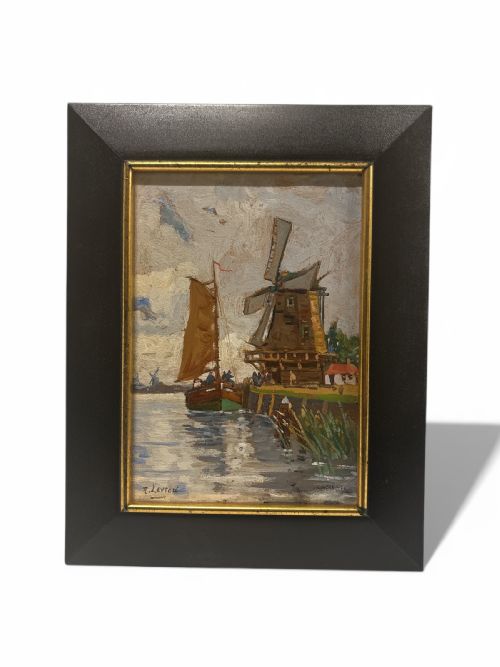
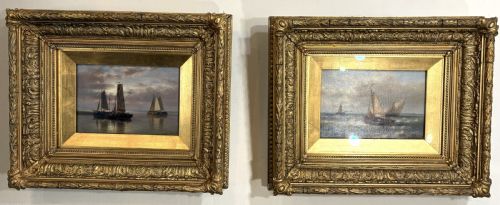


Vintage Dutch Coastal Scene
These vintage dutch coastal scene paintings capture maritime life through traditional oils on canvas, offering buyers classic windmill and sail boat views.
Vintage Dutch Coastal Scene
A vintage dutch coastal scene typically brings together maritime subjects like sailboats, windmills, and open waterways rendered in oil paint. These artworks draw upon the rich traditions of the 19th Century, Edwardian era, and mid-20th Century Dutch Revival movements. Buyers encounter these pieces framed in wood or giltwood, ranging from intimate oil on board studies to large canvases.
The selection on this page leans heavily toward 19th Century and early 20th Century works, alongside mid-century interpretations. Painters working in the Hague School and Impressionist styles populate the listings, offering varied perspectives on the Low Countries' shores. Works by listed artists sit alongside anonymous coastal views, giving collectors a broad spectrum of period representations.
Materials and methods behind the paint
Artists working on a vintage dutch coastal scene typically applied oil paint to stretched canvas or prepared wood panels. These oil on canvas and oil on board works utilise traditional pigments to capture the atmospheric light and cloud formations characteristic of the Low Countries. Painters built up textures with brushwork, sometimes applying thick impasto to suggest churning water or wind-swept skies.
Finished paintings are frequently housed in wood frames, occasionally enhanced with gold leaf or gilt finishes. These frames range from simple period mouldings to heavier giltwood constructions designed to complement the maritime subject matter. The physical support and framing methods reflect the standard workshop practices of the nineteenth and twentieth centuries.
Listings feature oil paintings on canvas and board from the nineteenth and twentieth centuries.
Distinguishing quality across the selection
The distinction between works rests upon the artist's handling of light, atmospheric perspective, and brush technique. Works associated with established painters or distinct regional schools demonstrate greater sureness in composition and colour harmony. The preservation of the original paint surface and the condition of the canvas support also influence the overall character of the piece.
Framing contributes to the presentation, with period giltwood frames offering greater harmony with the artwork than later replacements. The strength of the narrative - whether depicting specific vessels near the Maas or generic coastal views - shapes the visual impact. Subtle variations in pigment retention and surface varnish distinguish compelling works from simpler decorative examples.
Abraham Hulk I·THOMAS BUSH HARDY·Adrian Van Porten·Owen Bowen·Gudrun Sibbons·Frank Myers Boggs
The Vintage Dutch Coastal Scene Glossary
- Oil Paint
- A slow-drying paint made by mixing pigments with a drying oil, typically linseed oil. This medium allows artists to blend tones smoothly and build rich surface textures.
- Giltwood
- Wood that has been treated with a thin layer of gold leaf or gold paint. This finish is commonly found on period frames surrounding traditional maritime paintings.
- Hague School
- A group of artists working in The Hague during the late nineteenth century who were influenced by the realism of the French Barbizon school. They often painted moody, atmospheric landscapes and marine scenes.
- Impressionist
- A style of painting emphasising spontaneous brushstrokes and the shifting effects of light. In marine art, this approach captures water and sky through broken colour rather than rigid detail.
- Oil on Canvas
- An artwork created by applying oil paints directly onto a woven fabric support stretched over a wooden frame. This combination provides flexibility and a durable surface for expressive brushwork.
Vintage Dutch Coastal Scene: Frequently Asked Questions
What periods do these coastal paintings span?
The works span from the nineteenth century through the Edwardian period and into the mid-twentieth century.
Most pieces reflect nineteenth century maritime traditions or later twentieth century revivals.
How are these marine artworks constructed?
Artists used oil paint applied to stretched canvas or wooden board supports.
Many works retain their original wood or giltwood frames.
Which artistic styles appear in this category?
The listings feature Impressionist, Hague School, and Victorian Maritime approaches.
British Impressionism and twentieth century Dutch Revival styles are also represented.
Where do these coastal scenes originate?
The subjects focus on Dutch waterways, coastal views, and locations such as the Maas in Holland.
Works stem from European schools and international painters active during these periods.