

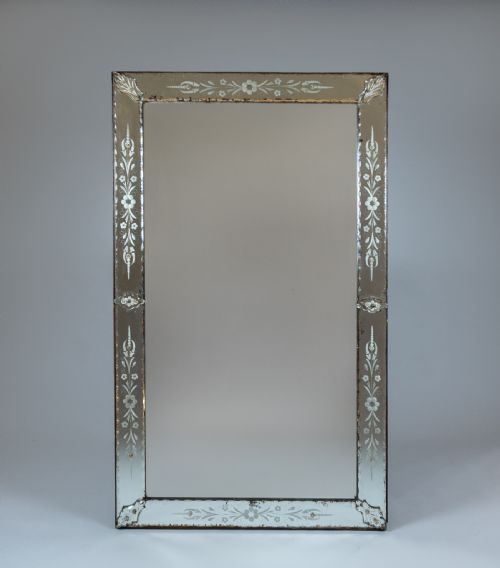
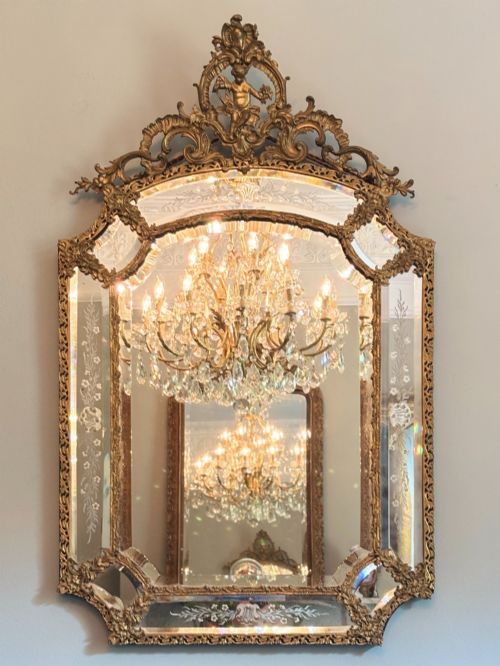
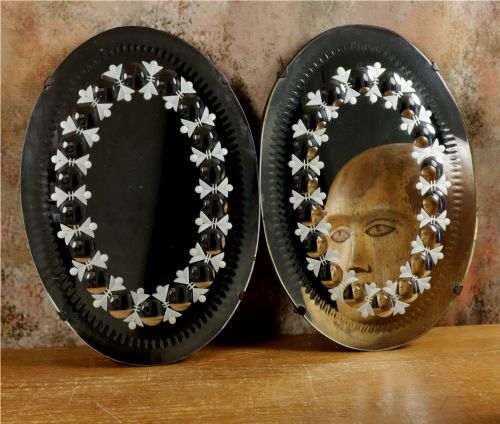
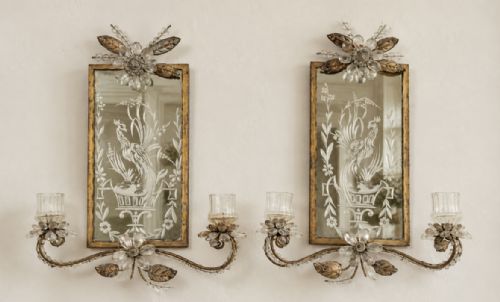

Vintage Etched Glass Mirror
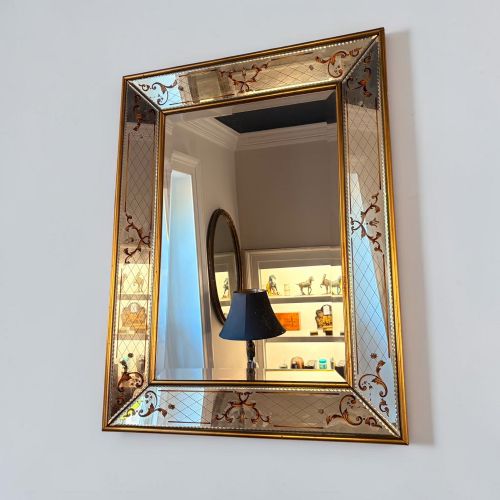
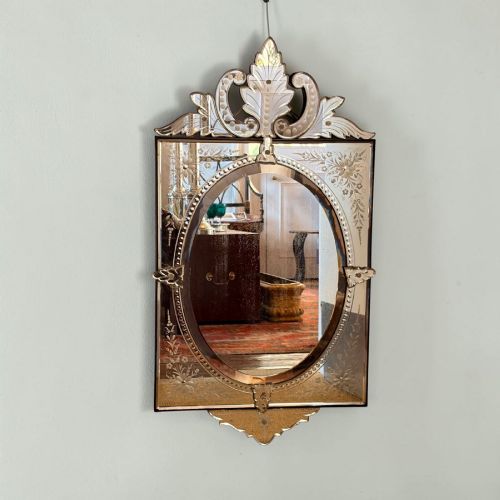
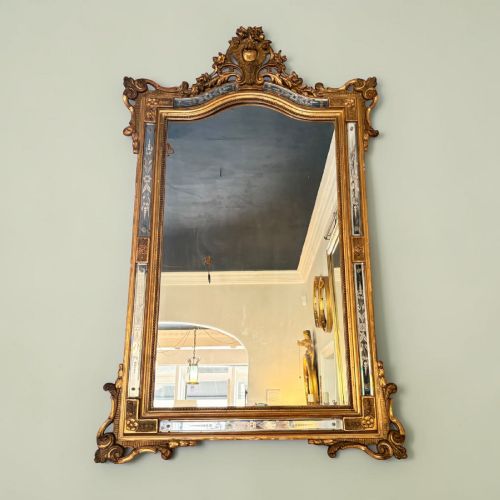
These vintage etched glass mirror pieces bring ornamental depth and period light to a room, ranging from grand Venetian cushion plates to sharp Art Deco geometries.
Vintage Etched Glass Mirror
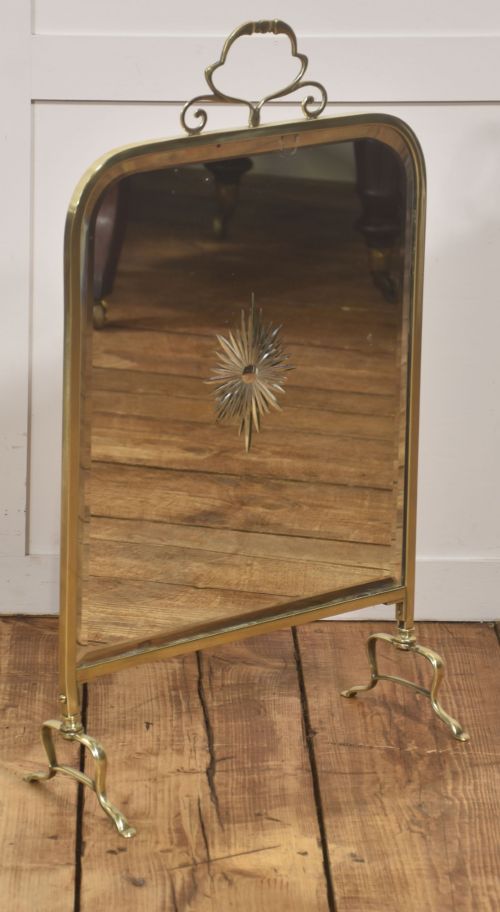
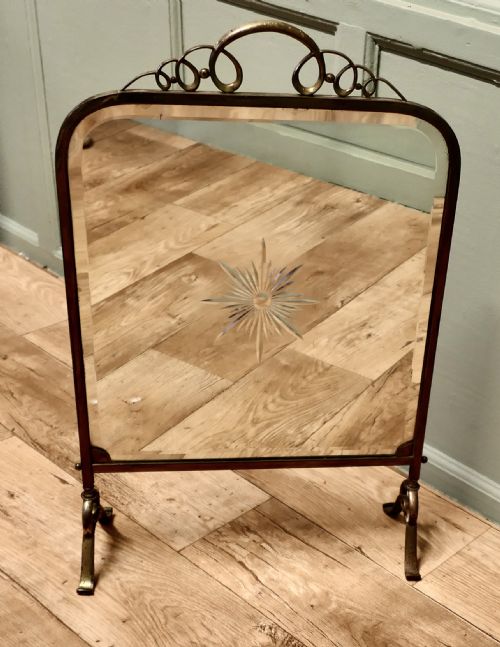
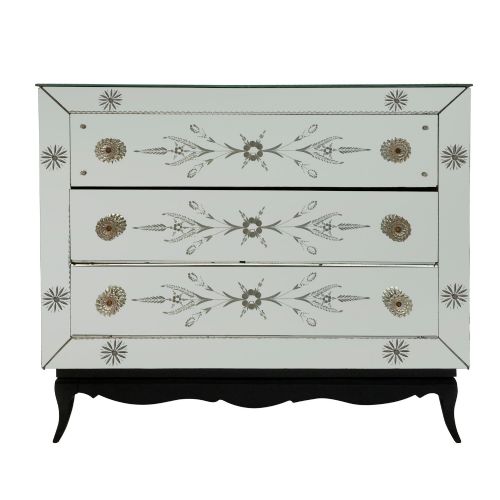
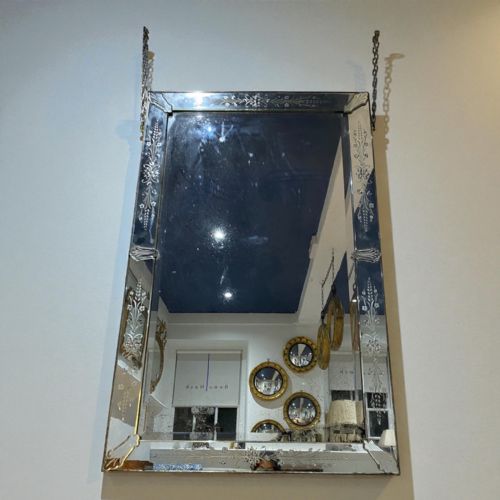
A vintage etched glass mirror encompasses a wide selection of decorative objects, from grand wall mirrors and overmantles to smaller serving trays, fire screens, and even mirrored chests of drawers. The search phrase covers diverse forms where glass meets acid, wheel, or diamond engraving.
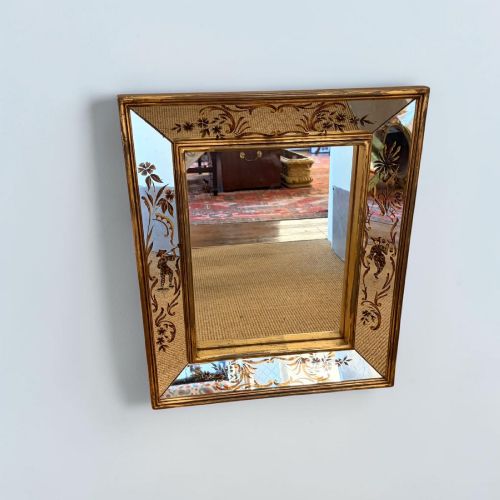
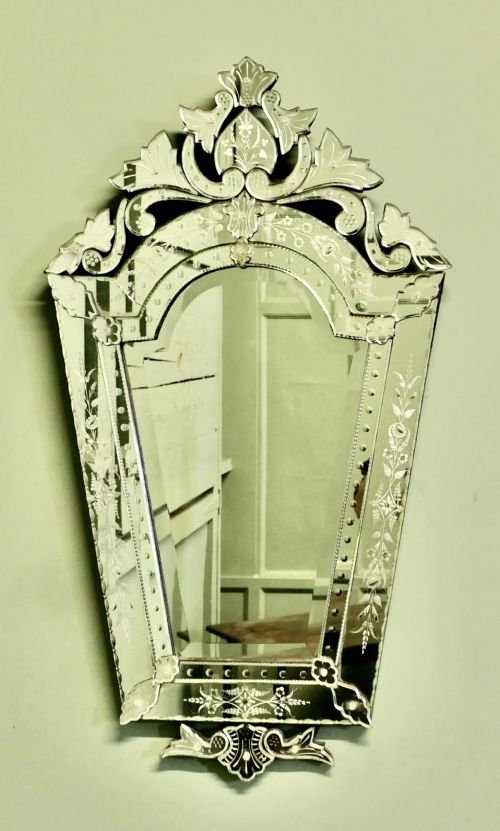
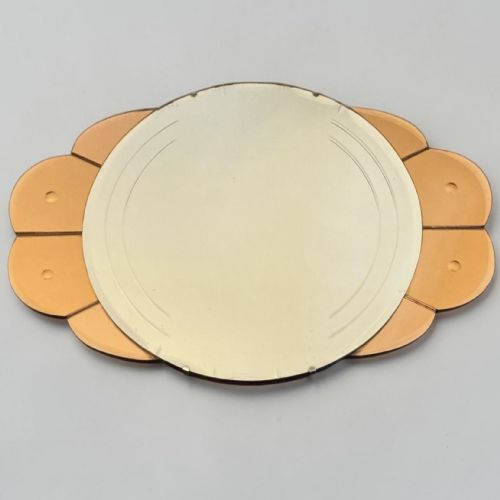
Venetian and Art Deco examples dominate the selection, showing distinct regional tastes across the nineteenth and twentieth centuries. Buyers frequently encounter nineteenth-century cushion mirrors alongside 1930s peach-tinted plates and round French designs.
Functional items such as vanity trays, cocktail tables, and pub advertisements also appear alongside standard wall-hanging formats. These smaller pieces demonstrate the same decorative etching found on larger architectural overmantles.
Materials and construction methods
Makers utilised silvered glass, mirrored plates, and coloured glass substrates including peach, ruby red, and cobalt blue. Brass, gilt-wood, silver plate, and painted timber frames often provide the structural support for these heavy glass elements.
Surface decoration relies on wheel cutting, acid etching, and hand engraving to create motifs directly onto the mirror plate or surrounding glass frame sections. Bevelled edges and cushion moulding give dimensionality to flat glass panels.
Vintage Etched Glass Mirror Retail Price Guide 2026
Typical asking prices for vintage etched glass mirror among the pieces listed under this phrase on Sellingantiques today, from the lower quarter to the upper quarter. They describe what is for sale here now, not the wider market.
Evaluating craftsmanship and condition
Depth and precision in the engraved or etched patterns separate standard production from superior examples. Finely cut lines and crisp detailing across complex floral or geometric motifs demonstrate the hand of a skilled artisan.
The integrity of the original silvering and the uniformity of foxing contribute significantly to the character of the piece. Natural ageing on nineteenth-century and Edwardian plates adds atmospheric depth without obscuring the reflective surface.
The Vintage Etched Glass Mirror Glossary
- Cushion mirror
- A mirror featuring a convex, shaped outer frame made of glass segments that curve towards the central plate. This style is particularly prevalent in Venetian pieces.
- Foxing
- The natural oxidation and ageing of the silver backing behind the glass plate, creating dark spots or speckled patination over time.
- Overmantle mirror
- A large horizontal mirror designed to sit directly above a fireplace mantel. These often feature arched tops or elaborate frames.
- Acid etching
- A technique using acid to eat away at the surface of the glass, creating opaque, frosted designs with smooth recesses.
- Bevelled plate
- A mirror glass plate whose outer edges are cut and polished at an oblique angle to catch the light.
Vintage Etched Glass Mirror: Frequently Asked Questions
How do I hang a heavy Venetian mirror safely?
Large Venetian wall mirrors require professional wall anchors suited to the specific masonry or plaster structure of your room. The weight of the glass frame components demands a secure weight-bearing fixing rather than standard picture hooks.
Distribute the load evenly across sturdy brackets that support the base while securing the top against movement. Avoid hanging mirrors in damp environments to protect the antique silvering.
How can I tell a 1930s Art Deco mirror from an older Victorian one?
Art Deco mirrors rely on geometric shapes, sunburst patterns, and sometimes coloured peach or amber glass plates. They feature streamlined profiles with minimal framing.
Victorian and Edwardian examples typically display more ornate wooden or gilt frames, Rococo scrollwork, or traditional cushion glass arrangements. The engraving styles also shift from elaborate nineteenth-century florals to sharp twentieth-century angles.
Can I use a vintage mirror tray for serving drinks?
Many mirrored trays from the early twentieth century were built for serving drinks or displaying glassware on cocktail tables. Their silver-plated or brass galleries protect the edges.
Protect the antique silvering from excessive moisture by wiping spills promptly with a dry cloth. Avoid submerging the piece in water during cleaning.
What causes dark spots on antique mirrors?
Dark spots and clouding known as foxing occur when atmospheric moisture reaches the silver backing behind the glass over decades. This chemical ageing process alters the reflection.
Many collectors value natural foxing as proof of genuine age and character. As long as the silvering remains stable, these marks enhance the historic appeal.