



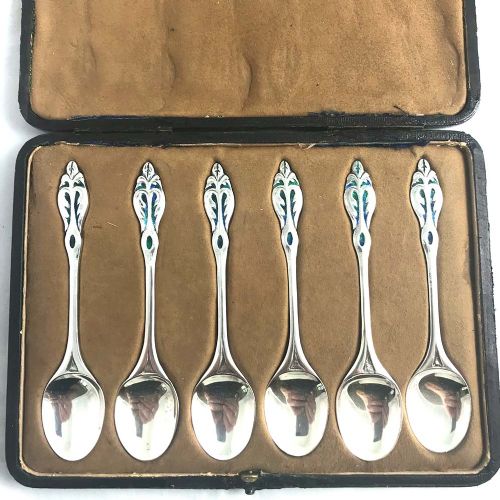


Vintage Enamelled Coffee Spoons
Vintage enamelled coffee spoons are small, brightly coloured implements that bring vibrant pattern and gleaming precious metal to the after-dinner tray.
Vintage Enamelled Coffee Spoons
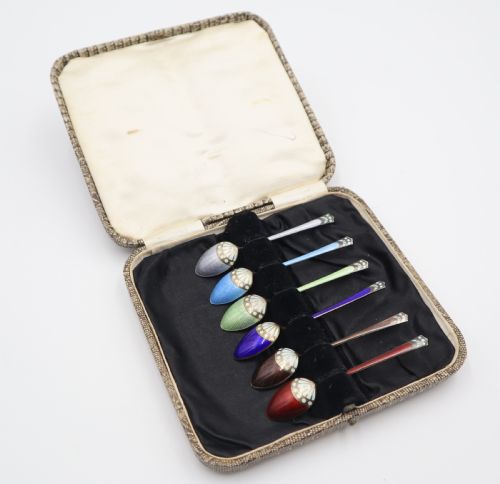
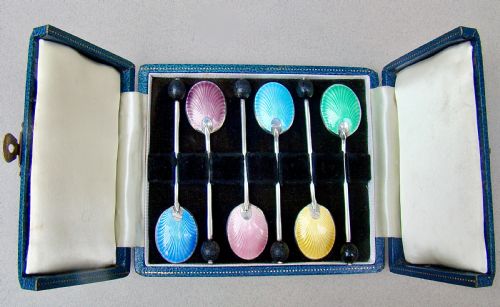
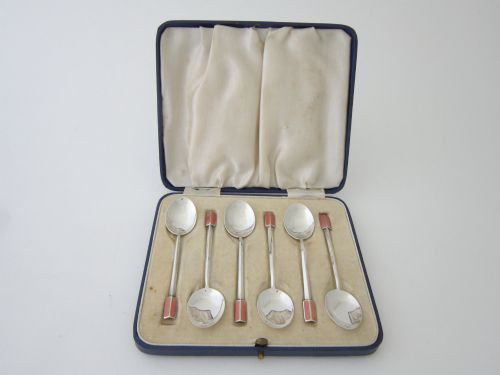
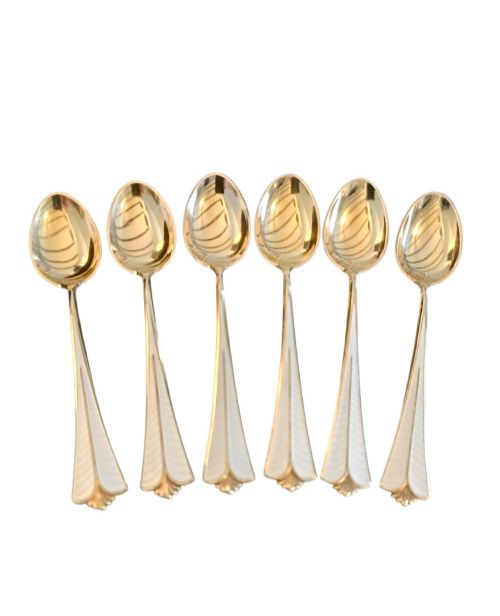
When you search for vintage enamelled coffee spoons, you find miniature cutlery designed specifically for demitasse cups rather than full-sized mugs. These pieces date principally from the early decades of the twentieth century, spanning the Edwardian era through the Art Deco period.
You are most likely to meet boxed sets containing six matching items, frequently nestled in their original satin and velvet lined leatherette cases. Individual spoons or smaller card-suit sets also appear occasionally.
The aesthetic of these items borrows heavily from the prevailing design movements of their creation. Art Deco geometry and Art Nouveau floral curves dominate the surviving examples on this page.
How they were made
Makers formed the base of these implements from sterling silver or silver gilt, shaping handles with detailed casting and stamping techniques. Many items originated from silversmiths working in major British hubs like Birmingham alongside prominent Scandinavian workshops.
Vitreal colour was applied by fusing powdered glass to the metal surface under high heat, a process known as vitreous enamelling. This technique created smooth, glossy panels that resisted tarnishing and held deep pigments.
Vintage Enamelled Coffee Spoons Retail Price Guide 2026
Typical asking prices for vintage enamelled coffee spoons among the pieces listed under this phrase on Sellingantiques today, from the lower quarter to the upper quarter. They describe what is for sale here now, not the wider market.
Card-suit spoons turn a standard after-dinner coffee into an impromptu hand of bridge.
What varies in quality
The distinction between ordinary spoons and exceptional ones rests in the complexity of the enamel work and the prestige of the retailer or designer. Pieces commissioned by renowned houses exhibit superior finishing on the reverse bowls and tighter geometric control.
The preservation of the original presentation case heavily influences the overall desirability of a set. Fitted boxes bearing retailer stamps from notable London department stores elevate the historical interest of the contents.
David Andersen·Liberty and Co
The Vintage Enamelled Coffee Spoons Glossary
- Sterling silver
- A silver alloy containing 92.5 percent pure silver and 7.5 percent other metals, usually copper. This standard provides the necessary rigidity for small spoons.
- Vitreous enamel
- A material made by fusing powdered glass to a metallic substrate by firing. It produces a durable, glossy coloured coating.
- Silver gilt
- Silver that has been coated with a thin layer of gold on its surface. This treatment adds a warm yellow lustre to the metal parts.
- Flatware
- Table cutlery used for eating and serving food. In this context, it refers specifically to small-scale spoons.
- Demitasse
- A small cup used for serving strong black coffee after a meal. The accompanying spoons are scaled down to match these diminutive vessels.
Vintage Enamelled Coffee Spoons: Frequently Asked Questions
How do I clean vintage enamel spoons?
Clean these items gently using warm water and mild washing-up liquid with a soft cloth. Avoid abrasive pastes or harsh chemical dips that can scratch the delicate glass surface.
Dry each piece immediately with a lint-free towel to protect the metal and prevent moisture from lingering in the crevices of the handles.
Are these spoons safe for daily use?
These delicate items were made for occasional demitasse service rather than heavy daily dining. The vintage glass coating can chip if knocked against hard crockery.
Hand washing is essential because domestic dishwashers use fierce jets and harsh detergents that ruin vintage metal and enamel.
Why are they usually found in boxes?
Many sets were retailed as luxury gifts for weddings, anniversaries or housewarmings. The fitted cases lined with satin and velvet protected the fragile coloured bowls from scratching.
Keeping the spoons stored in their original leatherette boxes preserved the gilding and prevented tarnishing while not in use.
How can I tell Art Deco from earlier styles?
Art Deco spoons display sharp geometric lines, stylised motifs and symmetrical patterns typical of the interwar period. They often feature bright, contrasting colour blocking.
Earlier pieces from the Edwardian era rely on flowing curves, organic shapes and softer pastel shades inspired by the Art Nouveau movement.