





Silver and Enamel Cutlery
Silver and enamel cutlery combines precious metal with bright vitreous glass, offering collectors striking colour and clean twentieth-century design.
Silver and Enamel Cutlery
When you search for silver and enamel cutlery, you encounter small serving pieces, teaspoons, and cased sets spanning from the nineteenth century into the mid-twentieth century. The selection ranges from British Art Deco teaspoons to Russian cloisonne spoons and Danish silver gilt pieces.
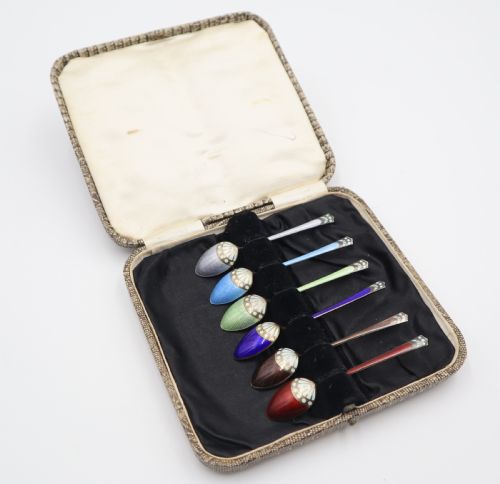
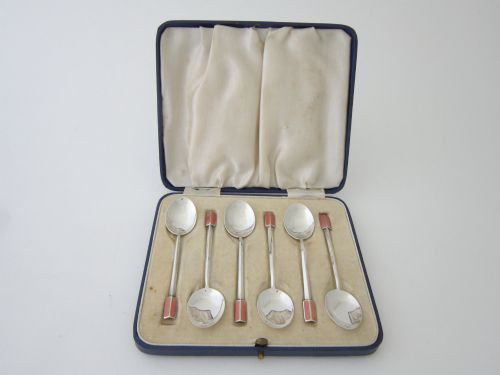
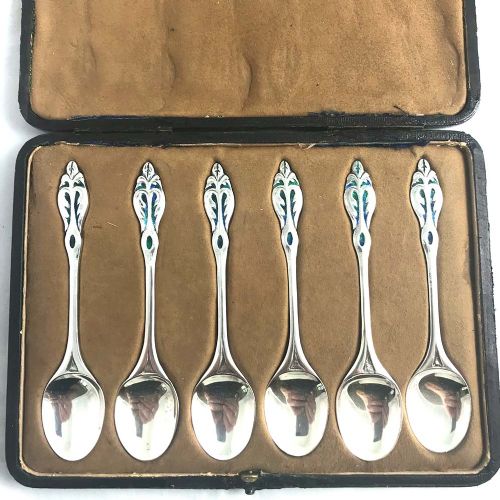
You are most likely to meet cased sets of six teaspoons or coffee spoons dating from the 1930s, often featuring bright geometric enamel decoration. These smaller utensils survive more frequently than larger table services because people kept them safely tucked away in fitted boxes.
The objects cross several distinct aesthetic movements, including Art Nouveau, Arts and Crafts, Russian Revival, and Mid-Century Modern. Each period brings its own characteristic palette and form, from linear jazz-age patterns to rich traditional ornamentation.
Materials and construction
Makers formed the underlying structure from silver, sterling silver, or silver gilt, applying gold to silver surfaces for a warm metallic contrast. Vitreous enamel was then fused to the metal through high-temperature firing, binding powdered glass permanently to the silver base.
Techniques varied from simple translucent enamel over engine-turned metal to intricate cloisonne work where thin wire creates borders for different coloured pastes. Many pieces also utilised satin linings inside leatherette presentation cases to protect the fragile glass surfaces.
Silver and Enamel Cutlery Retail Price Guide 2026
Typical asking prices for silver and enamel cutlery among the pieces listed under this phrase on Sellingantiques today, from the lower quarter to the upper quarter. They describe what is for sale here now, not the wider market.
Object forms on this page include cased sets of teaspoons, coffee spoons, and commemorative items like sailing club spoons.
Assessing craftsmanship
Quality rests in the precision of the metalwork and the stability of the vitreous enamel. Finer pieces display smooth, perfectly polished enamel surfaces that sit flush with the surrounding silver borders without shrinking or cracking at the edges.
Design distinction and maker attribution elevate certain sets above standard production. Pieces originating from known firms or featuring complex multi-coloured cloisonne work show a superior level of artistry compared to plain commercial teaspoons.
Vasily Agafonov·David Andersen·Liberty and Co
The Silver and Enamel Cutlery Glossary
- Vitreous Enamel
- A material made by fusing powdered glass to a metallic substrate at high temperatures. This process creates a durable, glossy surface with rich colour that resists fading.
- Silver Gilt
- Silver that has been coated with a thin layer of gold. This technique provides the visual warmth of solid gold while maintaining a silver core.
- Cloisonne
- A decorative metalwork technique where thin wire is soldered to the metal base to create compartments for enamel paste. Each cell is filled with coloured glass before firing.
- Leatherette
- A simulated leather material commonly used to cover presentation cases for cutlery sets. It protects the spoons from tarnish and physical damage.
Silver and Enamel Cutlery: Frequently Asked Questions
How were silver and enamel spoons used?
These utensils served formal tea and coffee rituals, where guests used small spoons to stir sugar into hot drinks. They also functioned as decorative presentation pieces rather than heavy everyday tableware.
Because of their delicate glass decoration, owners reserved them for special social occasions and stored them securely in velvet-lined boxes when not in use.
How do I care for silver and enamel cutlery?
Wash the pieces gently by hand in warm soapy water and dry them immediately with a soft cloth. Avoid harsh chemical dips or abrasive silver polishes that can scratch or weaken the glass enamel.
Store the items in their original cases or a tarnish-resistant wrap to protect both the silver finish and the brittle vitreous surface from impact.
How can I tell the period of a set?
Examine the overall design style, as Art Deco pieces from the 1930s feature clean geometric lines, while 19th-century examples often display traditional Russian Revival ornamentation. Makers' marks and hallmarks stamped on the silver components provide the most reliable dating evidence.
Box styles and typography inside the presentation cases also offer clear clues to the decade of manufacture, matching the aesthetic trends of British or Scandinavian design.
Are these sets still usable today?
Many people continue to use silver and coffee spoons for special gatherings, provided the enamel remains fully intact and undamaged. Gentle handling ensures the glass components survive modern dining without sustaining chips or cracks.
Collectors often balance occasional use with careful preservation, treating the cased sets as both functional tableware and historical design objects.