
Vintage Enamel Pendant
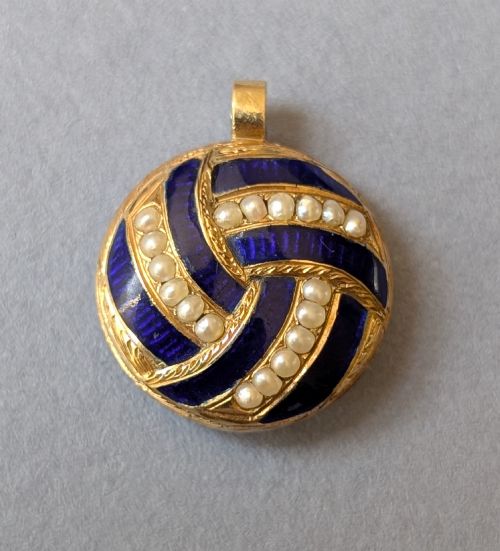
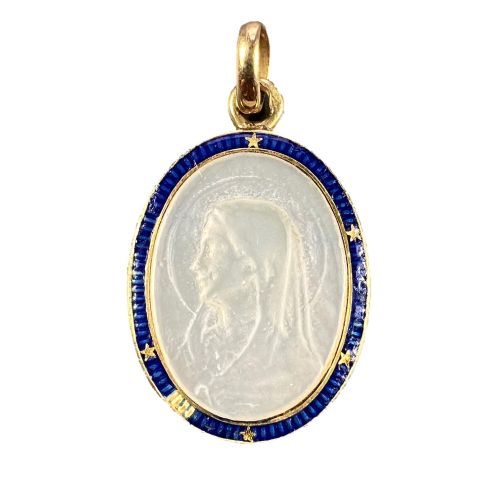
When you search for a vintage enamel pendant, you uncover wearable miniature paintings fused onto silver and gold from the nineteenth and twentieth centuries.
Vintage Enamel Pendant
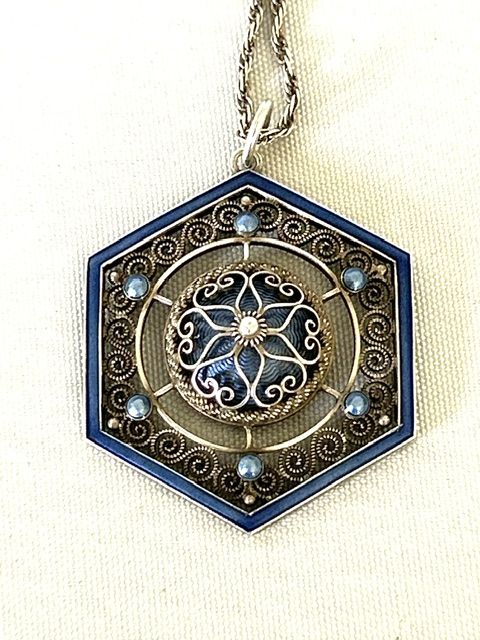
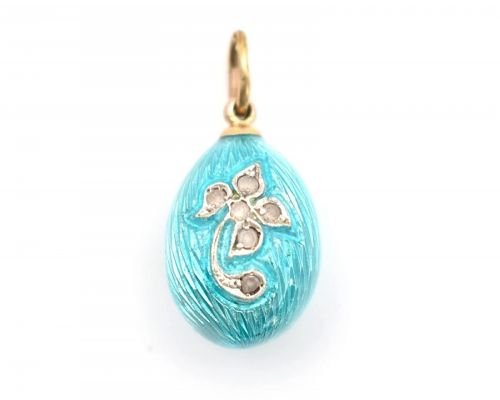
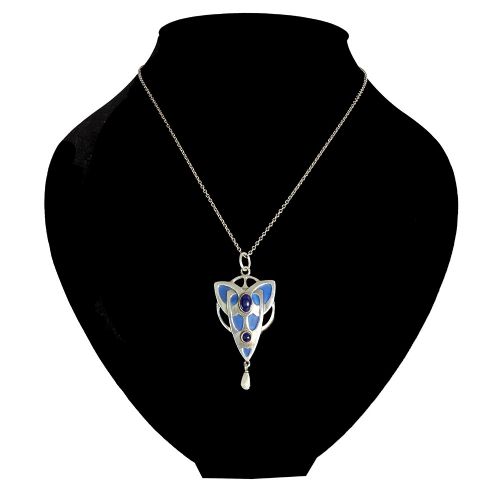
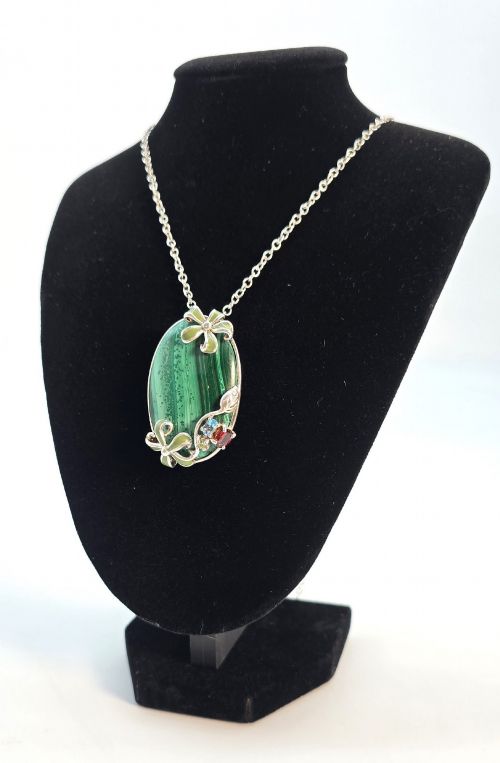
A vintage enamel pendant encompasses silver and gold necklace ornaments decorated with vitreous glass pastes, spanning periods from the nineteenth century through the mid-twentieth century. Buyers encounter stylistic expressions ranging from organic Art Nouveau and geometric Art Deco to linear Edwardian and hand-wrought Arts and Crafts designs.
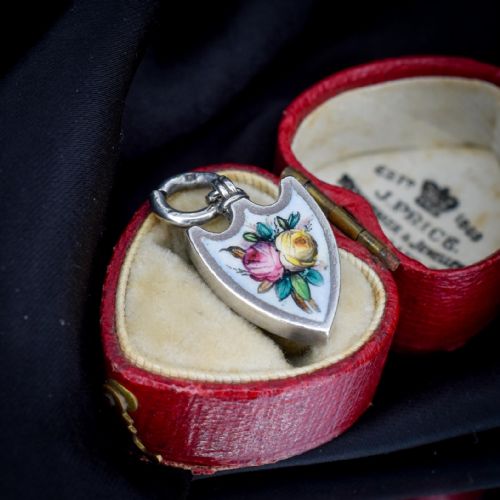
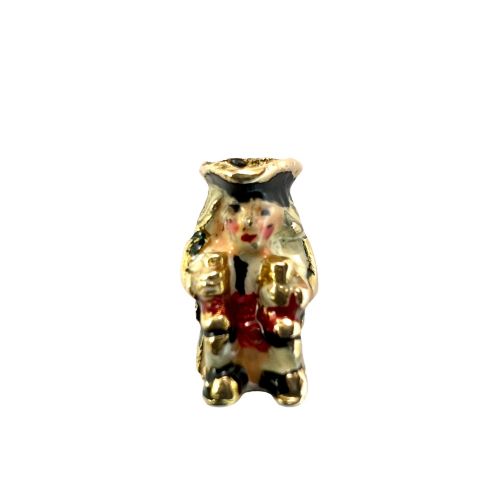
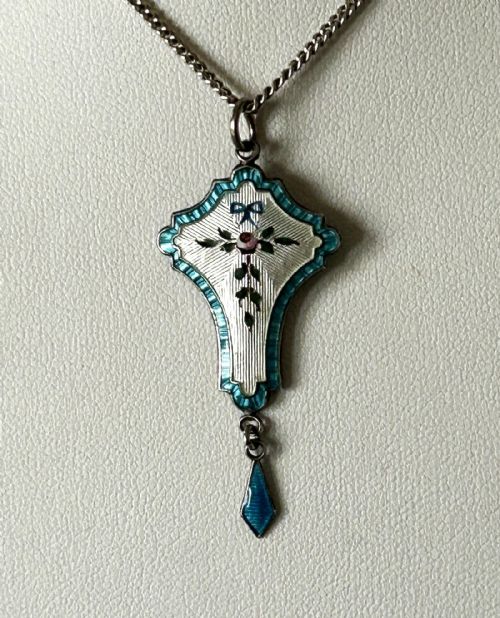
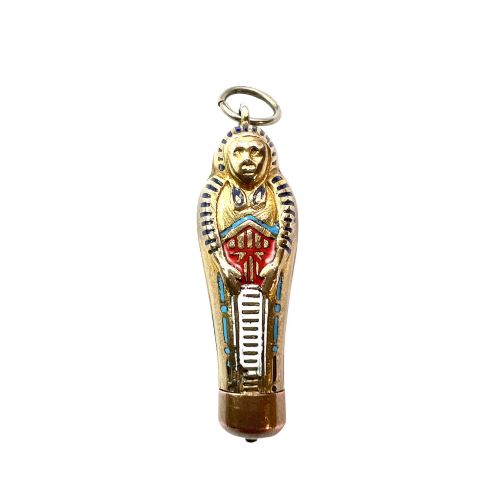
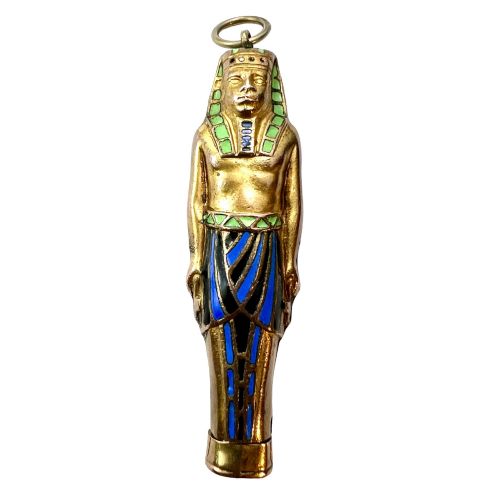
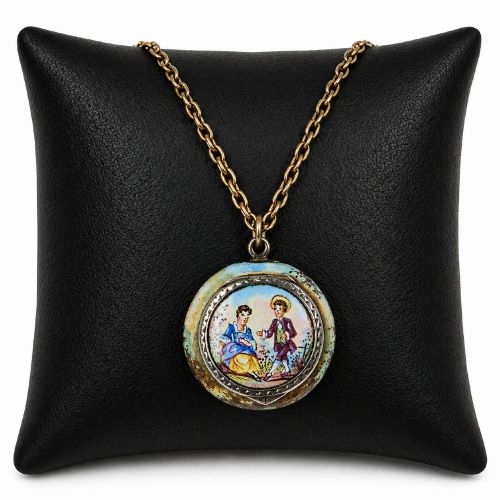
The most frequent examples on this page combine sterling silver or yellow gold settings with colourful guilloche, plique-a-jour, or opaque enamel work. Pieces take the form of lockets, floral charms, religious medals, and framed geometric plaques suspended from matching chains.
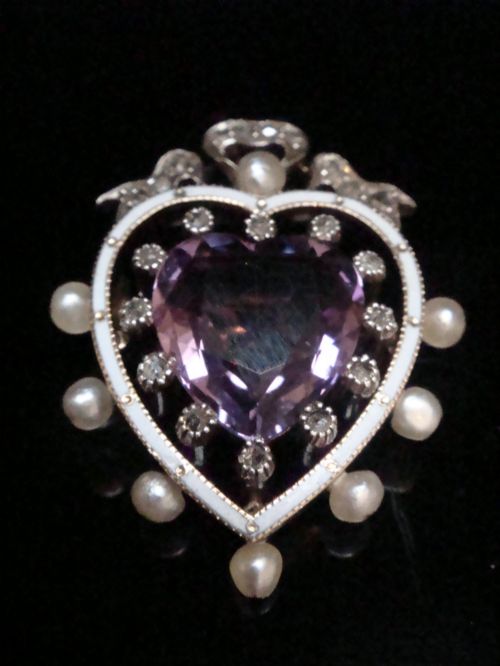
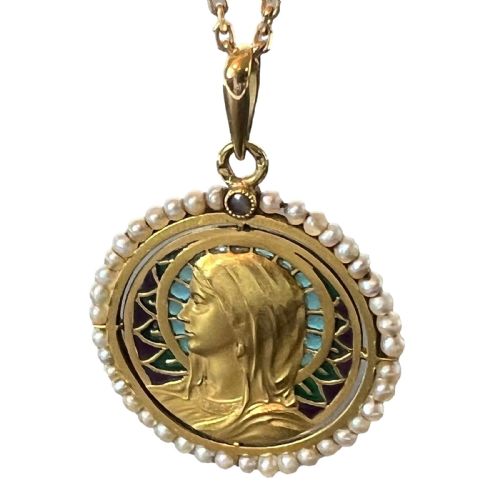
Origins stretch across Britain, Scandinavia, France, Austria-Hungary, and Russia, reflecting regional specialisms in silversmithing and glass fusing. Pieces often incorporate pearls, diamonds, or chalcedony alongside the central enamelled field.
Materials and Technique
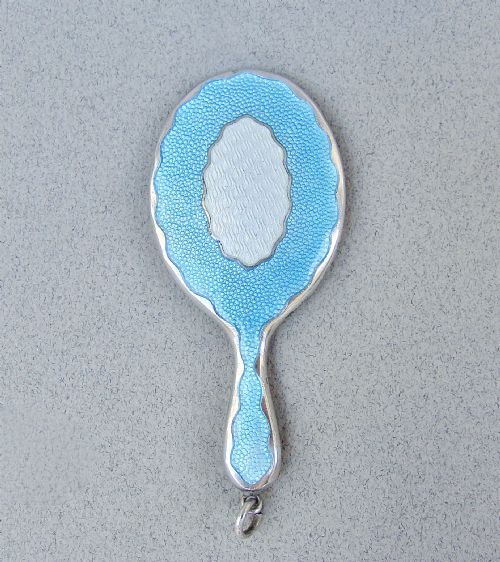
Makers fused powdered glass vitreous enamel onto prepared bases of sterling silver, 9ct gold, or 18k yellow gold through high-temperature kiln firing. Artisans often engraved underlying metal surfaces with engine-turned guilloche patterns so that translucent enamel layers caught the light.
Techniques such as plique-a-jour omitted solid metal backings entirely, creating translucent stained-glass effects held within delicate wire cell outlines. Settings frequently incorporated seed pearls, turquoise stones, and diamonds mounted in prong or bezel frames.
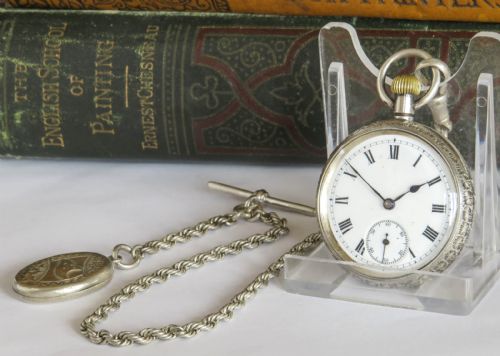
Several miniature enamel objects on this page double as working propelling pencils, compact mirrors, and tiny pocket watch cases.
Quality Variations
The standard of a vintage enamel pendant rests upon the precision of the metalwork and the clarity of the fused glass. Finer pieces display smooth, unblemished enamel surfaces with even colour saturation and crisp engine-turned detailing beneath translucent layers.
Superior examples originate from named workshops and master designers who integrated stone settings like natural pearls and diamonds with balanced compositional symmetry. Lesser versions exhibit surface pitting, uneven firing thickness, or simplified mountings with minimal hand finishing.
Marius Hammer·Henry Williamson·Henry Matthews·Archibald Knox·Liberty and Co·Murrle Bennett·David Andersen·Bjorn Sigurd Ostern·Hroar Prydz·Charles Horner·Christian Dior
The Vintage Enamel Pendant Glossary
- Guilloche
- An ornamental technique where a mechanical lathe engraves a precise repetitive pattern into metal before translucent enamel is applied. This allows light to reflect through the coloured glass in intricate geometric waves.
- Plique-a-jour
- A vitreous enamelling technique resembling miniature stained glass where the enamel is fired unsupported by a backing metal. Light passes directly through the open cells.
- Vitreous Enamel
- A material made by fusing powdered glass to a metallic substrate at high temperatures. The resulting compound provides a durable, glossy coloured surface.
- Sterling Silver
- An alloy composed of ninety-two point five percent silver and seven point five percent other metals, typically copper. This standard forms the primary metal framework for many twentieth-century pendants.
Vintage Enamel Pendant: Frequently Asked Questions
How do I care for my enamel pendant?
Store your pendant separately in a soft pouch to prevent scratching from harder metals or gemstones. Clean the piece gently using a damp cloth and mild soap, avoiding harsh chemical dips that can damage fragile glass surfaces.
Keep the item away from prolonged direct sunlight and extreme temperature shifts to protect the integrity of the vintage glass and metal settings.
Are these pendants supplied with original chains?
Many listings feature period-appropriate or original matching chains, such as silver albert chains or delicate link necklaces. Specific details regarding whether a chain is original to the pendant are noted in individual descriptions.
Buyers preferring alternative lengths can readily swap the suspension chain while keeping the antique pendant secure on the jump ring.
How can I tell Art Nouveau from Art Deco pieces?
Art Nouveau pendants dating around nineteen hundred rely on asymmetrical flowing lines, floral motifs, and organic subjects inspired by nature. They frequently utilise plique-a-jour enamel and cabochon stones.
Art Deco items from the nineteen twenties and thirties favour rigid geometry, crisp symmetry, and engine-turned guilloche patterns in bold primary or pastel tones.
What is plique-a-jour enamel?
Plique-a-jour is a demanding enamelling method where glass paste is fired inside open wire cells without a solid backing metal. When held to the light, the finished piece glows like miniature stained glass.
This technique appears frequently in fine French and Scandinavian pendants from the early twentieth century.