






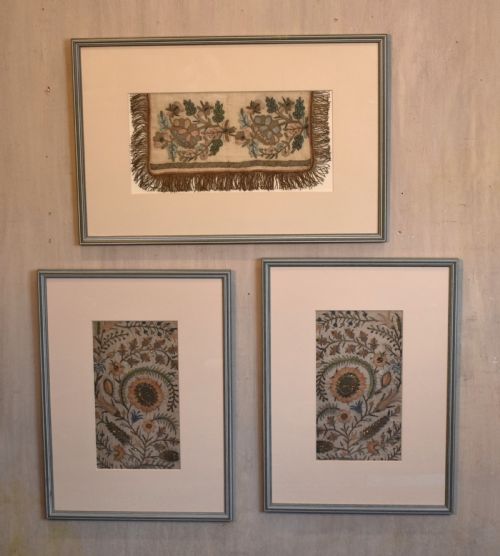
Vintage Embroidery Artwork
Vintage embroidery artwork brings historic needlework, silk panels and wool pictures into modern rooms with rich texture and centuries of handcraft.
Vintage Embroidery Artwork
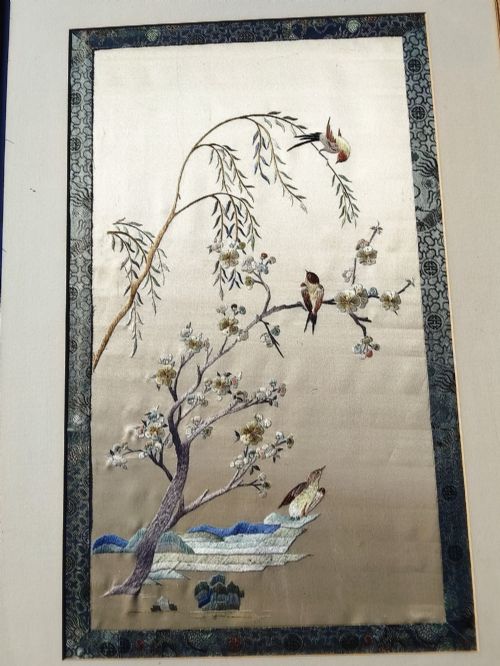
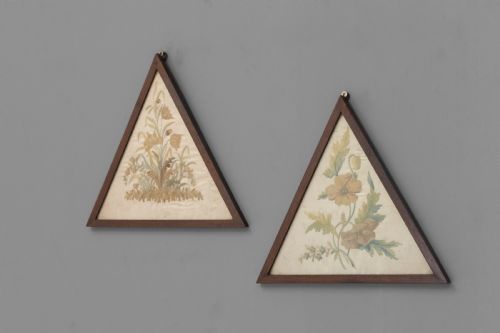
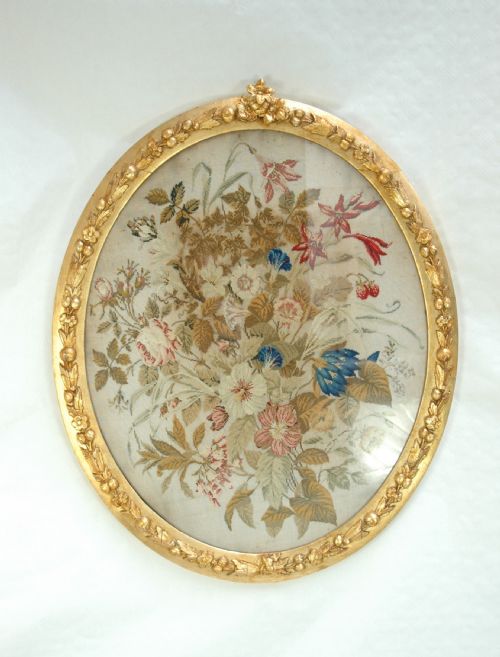
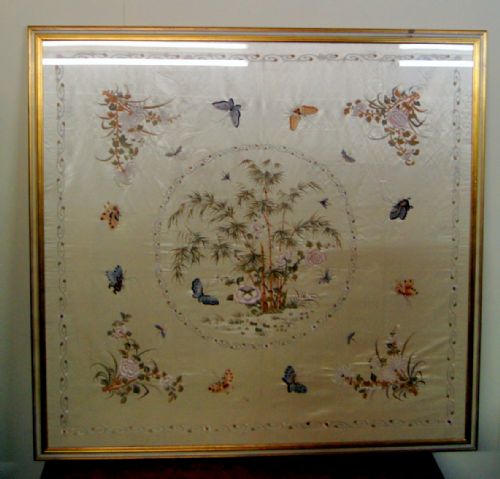
Vintage embroidery artwork encompasses needlework pictures, framed textile pieces and wall art spanning from the seventeenth century through to the nineteenth century. These textiles capture diverse global traditions, ranging from English country house samplers to Chinese garden bird panels.
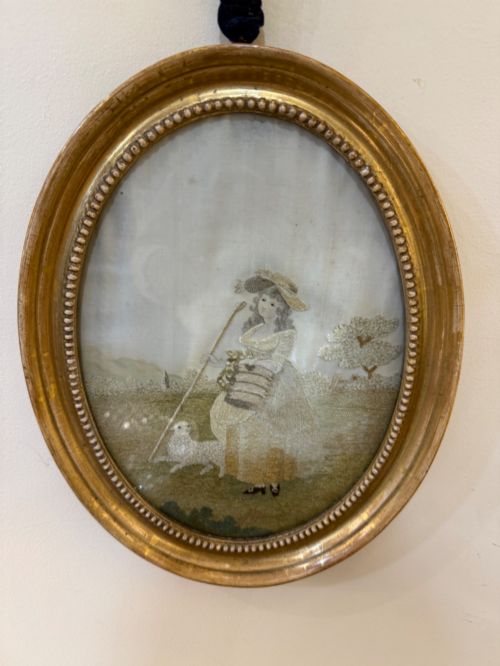
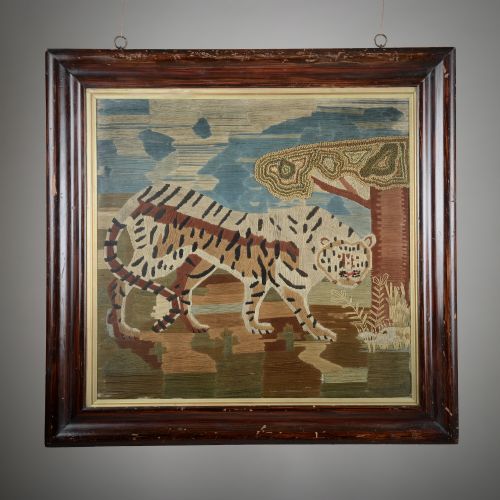
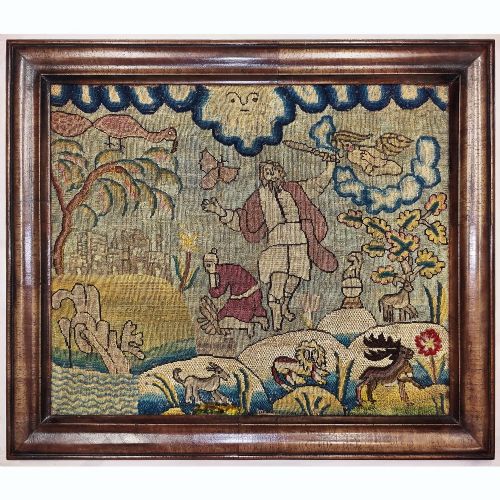
Buyers encounter framed alphabet samplers, crewel work, tapestry pictures and large wool work depictions of animals and landscapes. The most common forms on this page include nineteenth-century wool work and eighteenth-century needlework pictures.
Originating across Britain, continental Europe, China and Japan, these pieces demonstrate historic stitching techniques preserved in original frames. Each item offers a direct link to domestic handcraft traditions of the past.
Assessing quality and preservation
Quality rests upon the intricacy of the stitch work and the clarity of the pictorial composition. Pieces featuring detailed pictorial scenes or complex needlework display higher technical execution than simpler alphabet samplers.
The condition of the textile and the survival of the original frame heavily influence the overall character of the piece. Vibrant thread colour retention and secure mounting distinguish superior examples from faded or degraded textile panels.
Vintage Embroidery Artwork Retail Price Guide 2026
Typical asking prices for vintage embroidery artwork among the pieces listed under this phrase on Sellingantiques today, from the lower quarter to the upper quarter. They describe what is for sale here now, not the wider market.
Emma and Hannah Barnes left their names stitched into an 1853 alphabet sampler.
The Vintage Embroidery Artwork Glossary
- Crewel work
- Embroidery executed with wool yarn on a linen or cotton substrate. This technique produces textured surface designs often found in early pieces.
- Sampler
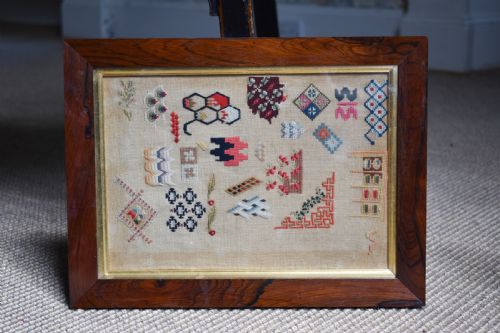
- A piece of needlework demonstrating various stitches and alphabets, traditionally worked by young learners. These items often record names and dates.
- Berlin wool work
- A style of needlepoint embroidery worked in coloured wool using printed grid patterns. It became popular during the nineteenth century for pictorial wall art.
- Needlework picture
- A framed textile artwork created with thread to depict a scenic landscape, portrait or narrative subject. They imitate painted canvases through varied stitch directions.
Vintage Embroidery Artwork: Frequently Asked Questions
How do I hang antique needlework?
Protect vintage embroidery artwork from direct sunlight to prevent silk and wool threads from fading over time. Hang pieces on interior walls away from moisture sources to maintain the stability of the fabric and wooden frame.
Ensure the hanging wire is secure and use appropriate wall fixings to support the weight of framed textiles and glass. Professional framing techniques help preserve the integrity of older panels.
What is the difference between a sampler and a wool work picture?
Samplers focus on alphabets, numbers and repeating stitch variations, often created by learners to demonstrate skill. They carry genealogical or educational significance.
Wool work pictures depict complete pictorial scenes, such as animals, figures or landscapes, using thick yarn. These function purely as decorative wall art rather than technical exercises.
How do I clean vintage embroidered panels?
Leave cleaning and restoration to professional textile conservators rather than attempting DIY methods. Household cleaning products cause irreversible damage to aged silk, wool and linen fibres.
Dust wooden frames gently with a dry cloth while keeping moisture well away from the fabric surface. Sealed frames protect the internal embroidery from ambient dust and airborne pollutants.