



Vintage Drum Desk
A vintage drum desk offers a revolving surface and enclosed compartments, bringing classic proportions and functional elegance to any study.
Vintage Drum Desk
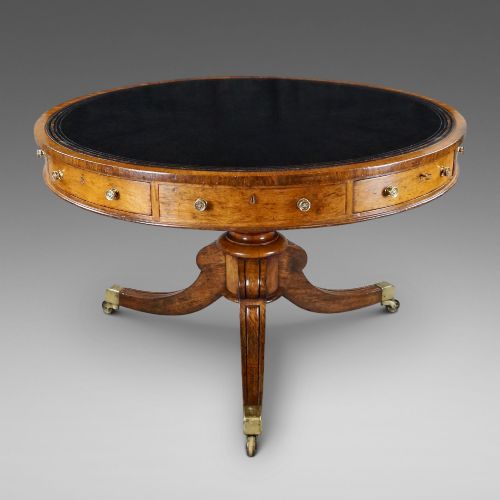
A vintage drum desk takes its name from the cylindrical shape of the table body, often featuring a revolving top or fitted drawers arranged in a circle. These pieces function as compact writing tables or library tables, designed to stand in the centre of a room rather than against a wall.
The selections encountered here span the nineteenth century through the early twentieth century, including Edwardian and Art Deco interpretations. Mahogany is the predominant timber found alongside oak and burr root maple, frequently paired with inset leather writing surfaces.
Makers of these circular tables utilised traditional cabinet-making methods to allow smooth rotation of the top section while maintaining structural stability. The form balances decorative presence with practical storage for papers and writing implements.
How they were made
Construction relies heavily on solid mahogany and oak, selected for their strength and ability to take fine joinery around a circular frame. Cabinet makers shaped timber veneers carefully over curved carcases to achieve the distinctive drum silhouette.
Writing surfaces employ hand-tooled leather inserts, often edged with gold tooling, while secondary materials like brass hardware and glass dials appear on associated items in the records. Polishing was traditionally achieved through repeated applications of shellac to build a durable, glossy finish.
Vintage Drum Desk Retail Price Guide 2026
Typical asking prices for vintage drum desk among the pieces listed under this phrase on Sellingantiques today, from the lower quarter to the upper quarter. They describe what is for sale here now, not the wider market.
The records show materials spanning mahogany, oak, burr root maple, brass, glass, marble, steel, leather, and fabric across nineteenth and twentieth-century items.
What varies in quality
The distinction between standard production and superior work lies in the selection of timber figures, such as matched flame mahogany or burr root maple veneers. Precision in the internal pivot mechanism determines how smoothly a revolving top operates over time.
Finishing details like crispness in wood turnings, hand-tooled leather borders, and substantial brass fittings elevate an example above simpler utilitarian versions. Original patination on timber surfaces indicates age and careful preservation rather than aggressive modern stripping.
The Vintage Drum Desk Glossary
- Drum table
- A circular library or writing table featuring a deep top resembling a drum, often containing drawers around the perimeter. These pieces frequently rest on a central pillar supported by tripod legs.
- Fusee
- A conical pulley used in clockwork mechanisms to equalize the driving force of the mainspring as it unwinds. This device ensures consistent timekeeping across the duration of the wind.
- Ormolu
- Gilded bronze ornamentation applied to furniture and clock cases, particularly popular in nineteenth-century decorative arts. The technique involves treating brass or bronze with an amalgam of mercury and gold.
- Barograph
- A self-recording barometer that plots atmospheric pressure onto a rotating drum covered in paper. These scientific instruments were commonly housed in mahogany or oak glazed cases during the Victorian and Edwardian periods.
Vintage Drum Desk: Frequently Asked Questions
What is a drum desk?
A drum desk is a circular freestanding table with a deep top containing drawers, designed to sit in the middle of a room for writing and storage.
Many examples feature a revolving top mechanism that allows access to the compartments from a seated position without moving the chair.
How do I date a drum desk?
Dating relies on examining the secondary timbers, construction methods, and hardware styles associated with periods like the nineteenth century or the Edwardian era. Hand-cut dovetails in the drawers and the type of polish or veneer work offer strong indicators of the decade of manufacture.
Comparing the turned pedestal base and feet against documented furniture styles of the Georgian revival or Victorian periods helps narrow the age further.
Can I use a drum desk for work?
These tables provide a practical surface for writing or placing a laptop, provided the height and knee clearance suit your seating requirements.
The surrounding drawers offer convenient storage for stationery and small items, keeping the circular leather top clear for daily use.
How should I care for the leather top?
Protect the inset leather top from direct sunlight and excessive moisture to prevent cracking or fading over the years.
Applying a neutral leather cream occasionally helps maintain the suppleness of the hide and preserves any gold tooling along the border.