
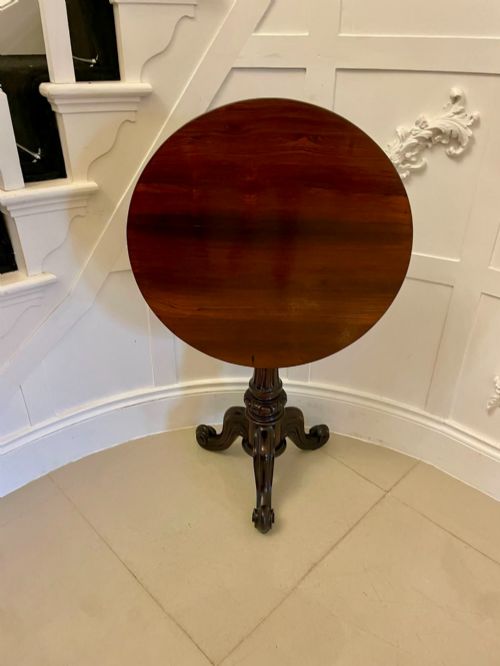
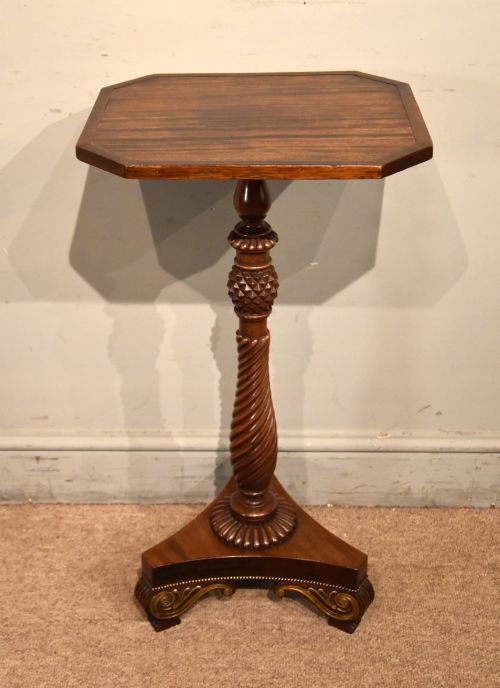
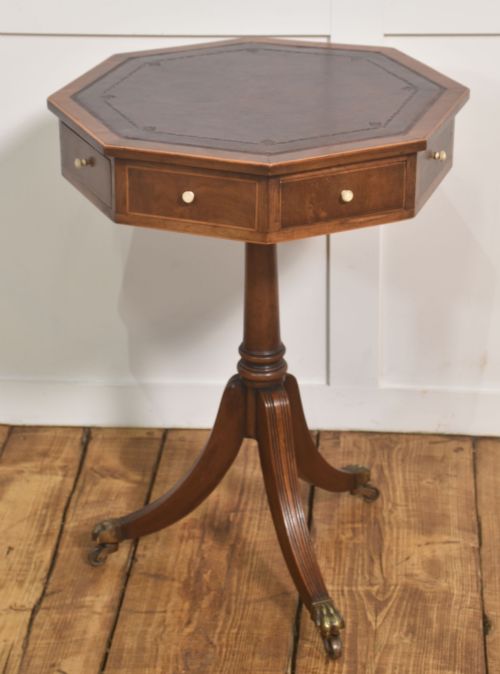
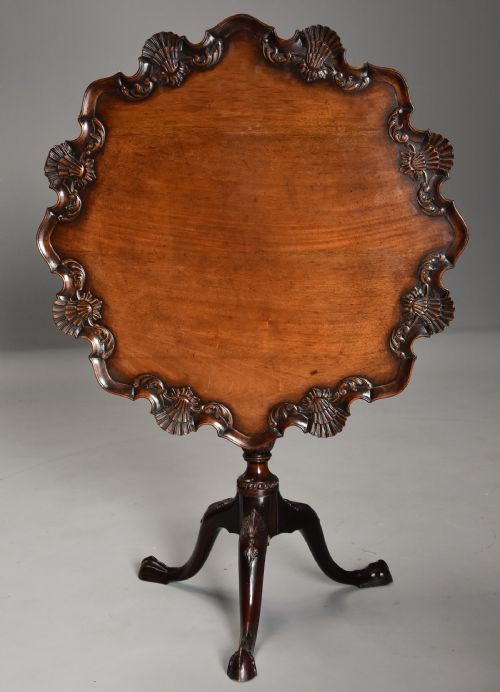
Tripod Base Occasional Table
A tripod base occasional table offers sturdy three-legged balance beneath a compact surface designed for lamps, books, or drinks.
Tripod Base Occasional Table
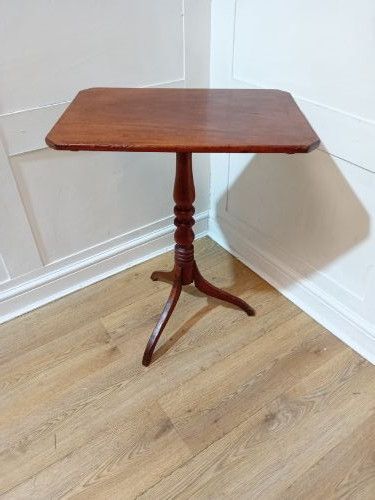
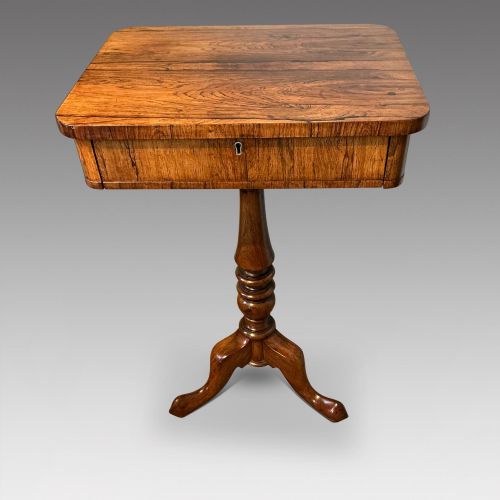
A tripod base occasional table is a compact, movable piece designed for holding items like lamps, books, or wine glasses within a room. The selection spans the 18th century through the Edwardian period, encompassing Georgian, Regency, and Victorian aesthetics.
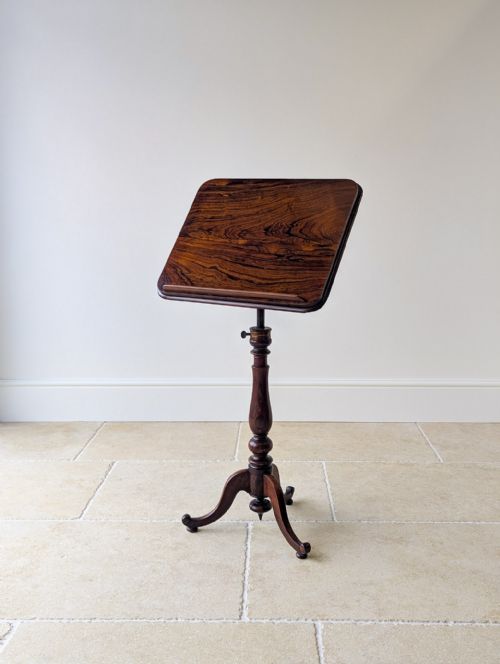
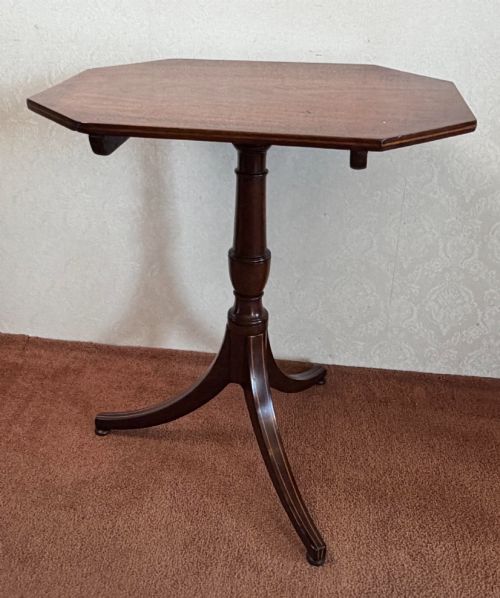
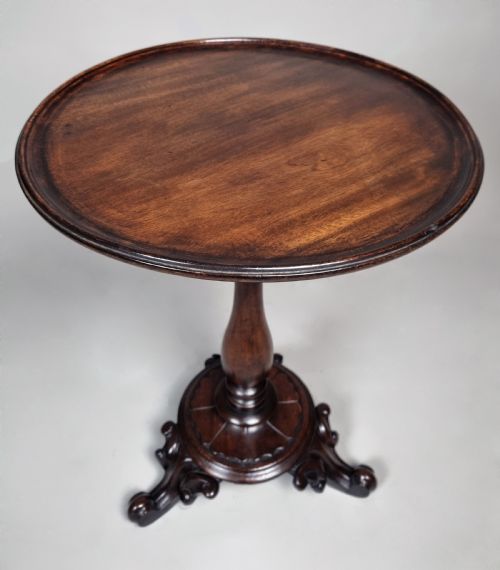
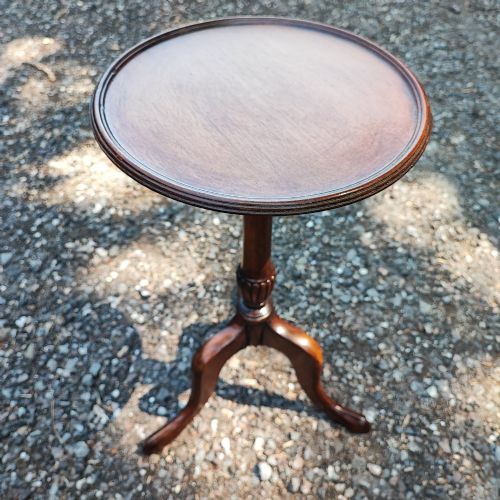
Buyers frequently encounter mahogany and rosewood versions supported by three-legged pedestals, often featuring tilt mechanisms or circular tops. Forms range from simple wine tables and candle stands to drum tables and reading stands.
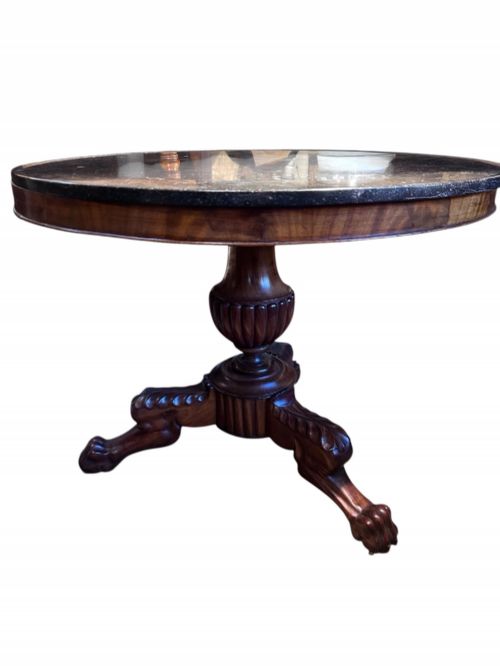
Origins include English workshops, French examples such as the Louis Philippe gueridon, and colonial pieces in padouk. These tables served versatile functions in drawing rooms, libraries, and parlours.
How they were made
Cabinetmakers utilised dense timbers like mahogany, rosewood, oak, and walnut, often pairing them with decorative veneers such as pollard oak, thuyawood, and satin-birch. Tops were frequently turned from single planks or constructed with intricate marquetry, parquetry, and boxwood inlay.
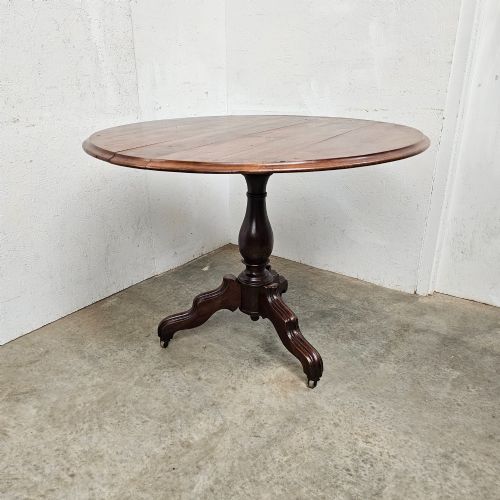
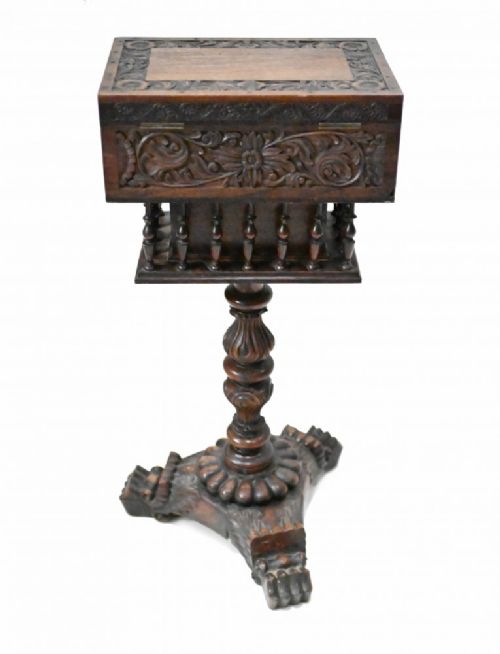
Structural stability relied on a central pillar anchored to three splayed legs, sometimes joined by tilting mechanisms, snap-top catches, or brass fittings. Craftspeople employed turning, carving, and jointing techniques suited to each period style, from George III tripod bases to Victorian pedestal mounts.
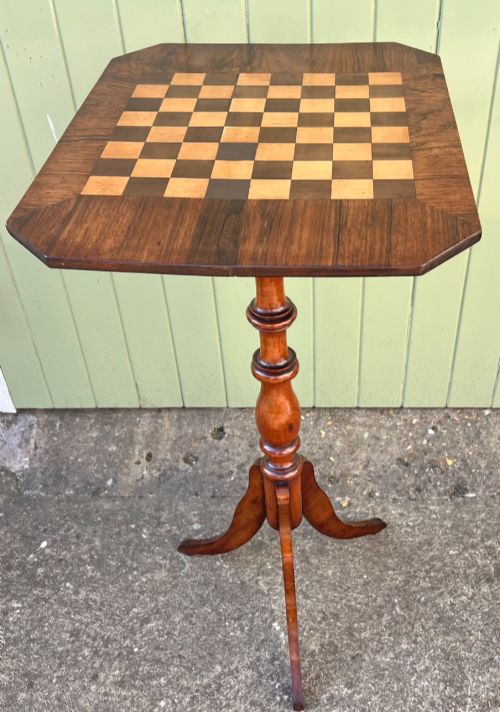
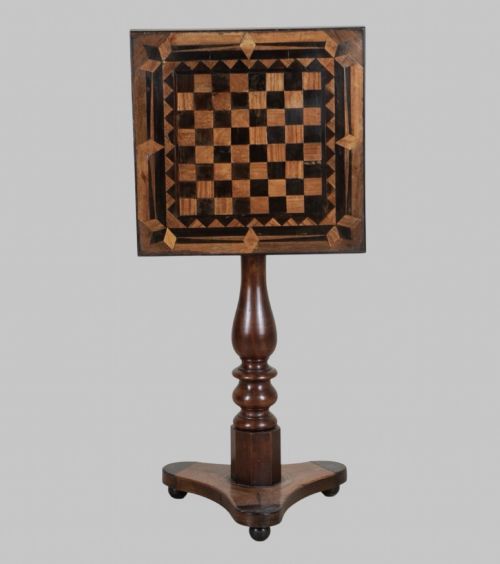
Some tables include hidden chess boards and revolving book stands, proving that antique ancestors loved desk gadgets just as much as we do.
What varies in quality
The standard of timber selection and the precision of the joinery define the upper tier of these tables. Finely figured mahogany or rosewood grain paired with crisp boxwood inlay or carved pillar details indicates superior workshop output.
Rigidity in the three-legged base and smoothness in tilt-top or revolving mechanisms distinguish master craftsmanship from utilitarian production. Proportions between the top and the pedestal remain balanced in finer examples.
George Bullock·Gillows·Holland and Sons·Anton Sueffert
The Tripod Base Occasional Table Glossary
- Tilt-top table
- A table with a hinged top that folds vertically when not in use. This mechanism allowed the piece to stand flat against a wall to save space.
- Tripod base
- A support structure consisting of three splayed legs radiating from a central pillar. This design ensures stability on uneven floorboards.
- Wine table
- A small, single-pillar table designed to hold a decanter and glasses. They frequently feature dished or circular tops to prevent spills.
- Drum table
- A circular library or occasional table with a deep frieze band resembling a drum. They often incorporate drawers and leather-inset tops.
- Marquetry
- Inlaid patterns formed from different coloured woods or materials fitted into a veneer. This technique decorated tabletops in geometric or pictorial designs.
Tripod Base Occasional Table: Frequently Asked Questions
What is a tilt top table used for?
A tilt top table allowed owners to fold the surface flat against a wall when not in use, saving floor space in smaller rooms.
They were brought out to hold candles, books, or tea wares as needed during daily routines.
How do I date a tripod table?
Dating relies on timber choices, leg profiles, and construction methods aligned with periods like Georgian, Regency, or Victorian.
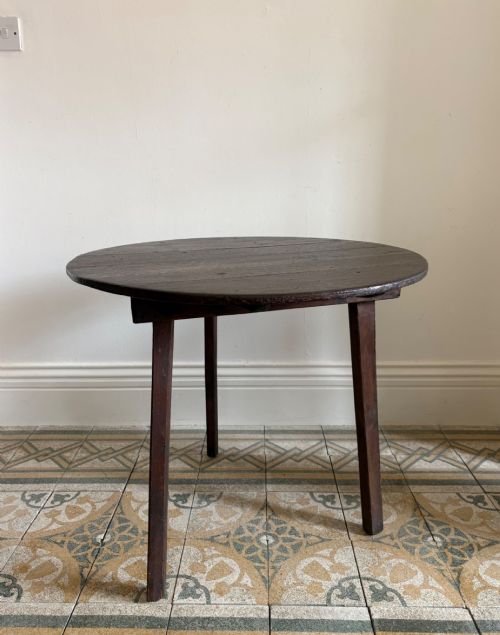
Earlier 18th-century examples often use oak with pad feet, while Regency and Victorian pieces favour rosewood or mahogany with pillar mounts.
Are tripod tables stable on carpets?
The three-legged design naturally accommodates uneven surfaces better than four legs, provided the splayed feet are sturdy.
They sit well on carpets, though heavy items should be placed centrally to maintain balance on the pillar.
What is the difference between a wine table and a lamp table?
Wine tables typically feature smaller, sometimes dished circular tops intended for holding a glass or bottle near a seat.
Lamp tables offer slightly broader surfaces suited to lighting and books, often emerging during the Victorian period.