




Leather Inset Side Table
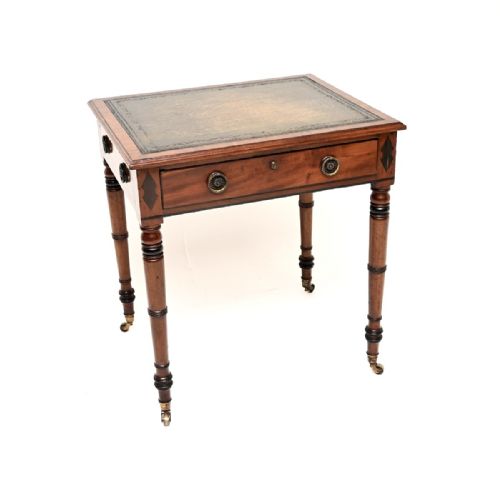
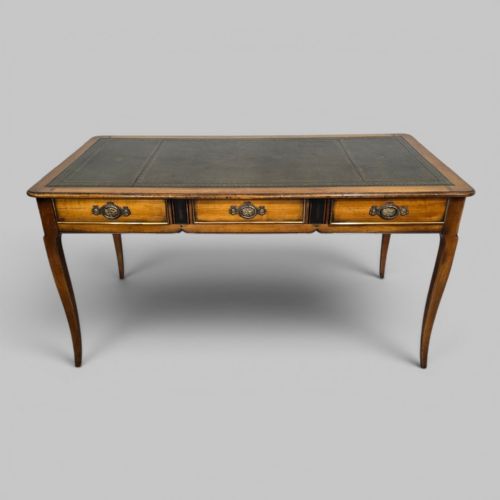
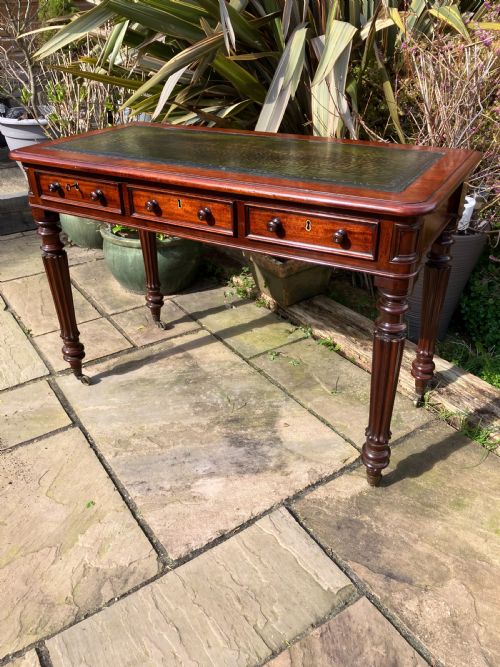
A leather inset side table offers a practical surface for writing and display, combining functional timber work with a supple leather writing surface.
Leather Inset Side Table
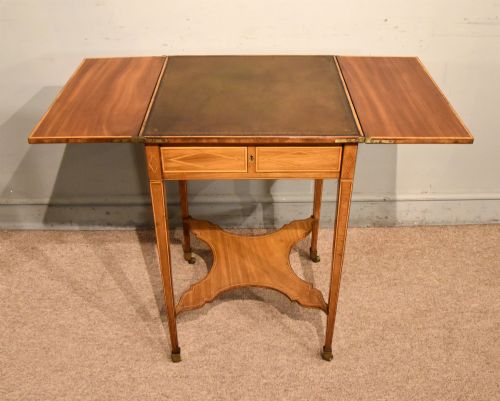
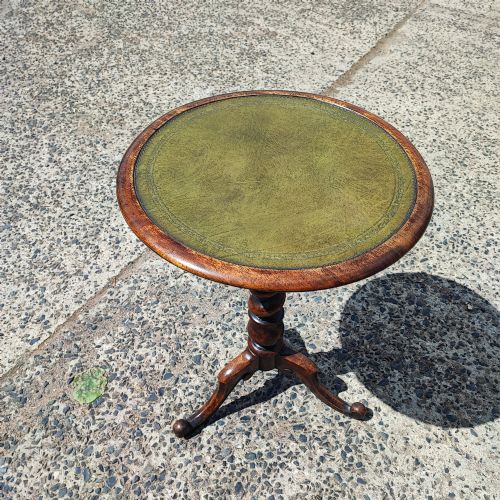
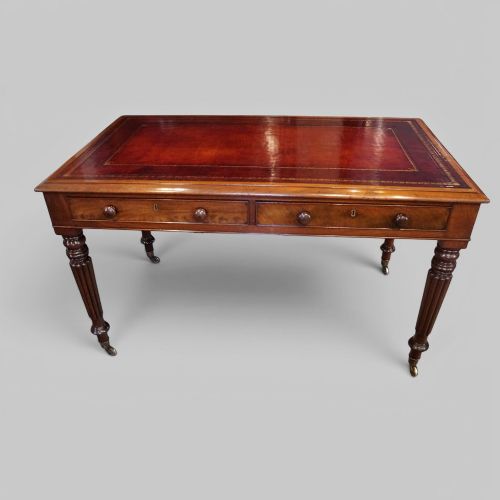
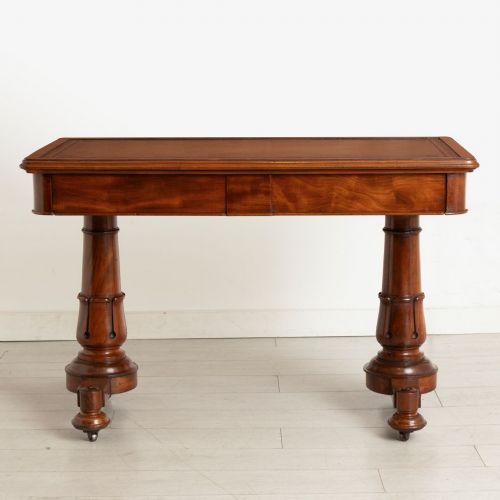
When you search for a leather inset side table, you encounter diverse forms ranging from compact occasional tables to substantial partners desks, library tables, and writing tables. The pieces span periods from the nineteenth century through the Edwardian era, reflecting Georgian, Regency, Victorian, and later revivals.
Mahogany predominates among the timber choices, frequently accompanied by oak, walnut, and occasional examples in birdseye maple or satinwood inlay. The formats include two-drawer side tables, drum tables, tripod tables, and console tables designed for domestic utility and study.
Victorian and Edwardian interpretations form the core of the available selection, often presenting fitted drawers and distinct surface tooling around the inset leather panel. These pieces served diverse functions in period interiors, operating as writing desks, library tables, and lamp stands.
How they were made
Cabinet makers utilised dense hardwoods such as mahogany, oak, and walnut to construct the primary frames and drawer structures. Timber selection determined the structural integrity of tables intended for daily writing and library use.
Writing surfaces incorporated panels of leather, frequently enhanced with gold leaf tooling around the borders. Brass hardware such as drawer pulls and castors complemented the timber frames, while inlay techniques like satinwood provided decorative contrast.
Listings feature woods including mahogany, oak, walnut, birdseye maple, and satinwood inlay.
What varies in quality
The sophistication of timber selection and secondary veneers establishes the baseline distinction between standard utility furniture and finer cabinet work. Pieces featuring figured mahogany, birdseye maple, or intricate satinwood inlay demonstrate superior craftsmanship.
The execution of brass hardware, the fineness of gold leaf tooling on the leather surface, and the stability of drawer construction dictate the overall calibre of an individual table.
The Leather Inset Side Table Glossary
- Partners Desk
- A large double-sided desk designed for two people to work opposite each other, featuring drawers on both long sides.
- Drum Table
- A circular library table with a deep top containing drawers, typically supported on a central pillar and tripod base.
- Tripod Table
- A small occasional table supported on a central column with three spreading feet.
- Satinwood Inlay
- Decorative contrasting wood veneer inserted into the primary timber surface to create geometric or floral patterns.
- Gold Leaf
- Extremely thin gold beaten into sheets, utilised for tooling decorative borders around leather writing surfaces.
Leather Inset Side Table: Frequently Asked Questions
What periods do these tables represent?
The pieces span the nineteenth and early twentieth centuries, encompassing Victorian, Edwardian, and Regency periods alongside Georgian styles and revivals.
Craftsmanship from these eras relies on traditional timber construction and hand-applied leather working techniques.
How were library tables used?
Library tables functioned as central workspaces for reading, sorting correspondence, and storing reference volumes within domestic studies and libraries.
Their substantial construction and drawer storage accommodated papers and writing implements.
Are these tables suitable for modern use?
These tables adapt readily to contemporary home offices, living rooms, and bedrooms as functional writing desks or display surfaces.
Their compact footprints and drawer configurations provide practical storage while maintaining period character.
What woods are commonly found?
Mahogany forms the primary timber across the majority of examples, supplemented by oak, walnut, and occasional lighter woods like birdseye maple.
Cabinet makers selected these hardwoods for their durability and capacity to receive fine finishes.