
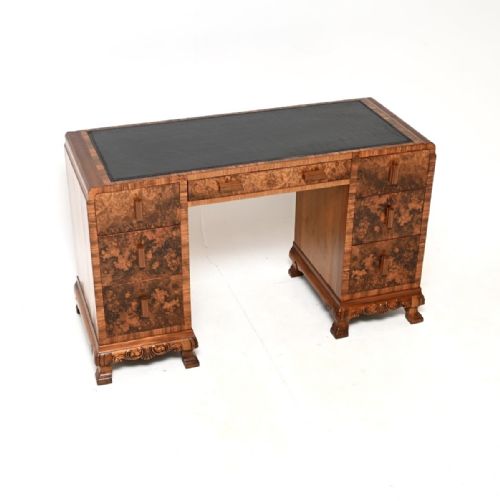
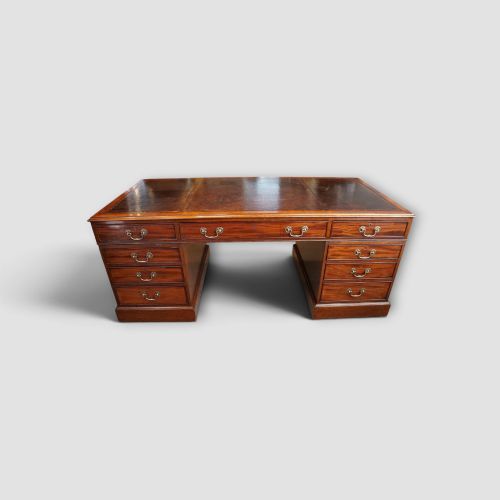
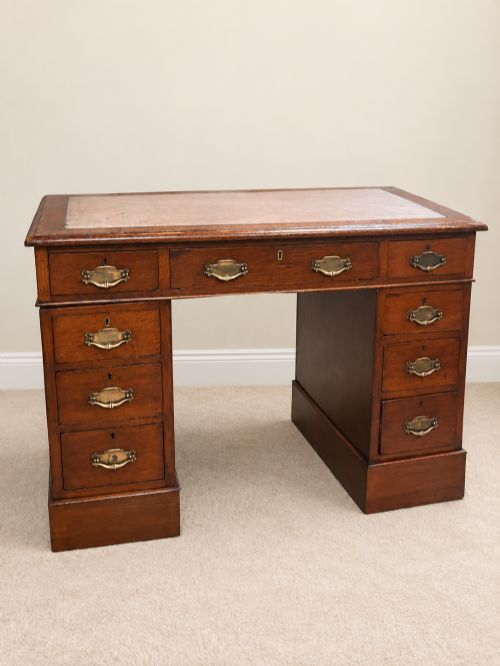
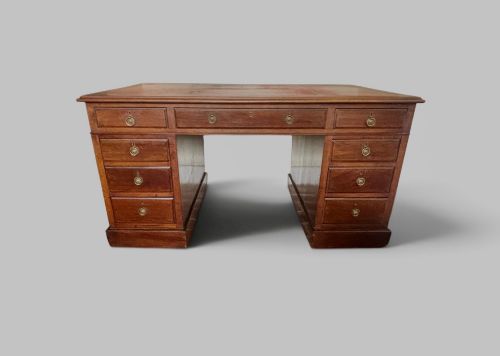


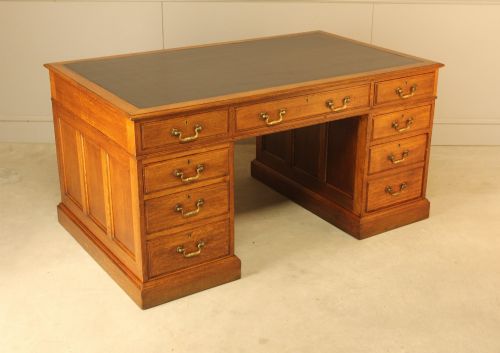
Brown Leather Pedestal Table
A brown leather pedestal table brings a functional writing surface and sturdy column support together in one practical room centrepiece.
Brown Leather Pedestal Table
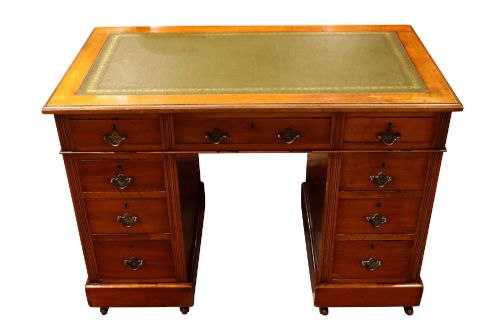
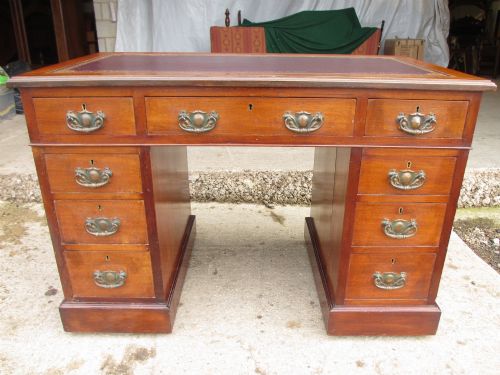
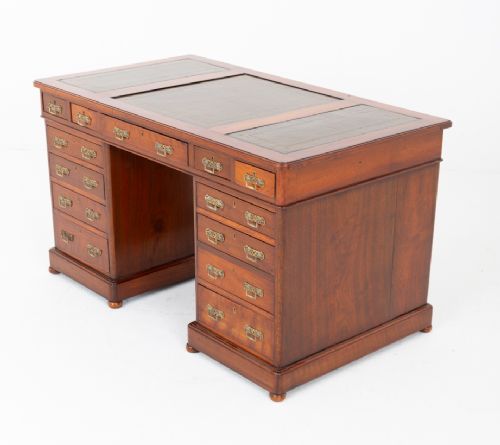
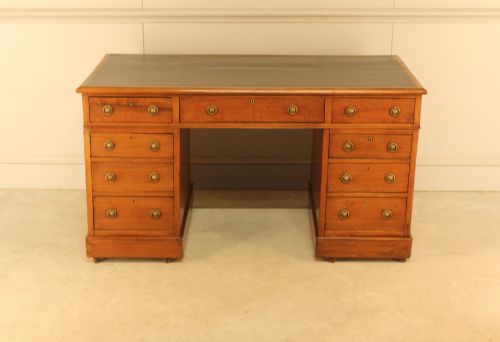
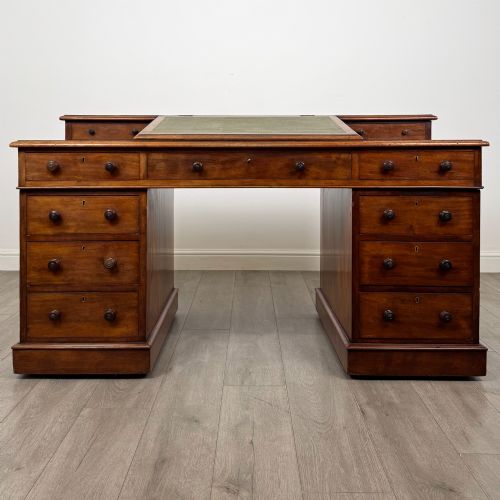
When you search for a brown leather pedestal table, you encounter forms that span several centuries and styles, including Victorian, Edwardian, and Georgian revivals. The listings show that these pieces frequently take the shape of pedestal desks, partners desks, and drum tables supported by a central pillar or twin pedestals. Walnut, mahogany, and oak dominate the construction, paired consistently with leather writing surfaces.
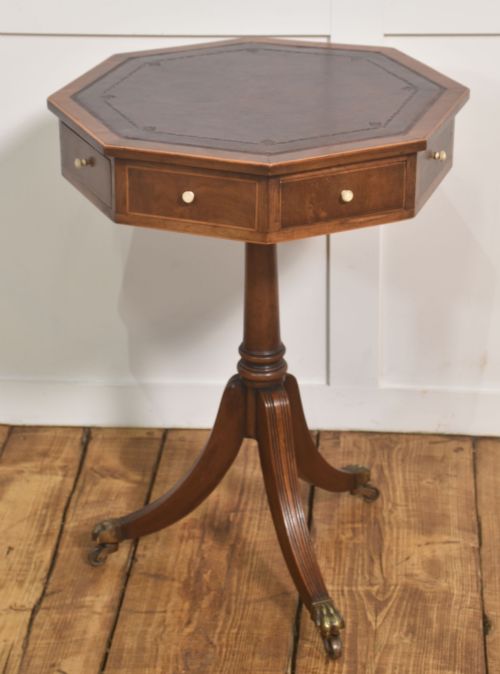
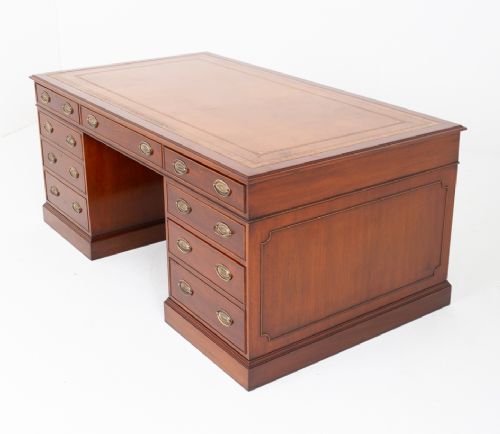
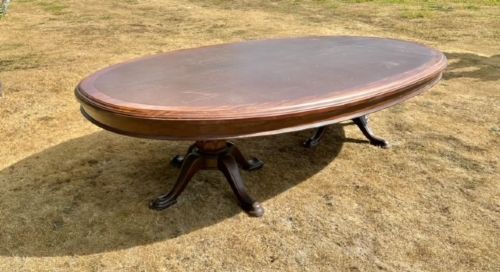
The version you are most likely to meet on this page is the nineteenth-century or early twentieth-century pedestal desk featuring a tooled leather insert atop multiple drawers. These range from compact walnut kneehole desks to large mahogany partners desks designed for use from both sides. Library tables and occasional drum tables also appear, offering circular leather tops supported by tripod bases or heavy central columns.
How they were made
Cabinet makers constructed the foundational carcases of these tables using dense timbers such as mahogany, oak, and walnut, often applying burr walnut or satinwood veneers for decorative effect. Drawers utilised traditional dovetail joints, while heavy pedestal bases provided stability for daily office or library use.
The defining feature, the leather writing surface, was typically glued directly to the wooden top and finished with decorative gold leaf tooling around the perimeter. Brass handles, key escutcheons, and occasional ivory inlay or Wedgwood plaques completed the detailing on higher-status examples.
Materials recorded include brass, gold leaf, ivory, and Wedgwood plaques alongside traditional hardwoods.
What varies in quality
The choice of timber creates a clear distinction across the range, moving from standard utility oak to highly figured burr walnut, satinwood, and dense old-growth mahogany. Finer examples display meticulous attention to timber selection, matching grain patterns across drawer fronts and pedestal columns.
Execution of decorative elements separates standard workshop production from master craftsmanship. Hand-tooled gold leaf borders, superior brass hardware, and intricate marquetry inlay indicate a higher grade of manufacture than plain stamped leather and utilitarian drawer construction.
Trollope and sons·Jackson and Graham·Edwards and Roberts
The Brown Leather Pedestal Table Glossary
- Pedestal desk
- A heavy writing table supported by two upright stacks of drawers rather than four separate legs. This form provides substantial storage beneath the main writing surface.
- Partners desk
- A large double-sided desk designed for two people to work opposite one another, featuring drawers and cupboards on both faces. These typically occupy the centre of a room rather than sitting against a wall.
- Drum table
- A circular library table featuring a deep frieze containing drawers, mounted on a central pillar and stable foot. The top is usually lined with leather for writing or reading.
- Tooled leather
- Leather decorated with pressed patterns, often highlighted using gold leaf applied with heated brass tools along the outer edges of the writing surface.
- Kneehole
- The central recessed space beneath a desk top where a person sits. In smaller desks, this space sits between two pedestals of drawers.
Brown Leather Pedestal Table: Frequently Asked Questions
What is a brown leather pedestal table used for?
These pieces served historically as functional writing desks, library tables, and administrative workspaces in studies and boardrooms. The durable leather surface provided a smooth plane for writing with ink and quills.
Today, they function effectively as executive desks in home offices or as statement centre tables in traditional libraries and studies.
How do I distinguish a Victorian desk from an Edwardian one?
Victorian examples generally feature heavier proportions, dense timbers like dark mahogany or walnut, and deep mouldings. Decoration often includes heavy hand-carving and robust brass handles.
Edwardian pieces tend to display lighter framing, satinwood or lighter mahogany veneers, and sometimes delicate inlay work reflecting Sheraton revival influences.
Are these tables free-standing?
Many pedestal desks and partners desks are finished on all sides, allowing them to stand in the middle of a room rather than pushed against a wall. Partners desks are specifically engineered for use from both directions.
Single-sided pedestal desks feature a plain panel at the back and are intended to face a wall.
What timbers were commonly used?
Mahogany, oak, and walnut form the primary structural and visual woods across the listed pieces. Cabinet makers also utilised burr walnut, satinwood, and thuya for specialised veneering.
Secondary woods like pine or oak were typically employed for internal drawer linings and hidden carcase framing.