



Vintage Drop Leaf Nightstand
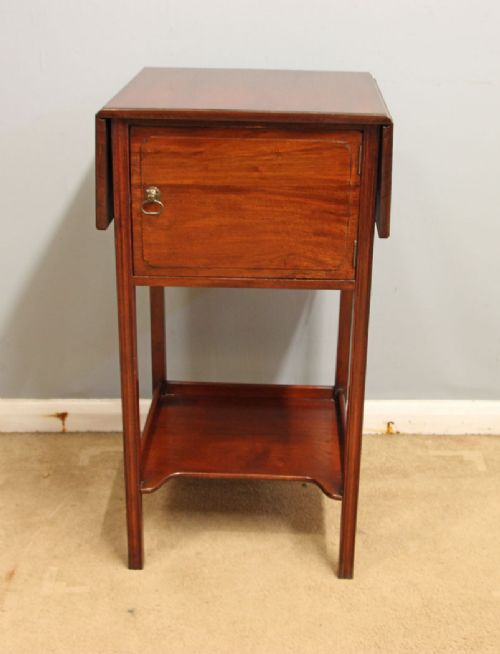
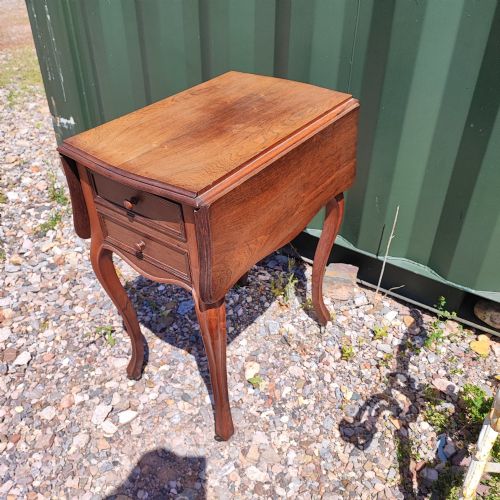
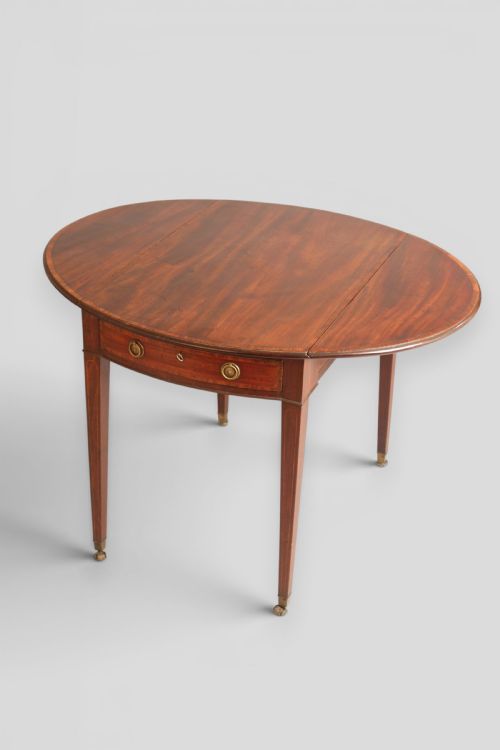
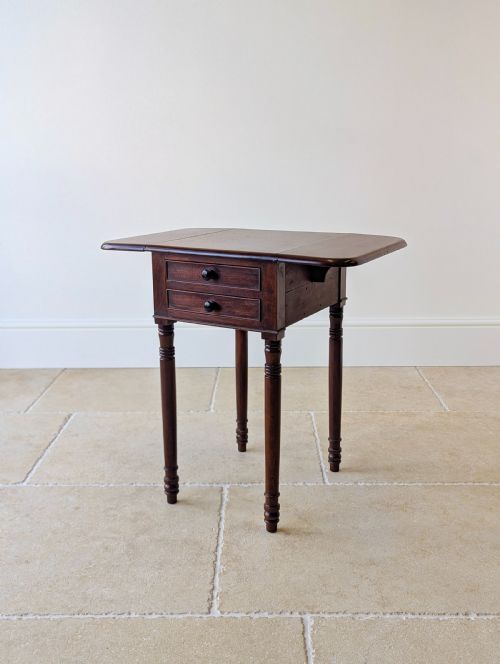
These vintage drop leaf nightstand pieces offer clever folding surfaces and compact bedside storage, merging period joinery with practical bedroom utility.

Vintage Drop Leaf Nightstand
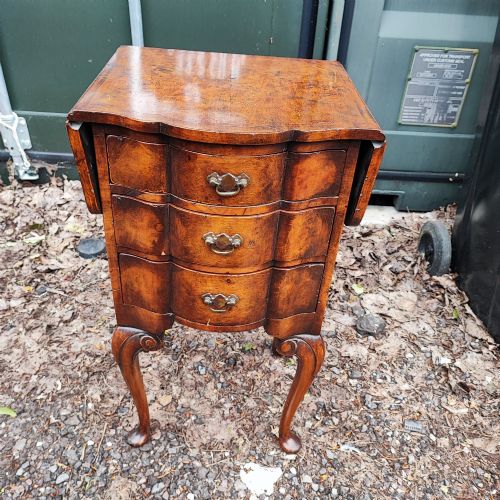
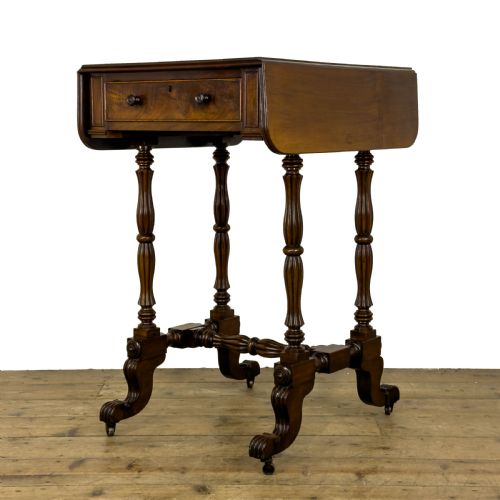
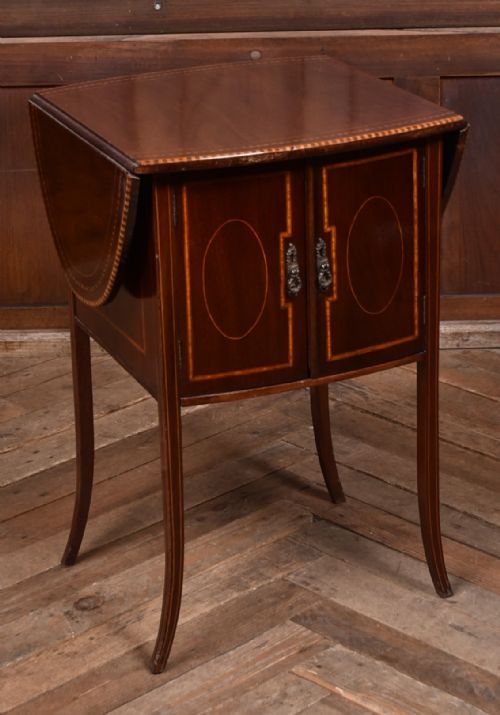
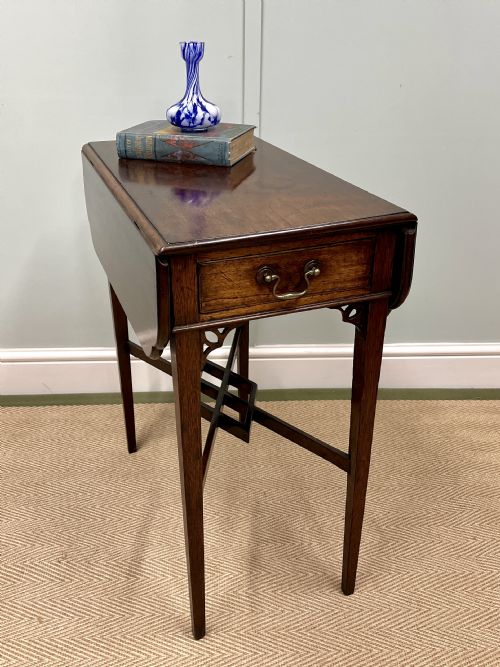
A vintage drop leaf nightstand brings together versatile folding leaves and bedside functionality, adapting readily to smaller bedroom layouts. When exploring this selection, buyers encounter various forms including compact side tables, drop leaf work tables, and modified Pembroke tables.
The objects span multiple periods, ranging from Georgian and Regency eras through Victorian, Edwardian, and later twentieth-century decades. Mahogany and walnut dominate the offerings, frequently accompanied by rosewood, satinwood, and boxwood details.
Makers and cabinetmakers built these pieces to serve multiple domestic duties, functioning as bedside cabinets, lamp stands, or occasional tables with hinged flaps. Their forms reflect the evolving demands of bedroom and parlour furniture across centuries of British and continental design.
Materials and construction
Cabinetmakers utilised solid timbers and timber veneers, selecting mahogany, walnut, and rosewood for their durability and rich grain patterns. Secondary woods and boxwood stringing provided structural support and delicate contrasting inlay.
Hinged leaves rely on drop-leaf brackets and folding wooden supports to extend the surface area when required. Brass fittings, handles, and occasional ceramic components secure drawers and support the folding mechanism.
Some baby Pembroke tables measure small enough to tuck beside a Victorian armchair as a miniature tea station.
Evaluating craftsmanship
The distinction between standard examples and finer pieces lies in the precision of the joinery and the selection of timber figures. Superior cabinets display well-matched mahogany or walnut grains and crisp, intact boxwood stringing.
The integrity of the drop leaf mechanism dictates daily usability, where smooth-operating folding brackets and sturdy hinges indicate careful original construction. Original brass hardware and stable drawer construction further separate exceptional specimens from simpler utility pieces.
The Vintage Drop Leaf Nightstand Glossary
- Pembroke table
- A small occasional table featuring two hinged flaps on opposite sides that can be raised or lowered. These tables often include one or two small drawers.
- Drop leaf
- A hinged table leaf that folds down when not in use to save space. It is supported by a pivoting bracket or swing leg.
- Sutherland table
- A narrow table with exceptionally wide drop leaves and folding legs that support the leaves when raised. It represents a specific Victorian and Edwardian form.
- Stringing
- A narrow inlay of contrasting wood or bone used to outline panels, drawers, or table tops. It adds subtle decorative linear detail to plain timber surfaces.
- Timber veneer
- A thin layer of choice wood applied over a sturdier secondary wood base. This technique allowed cabinetmakers to display striking grain patterns without using solid exotic timber.
Vintage Drop Leaf Nightstand: Frequently Asked Questions
How do I use a drop leaf table beside a bed?
Drop leaf tables provide an adjustable surface that expands for nighttime essentials and folds down to clear walkways during the day. Their compact footprint suits tight spaces where standard bedside tables prove too large.
Position the table so that the hinged flap opens away from the bed or towards the wall depending on daily habits. This flexibility accommodates lamps, books, and glasses without cluttering smaller bedrooms.
What is the difference between a Pembroke table and a bedside cabinet?
Pembroke tables feature drop leaves on two sides and typically rest on slender legs with an open underframe. Bedside cabinets enclose storage behind a door or drawers, often with a fixed top rather than folding flaps.
While some Pembroke tables serve as bedside surfaces in modern homes, traditional cabinets prioritised enclosed storage over expandable leaves. Both forms appear frequently in historical bedroom furniture.
How can I date a mahogany bedside piece?
Dating relies on observing construction methods, hardware styles, and the specific tone of the mahogany timber. Georgian and Regency pieces tend to show lighter framing and linear proportions, while Victorian examples often incorporate heavier mouldings and turned legs.
Edwardian items frequently display inlaid boxwood stringing and lighter internal secondary woods. Comparing drawer joints and backboards helps confirm the manufacturing era.
Are walnut and mahogany pieces cared for differently?
Both timbers require gentle cleaning with a soft cloth and protection from direct sunlight and excessive moisture. Wax polish nourishes the wood grain and maintains the historical surface sheen without sealing the timber permanently.
Avoid placing damp glasses or unshielded lamps directly on antique wood surfaces to prevent water rings and heat damage. Regular dusting preserves the original polish across both walnut and mahogany.