




Fretwork Stretcher Table
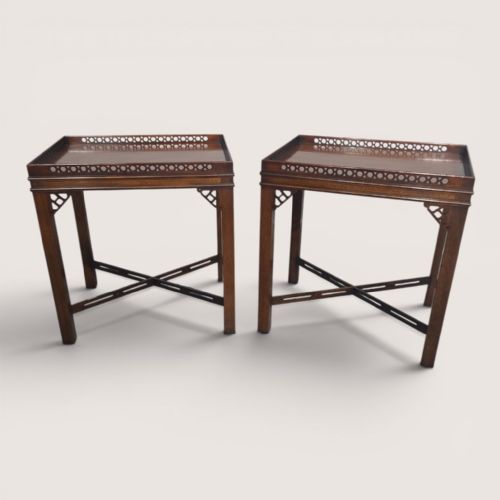
A fretwork stretcher table brings pierced wooden joinery down to the floor, offering a stable surface with distinct ornamental ambition.
Fretwork Stretcher Table
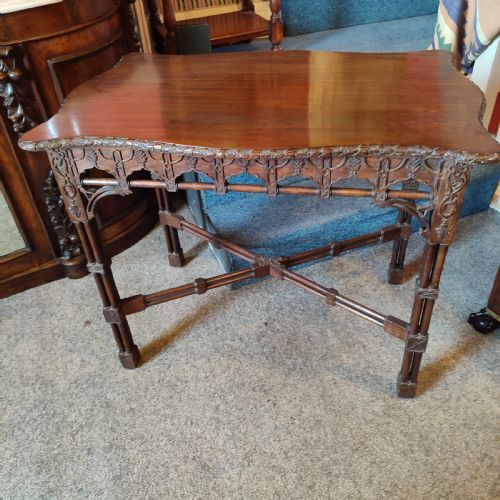
A fretwork stretcher table uses interlocking wooden braces beneath the top to provide both rigidity and a decorative architectural element. When buyers search for a fretwork stretcher table, they seek these pierced lower cross-braces that elevate a simple support frame into a visible design feature.
The pieces appearing here span side tables, occasional tables, Pembroke tables, writing tables, and silver tables. They cross several distinct periods, including Georgian, eighteenth century, nineteenth century, and early twentieth century revivals.
Mahogany is the dominant timber across these examples, occasionally accompanied by brass, glass, and painted wood. Styles range from strict Chippendale period work to Chippendale Revival, Edwardian interpretations, and French Chateau designs.
How they were made
Makers built these tables primarily using mahogany, selected for its strength and ability to hold fine, intricate cuts without splitting. Timber sections were joined using traditional cabinet-making methods to support the weight above while leaving room for open fretwork below.
Pierced stretcher components were worked by hand using fretsaws to create open geometric or interlaced patterns between the legs. Additional details such as fitted top drawers and display shelf stretchers required careful housing joints and dovetailed construction.
Some tables feature display shelf stretchers, giving the dust below a proper mahogany platform to rest upon.
What varies in quality
Quality rests heavily on the crispness and depth of the pierced work beneath the surface. Tables with sharply defined pierced apertures and clean internal angles demonstrate a higher level of cabinet-making than those with soft or rounded edges.
The choice and figuring of the mahogany timber also set examples apart. Dense, well-matched grain on the main surfaces and sturdy framing that keeps the stretcher assembly rigid without visible warping mark out better execution.
The Fretwork Stretcher Table Glossary
- Stretcher
- A horizontal support connecting the legs of a table to add stability. In these pieces, it also carries the decorative pierced work.
- Fretwork
- Ornamental woodwork pierced with a pattern using a fretsaw. It creates an open lace-like effect along the stretcher rails.
- Pembroke table
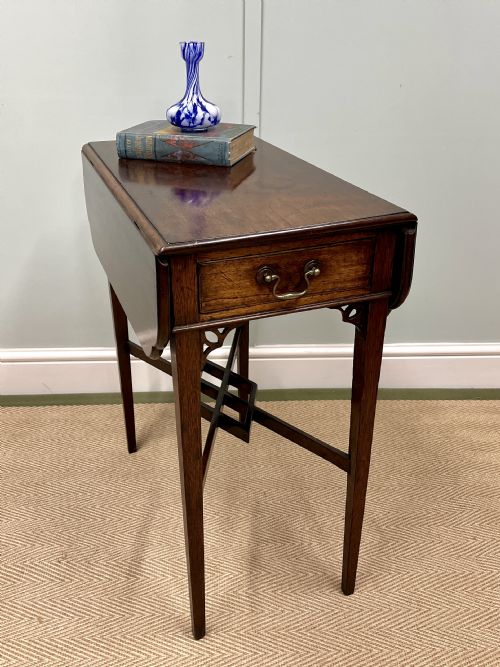
- A small rectangular table with hinged drop flaps on either side. It frequently incorporates a single drawer and braced legs.
- Silver table
- A high-sided display or serving table designed for tea service or silverware. These often feature raised galleries and intricate underframes.
- Chippendale
- A style originating from the mid-eighteenth-century designs of Thomas Chippendale. It heavily influences the carved mahogany and fret-cut stretchers seen in later revivals.
Fretwork Stretcher Table: Frequently Asked Questions
What is a fretwork stretcher table?
It is a small table featuring pierced wooden braces connecting the legs near the base. These braces provide structural rigidity while adding ornamental detail.
The examples here include side tables, writing tables, and Pembroke tables built from mahogany across several centuries.
How do I date a mahogany table?
Dating relies on observing construction methods, timber choice, and stylistic cues present in the piece. Eighteenth-century work differs significantly from later revivals.
The listings here range from the mid-eighteenth century through nineteenth-century pieces to early twentieth-century Edwardian examples.
Where should I place an occasional table?
These tables suit hallways, sitting rooms, or drawing rooms where surface space is needed without a heavy footprint. Their decorated stretchers reward low-angle viewing.
Keeping them away from direct heat sources helps protect the mahogany and prevents timber movement.
What is a Pembroke table used for?
A Pembroke table functions as a versatile workspace or occasional table with drop leaves that raise when extra surface area is required. Many include a fitted drawer for small items.
Their compact proportions made them popular for breakfasting, writing, or needlework in period homes.