


Vintage Drop Leaf Cabinet
These vintage drop leaf cabinet pieces offer compact utility and traditional timber craftsmanship, combining folding leaves with concealed storage for everyday living.
Vintage Drop Leaf Cabinet
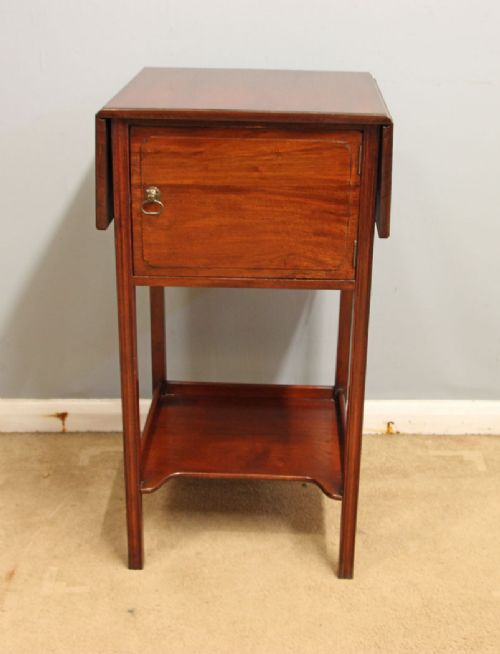
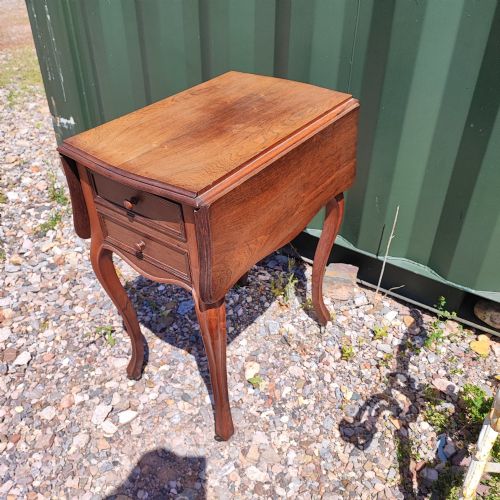
When you search for a vintage drop leaf cabinet, you are looking at practical wooden furniture designed to save space while providing surfaces and storage. These pieces combine hinged side leaves or flaps with cabinets, desks, and bedside tables.
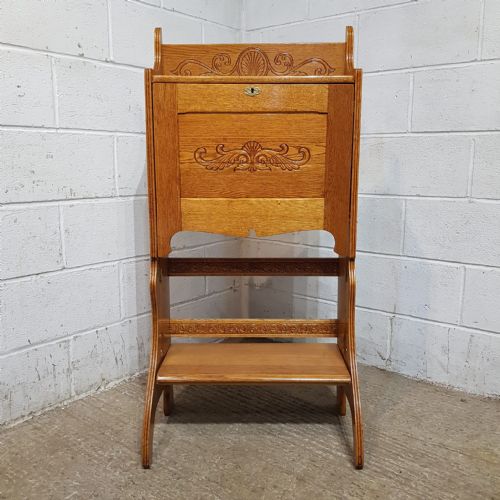
The selections here span periods from the mid-nineteenth century through the Edwardian era and into the 1930s. You will encounter forms such as bedside tables, compact bureaux, and side tables in various timber finishes.
Edwardian pieces and items from around nineteen hundred appear most frequently in this selection. They demonstrate the enduring popularity of folding flaps and drop fronts for domestic interiors.
How they were made
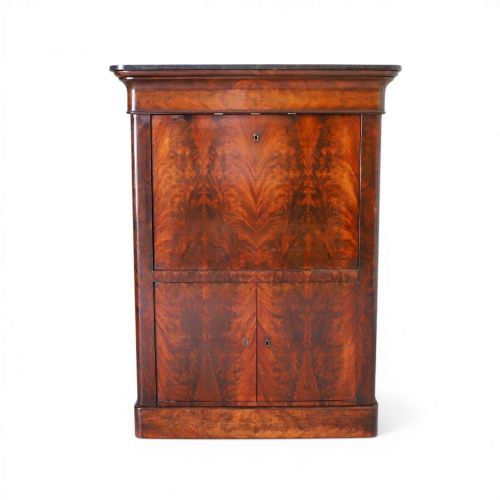
Cabinetmakers utilised solid timbers and attractive veneers to build these pieces, frequently selecting mahogany, walnut, and rosewood. Flame mahogany and figured walnut feature prominently to create rich grain patterns across flat surfaces and doors.
Metal hardware such as brass handles and hinges support the functional drop leaves and cabinet doors. Marble tops and glass elements also appear on specific nineteenth-century and twentieth-century examples.
Some nineteenth-century pieces conceal secret drawers behind their drop fronts, offering hidden compartments for private correspondence.
What varies in quality
The standard of a vintage drop leaf cabinet rests on the selection of timber veneers and the precision of the joinery. Superior examples display matched wood grains across the folding leaves and cabinet fronts.
Hardware execution and the smoothness of folding mechanisms distinguish finer pieces from simpler utilitarian items. The integration of secret drawers or shaped marble tops adds further distinction to the construction.
The Vintage Drop Leaf Cabinet Glossary
- Drop leaf
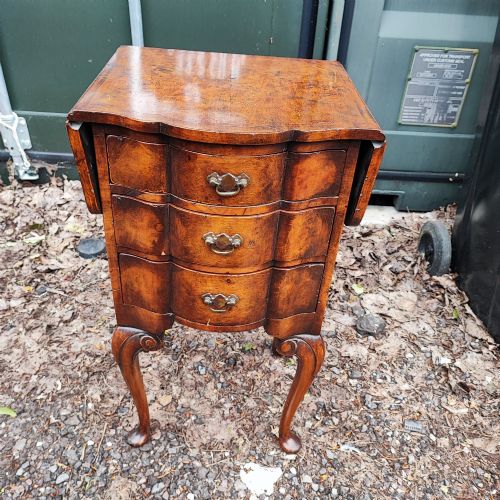
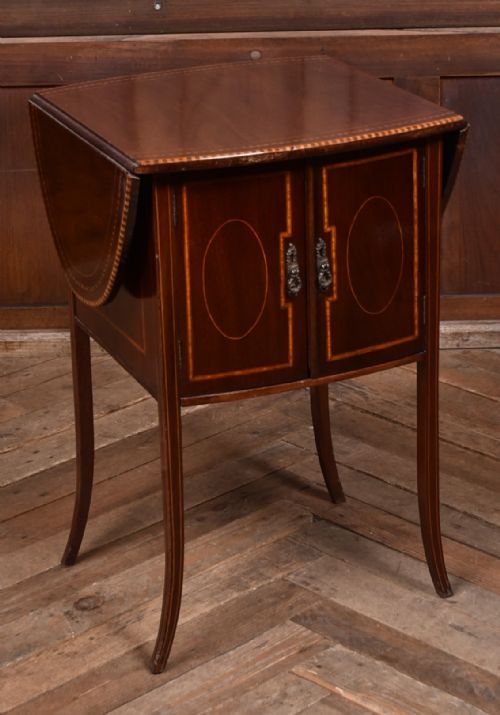
- A table or cabinet with a hinged flap on one or both sides that can be folded down or supported to extend the surface area.
- Bureau
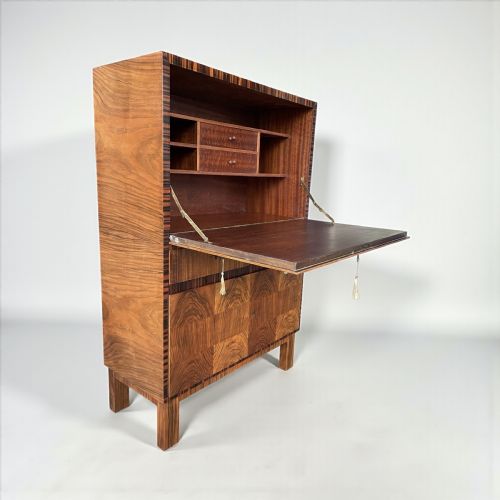
- A desk featuring a sloping hinged flap that opens to reveal a writing surface and small interior compartments.
- Flame mahogany
- A veneer cut from the fork of a mahogany tree where the grain creates a flame-like pattern, prized for decorative cabinetwork.
- Secrétaire à abattant
- A tall upright cabinet with a drop-front panel that serves as a writing desk, often concealing internal drawers.
Vintage Drop Leaf Cabinet: Frequently Asked Questions
Where were drop leaf cabinets used?
These cabinets served primarily in bedrooms, dressing rooms, and smaller parlours where space remained at a premium. The folding leaves allowed owners to adjust the footprint of the furniture according to immediate needs.
Bedside versions held lamps and night-time necessities, while desk variations provided compact writing surfaces that could be closed away neatly when not in use.
How do I identify Edwardian examples?
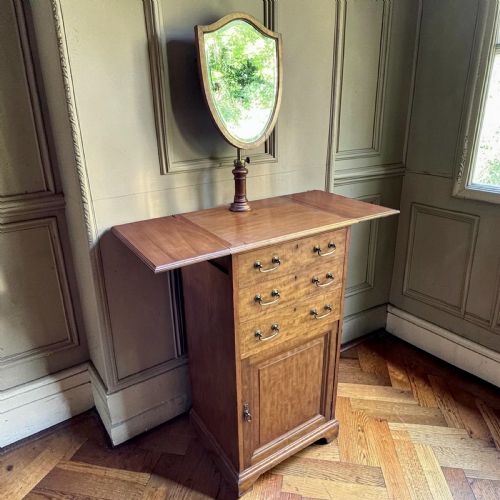
Edwardian pieces often utilise light mahogany framing and feature restrained decorative inlay or simple architectural lines. They frequently incorporate mirrors or adjustable shields on dressing chests and bedside furniture.
Comparing the lighter tone of Edwardian timber to the darker rosewood and walnut of earlier nineteenth-century items helps clarify the period of manufacture.
What timber finishes are common?
Mahogany, walnut, and rosewood dominate the material record for these cabinets. Walnut appears in both straight-grained and figured varieties across pieces from the 1920s and 1930s.
Flame mahogany provides striking visual texture on nineteenth-century surfaces, while oak appears in Arts and Crafts contexts from around nineteen hundred.
Are all drop leaves hinged?
The folding sections operate on metal hinges or pivoted wooden brackets designed to support the weight of the extended flap. These mechanisms allow the sides to drop vertically when extra floor space is required.
Checking the movement of the hinges and leaves reveals the original mechanical function intended by the cabinetmaker.