


Empire Style Secretaire
These empire style secretaire cabinets combine grand architectural form with concealed writing surfaces, offering serious presence and practical workspace.
Empire Style Secretaire
When you search for empire style secretaire, you are looking at substantial continental case pieces designed for private correspondence and display. The selection on this page centres primarily on nineteenth-century French and Biedermeier examples alongside occasional eighteenth-century precursors.
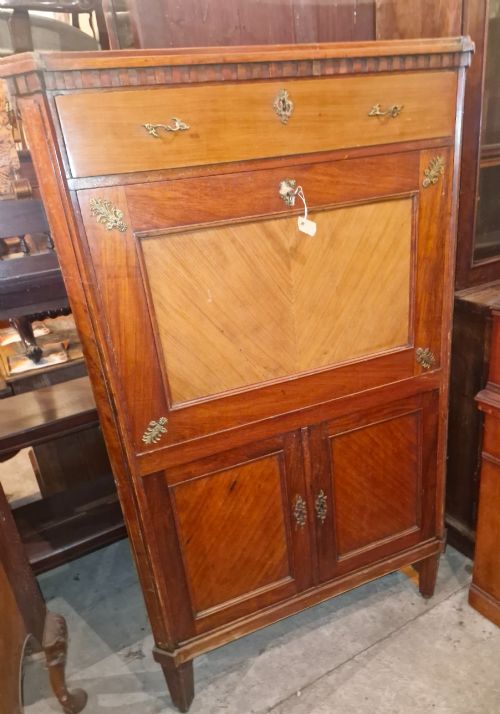
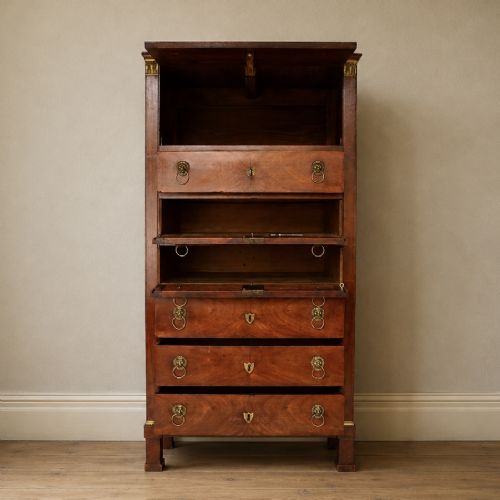
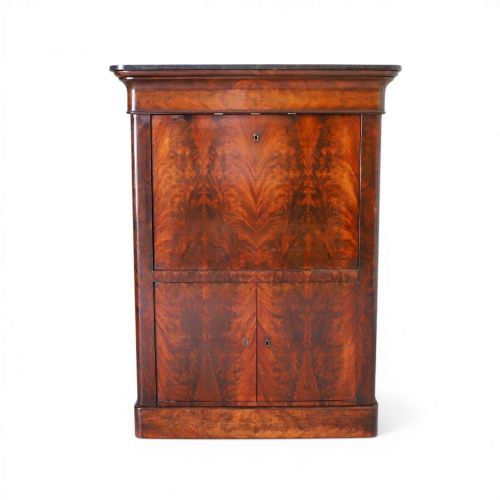
The dominant form is the secretaire à abattant, a tall cabinet featuring a drop-down fall front that conceals a fitted interior of small drawers and pigeonholes. Alongside these vertical cabinets, the evidence shows cylinder desks, escritoires, and secretaire commodes equipped with writing drawers.
Originating largely from France and continental Europe, these pieces reflect the monumental design vocabularies of the nineteenth century. Buyers encounter variations ranging from restrained Biedermeier birch pieces to grand French mahogany cabinets outfitted with marble tops.
Materials and Construction
Cabinetmakers constructed these frames using solid hardwoods like mahogany, walnut, oak, and birch, frequently applying rich flame mahogany or figured veneers to the primary surfaces. This technique created dramatic grain patterns across the large flat expanses of the fall fronts and drawer facades.
Metal mounts in brass and ormolu provide structural accent and classical decoration, typical of the French Empire aesthetic. Heavy marble tops in white or darker varieties crown many of the vertical cabinet forms, adding both weight and a finished classical surface.
Secret drawers lurk within these timber facades, designed to outsmart wandering eyes and misplaced love letters alike.
Factors of Quality
The distinction between standard examples and finer pieces lies in the choice of veneers and the precision of internal cabinetry. Superior items display matched flame mahogany veneers and intricate interior drawer arrangements that demonstrate careful joinery.
The integration of decorative elements such as cast brass or ormolu mounts and heavy marble slabs defines the visual hierarchy of these desks. Pieces retaining their original fitted compartments, secret drawers, and mirrors command greater attention from collectors.
The Empire Style Secretaire Glossary
- Secretaire à abattant
- A tall vertical cabinet with a hinged fall-front writing flap. This drop-down panel conceals an internal arrangement of small drawers and pigeonholes.
- Cylinder desk
- A writing desk featuring a curving cylindrical shutter that rolls back to reveal the writing surface and interior compartments. This form conceals the workspace when closed.
- Escritoire
- A traditional term for a writing cabinet or desk. The pieces listed under this designation date from the eighteenth and nineteenth centuries.
- Ormolu
- Gilded bronze used for decorative mounts and furniture trim. Makers applied these metal ornaments to accentuate the architectural lines of the cabinet.
- Biedermeier
- A central European style spanning the nineteenth century characterised by clean lines and domestic comfort. Furniture from this movement often utilises native timbers like birch.
Empire Style Secretaire: Frequently Asked Questions
What is a secretaire abattant?
A secretaire abattant is a tall upright cabinet featuring a hinged drop-down writing surface. This fall-front panel opens to reveal a fitted interior containing small drawers and compartments.
When closed, the cabinet presents a clean architectural facade that conceals the working desk area entirely.
How do I identify French Empire furniture?
French Empire pieces are characterised by monumental proportions, dark timbers such as mahogany, and classical architectural details. Ormolu mounts and marble tops frequently complete the formal appearance.
These cabinets often display symmetry and restrained ornamentation derived from classical antiquity.
What is Biedermeier style?
Biedermeier furniture developed in Central Europe during the early nineteenth century with an emphasis on utility and warm wood grains. Cabinetmakers often utilised native timbers such as birch and walnut rather than imported mahogany.
The aesthetic focuses on clean geometric forms and subtle ebonised details rather than heavy gilt bronze mounts.
How were these cabinets used?
These pieces served as private desks for correspondence and record-keeping in domestic interiors. The internal compartments provided secure storage for writing materials, letters, and important documents.
The drop-down flap created an immediate writing table without requiring a dedicated standalone desk.