


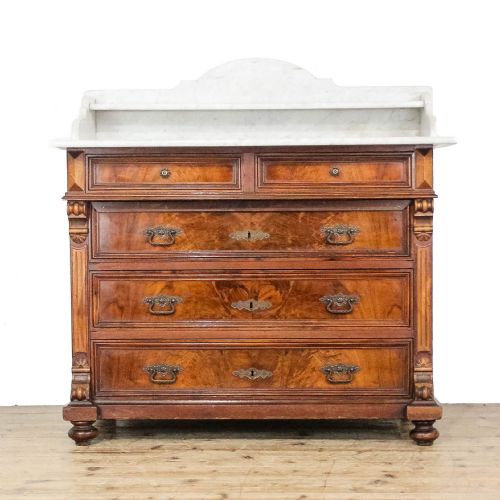


Marble Top Bureau
A marble top bureau brings together a fitted writing surface and a cool stone slab, combining practical workspace with decorative weight.
Marble Top Bureau
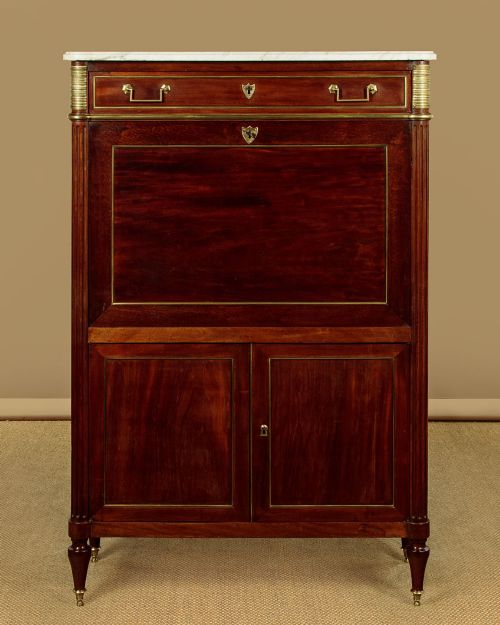
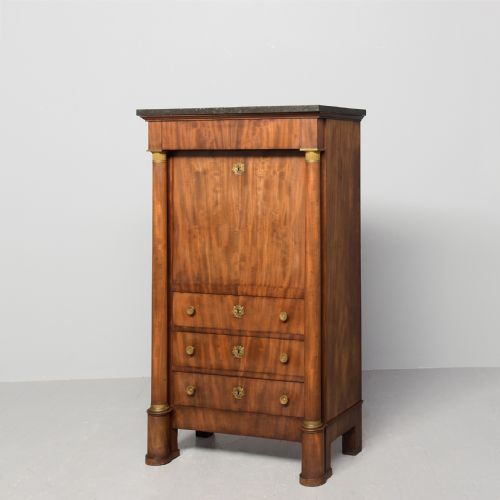
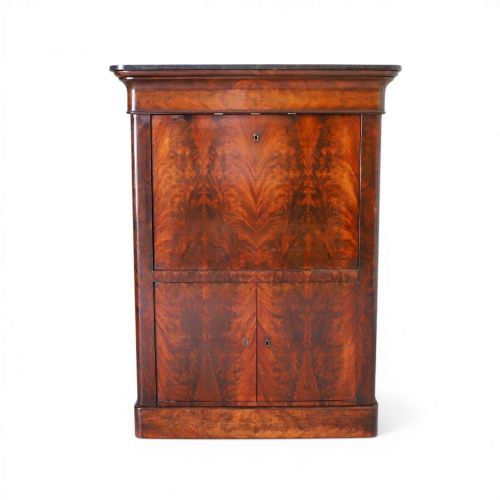
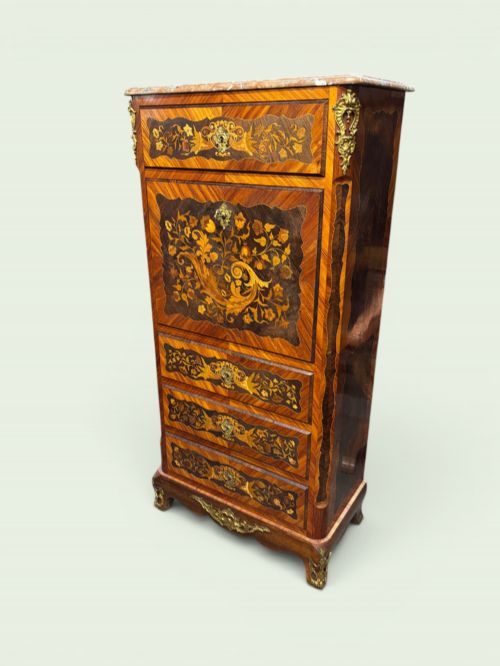
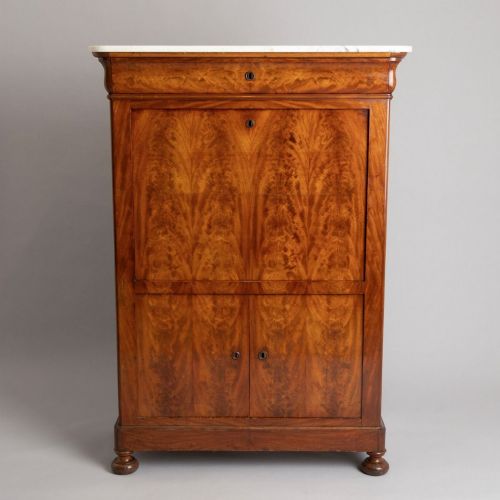
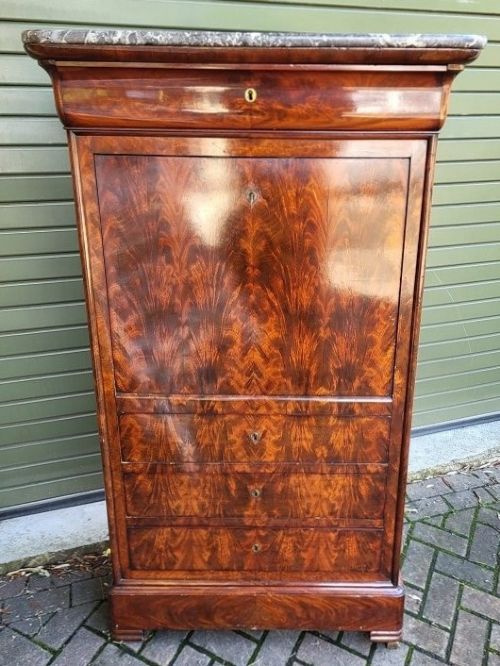
A marble top bureau most frequently appears as a nineteenth-century French secretaire abattant or cylinder desk, designed with a drop-down or rolling writing flap. These pieces originate predominantly from continental workshops, reflecting periods such as the French Empire, Louis XV and Louis XVI revivals, and the Victorian era.
The format combines enclosed storage and concealed drawers with a smooth stone surface across the top. Alongside upright secretaires, buyers encounter writing cabinets, chests of drawers, and occasional tables fitted with marble.
Makers often styled these desks within established revival movements, incorporating architectural proportions and refined cabinet work. The inclusion of stone provides a distinct visual weight and a durable horizontal plane.
Materials and Construction
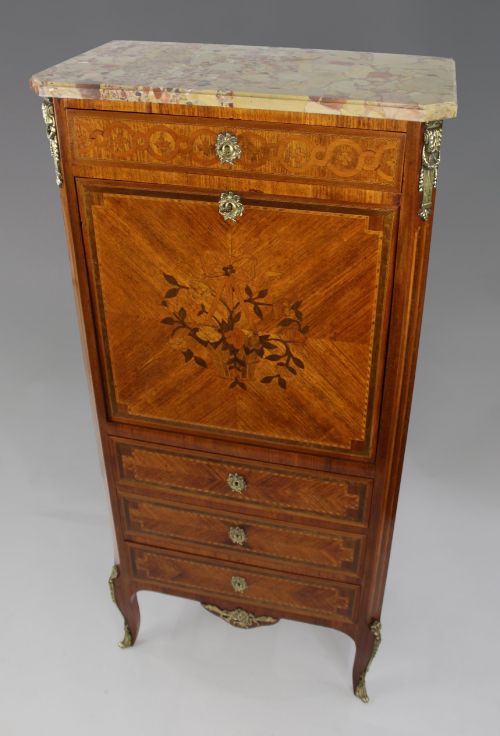
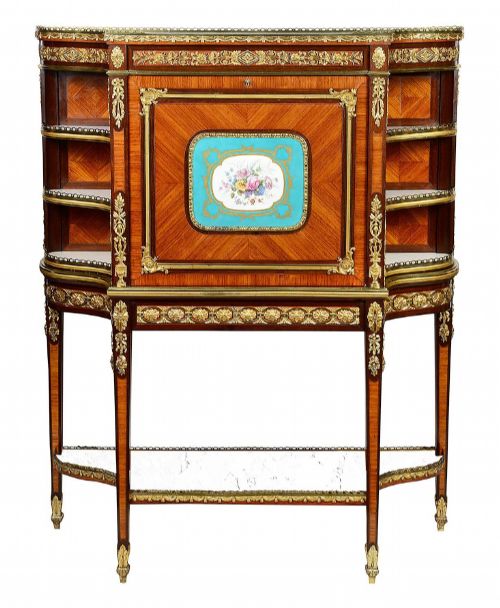
Construction relies on solid and veneered timbers including mahogany, flame mahogany, kingwood, rosewood, walnut, and satinwood, frequently laid over oak or pine carcases. Marquetry and parquetry patterns introduce geometric or floral designs across the exterior surfaces.
Gilt bronze, brass, and ormolu mounts frame the edges, drawers, and corners, adding metallic contrast to the timber and stone. Natural marble sits fitted to the uppermost section of the furniture, secured by the surrounding wooden gallery or moulded frame.
Secret drawers tucked behind dummy fronts remind us that nineteenth-century owners loved hiding love letters.
Assessing the Pieces
Quality rests on the precision of the cabinet work, the integration of the stone top, and the crispness of the bronze or ormolu mounts. Finer examples display meticulous grain matching in the veneers and smooth mechanics within the internal drawers and writing drops.
The depth of carving and the sophistication of marquetry inlay distinguish standard production from exceptional studio output. Original mounts that fit their rebates precisely indicate superior original assembly.
Blake·Paul Sormani·John Mclean·Millet·Befort Jeune
The Marble Top Bureau Glossary
- Secretaire abattant
- An upright writing cabinet featuring a drop-down front panel that opens to reveal a fitted interior of small drawers and compartments.
- Ormolu
- Gilt bronze mounts applied to furniture for decorative accent. This technique was widely utilised by nineteenth-century cabinet makers.
- Marquetry
- Decorative veneer work arranged in pictorial or geometric patterns using various coloured woods. It creates intricate surface designs across drawer fronts and fall flaps.
- Cylinder desk
- A writing table enclosed by a rolling quarter-cylinder wooden shutter that conceals the desk interior. When closed, it protects the fitted writing surface.
Marble Top Bureau: Frequently Asked Questions
What is a marble top bureau?
A marble top bureau is a writing desk or cabinet finished with a fitted stone slab across the upper surface. These pieces range from upright drop-front secretaires to cylinder desks.
The stone provides a durable, smooth decorative crown that distinguishes these writing pieces from standard wooden furniture.
How do I identify French revival styles?
French revival styles draw upon eighteenth-century court aesthetics, showing distinct curves in Louis XV pieces or straight, neoclassical lines in Louis XVI designs. Look at the balance of the mounts and the complexity of the veneer work.
Craftsmen during the nineteenth century revived these motifs using contemporary machinery while retaining hand-finished details.
Are the marble tops original?
Most marble slabs on nineteenth-century desks were cut specifically for the piece during initial construction, evidenced by precise fitting into the wooden mouldings. Variations in veining reflect the natural stone quarried at the time.
Inspect the edges where the stone meets the timber gallery to understand how the top integrates with the structure.