





Vintage Dressing Room Mirror
A vintage dressing room mirror brings functional elegance to a bedroom, offering adjustable reflection through cheval and tabletop forms.
Vintage Dressing Room Mirror
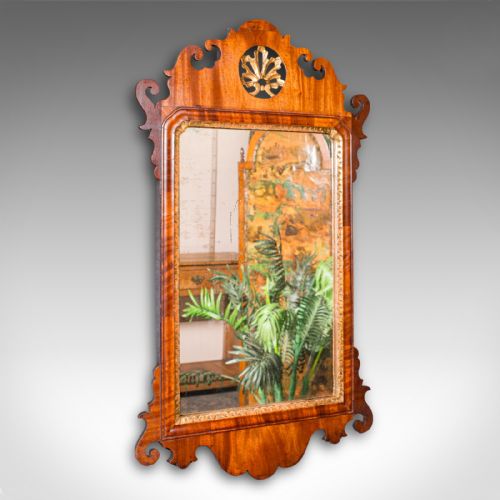
A vintage dressing room mirror encompasses cheval mirrors, triple dressing table mirrors, and floor-standing dressing mirrors designed for personal grooming. These pieces span from Georgian and Victorian eras through the 1920s, 1930s, and into the 1950s.
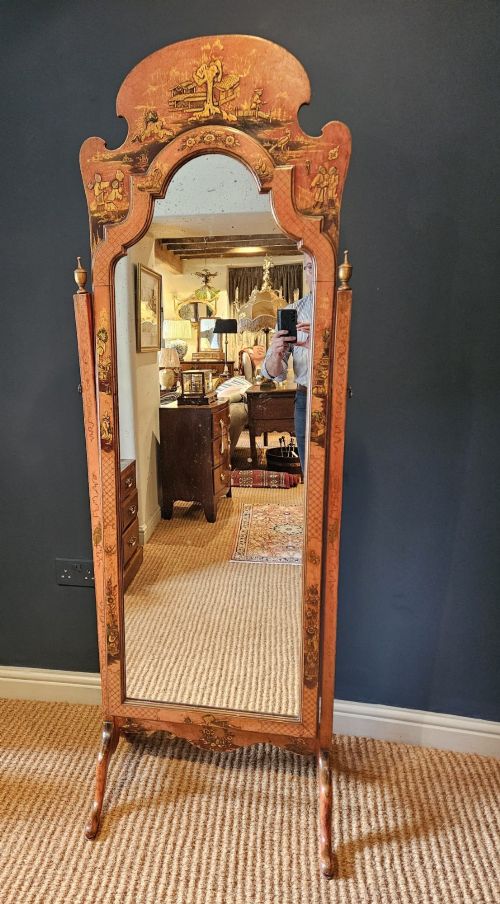
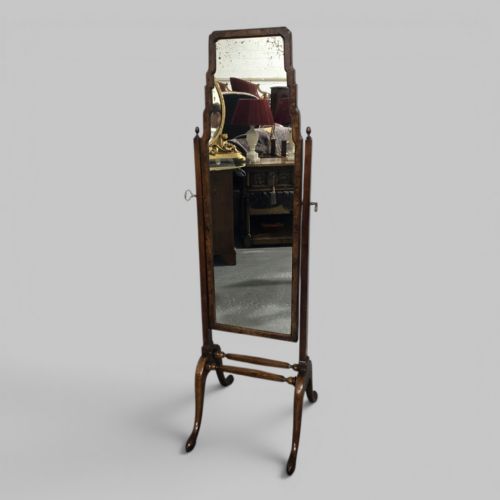
The most common versions met on this page are 1920s cheval mirrors framed in walnut, mahogany, or painted and lacquered wood. They stand on sturdy bases, often with tilting plates to adjust the angle of reflection.
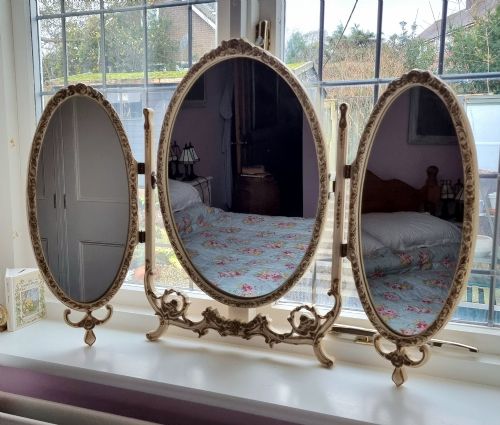
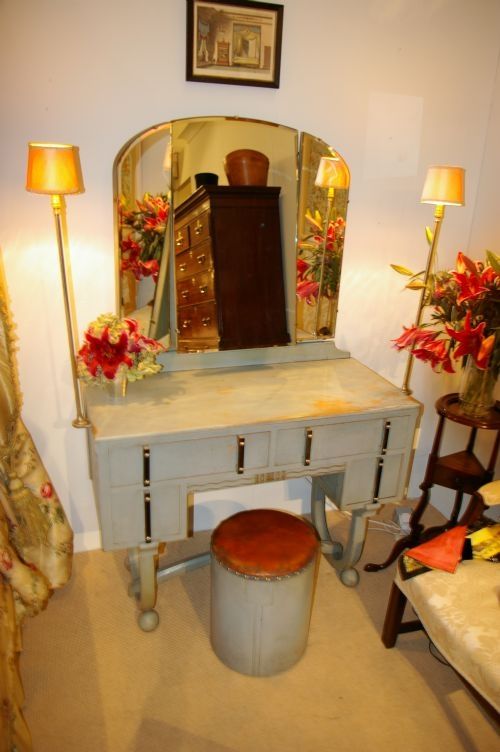
Other notable forms include triple dressing table mirrors and expansive floor-standing mirrors that serve both practical and decorative functions in a bedroom or dressing room.
Materials and construction methods
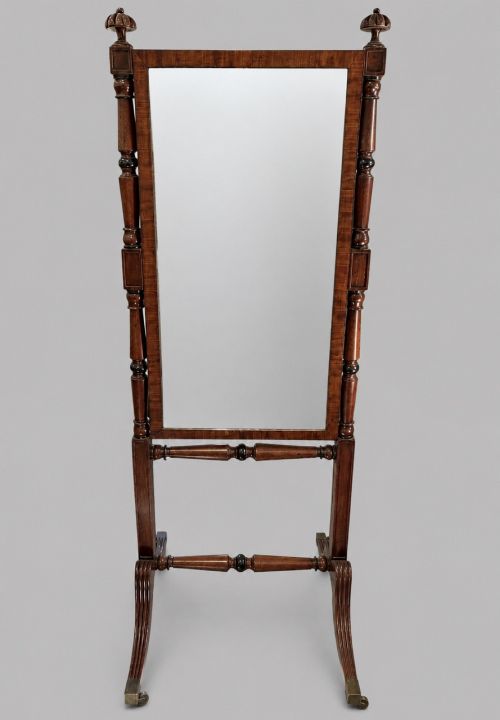
Timbers such as mahogany, walnut, and burr walnut form the primary structural frames, often complemented by brass castors, sabots, and hardware. Wood is frequently polished to a high sheen or painted in styles reflecting the period.
Mirrors utilise traditional glass and mercury glass plates set within stable wooden or brass frameworks. Artisans applied specialist decorative techniques including Chinoiserie motifs and lacquering to achieve distinct aesthetic finishes.
Periods represented span from the Georgian era through Victorian, 1920, 1930, and 1950.
Factors determining quality
The choice of timber grain, such as burr walnut or figured mahogany, distinguishes standard frames from superior examples. Finishes range from simple painted surfaces to intricate hand-painted Chinoiserie decoration.
Hardware quality, including solid brass sabots, castors, and tilting mechanisms, indicates the standard of manufacture. Original mirror glass and robust frame construction separate utilitarian items from exhibition quality pieces.
Rowley Gallery·Versace
The Vintage Dressing Room Mirror Glossary
- Cheval mirror
- A full-length mirror suspended in a frame that allows it to tilt. This freestanding form usually stands on four legs or a supportive platform.
- Mercury glass
- An early type of silvered glass produced by pouring a mercury and tin amalgam between double-walled blown glass. It creates a distinctive, mottled reflective appearance.
- Sabot
- A metal sleeve fitted to the foot of a furniture leg for protection and decoration. Brass versions are common on 19th-century supports.
- Triple dressing table mirror
- A three-panel mirror with a central plate and two adjustable side wings. It is typically designed to sit atop a dressing chest or table.
Vintage Dressing Room Mirror: Frequently Asked Questions
What is a cheval mirror?
A cheval mirror is a freestanding, full-length looking glass mounted in a frame that tilts on vertical pivots. This design allows the user to adjust the angle from head to toe.
Such mirrors became popular in the 19th century and continue to serve as practical bedroom furnishings today.
How do I use a dressing room mirror?
These mirrors are positioned in bedrooms, dressing rooms, or reception spaces to assist with grooming and outfit checks. Cheval versions stand directly on the floor, whilst smaller triple mirrors sit on dressing tables.
Positioning them near natural light sources helps maximise their reflective utility in the room.
How do I identify a 1920s mirror?
Mirrors from the 1920s often feature specific stylistic elements like Art Deco geometry or Chinoiserie decoration. Materials frequently include walnut, lacquered wood, and painted finishes.
Construction details and hardware styles help separate these 20th-century pieces from earlier Victorian or Georgian examples.
What is mercury glass?
Mercury glass is a double-walled blown glass type featuring a reflective silver lining inside. Despite the name, traditional versions used a tin and mercury amalgam.
Over time, this material develops a characteristic speckled appearance that distinguishes it from modern silvered glass.