
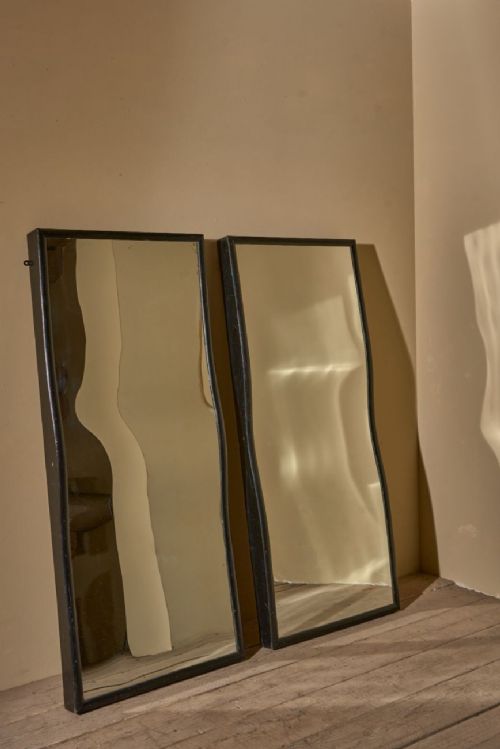
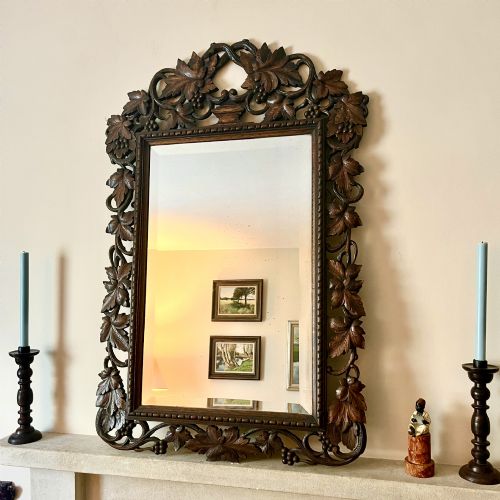
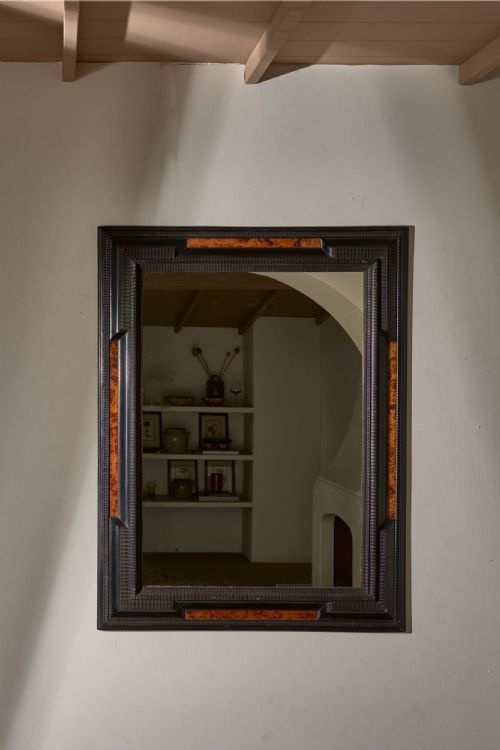

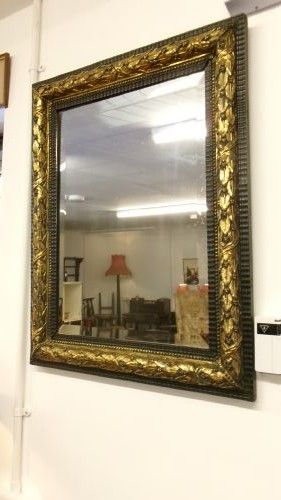
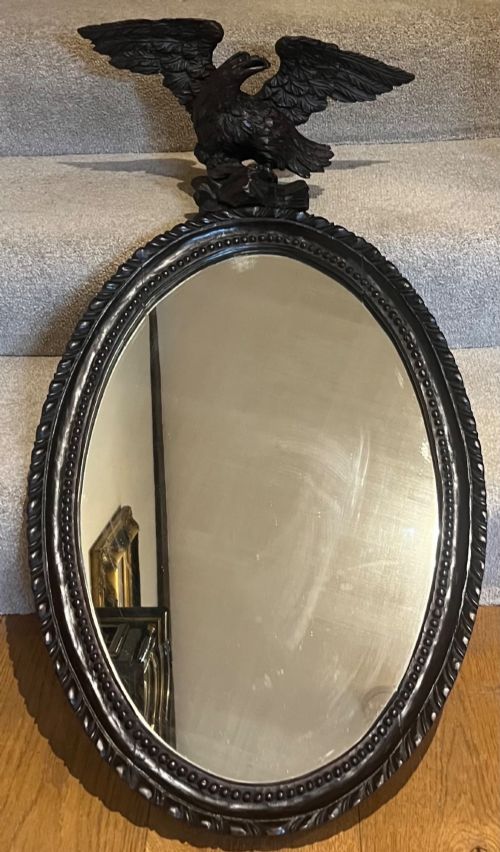


Black Timber Framed Mirror
A black timber framed mirror anchors a room with dark warmth, bringing depth and period character to any wall.
Black Timber Framed Mirror
A black timber framed mirror combines heavy dark framing with reflective glass, appearing across the nineteenth century and early twentieth century. These pieces range from restrained Victorian oak and ebonised mouldings to ornate Black Forest carvings and revival styles.
The most likely version to meet on this page is the nineteenth century carved or ebonised wall mirror, alongside striking early twentieth century fairground and circus pieces. Each item uses its dark wooden surround to frame the reflective surface and create a distinct visual anchor.
Makers and workshops from the Victorian, Edwardian and later periods utilised woods like oak, ebonised timber and veneer to construct these wall mirrors. Styles stretch from Italian Baroque Revival and Gothic to Art Deco and Black Forest designs, offering diverse decorative presence.
Materials and construction
Makers constructed these frames from solid timbers such as oak, applying carved details or ebonising finishes to darken the wood. Metal mounts, brass fixtures and veneer further supplement the wooden structures.
Mirror glass sits within the timber surrounds, occasionally featuring bevelled edges or mercury finishes that show age. Carved elements demonstrate traditional hand woodworking techniques across European workshops.
Current listings span the nineteenth century to the Edwardian era, featuring oak, ebonised wood, metal, and mirror glass.
Judging quality in dark framed mirrors
Quality rests upon the crispness of the wood carving and the depth of the ebonised finish applied to the timber. Superior examples exhibit harmonious proportions between the heavy wooden frame and the central glass.
The integrity of the original mirror glass and the skill evident in decorative brass or metal mountings distinguish finer pieces from standard production.
The Black Timber Framed Mirror Glossary
- Ebonised wood
- Timber treated with a dark stain or finish to imitate ebony. This technique was popular during the Victorian period for creating formal, striking frames.
- Black Forest
- A style of ornate, highly detailed wood carving originating from the Swiss-German border region. These pieces often depict natural motifs such as animals or foliage.
- Mercury mirror
- A type of mirror produced using a tin-mercury amalgam behind the glass before the modern silvering process was adopted. It creates a characteristic mottled, deep reflection.
- Bevelled glass
- Glass with an edge that has been cut and polished to an angle thinner than the rest of the pane. This catches the light and adds dimension to the mirror face.
Black Timber Framed Mirror: Frequently Asked Questions
Where should I hang a black framed mirror?
These dark frames suit hallways, above mantelpieces, or as feature pieces on neutral walls where the timber contrast stands out.
Ensure the wall fixings safely support the weight of solid oak or heavily carved wooden surrounds.
How do I clean an antique mirror frame?
Dust the carved timber gently with a soft, dry brush to protect the ebonised or natural wood finish.
Avoid harsh chemical cleaners that might strip the historic dark surfaces or damage old mirror glass.
Are these mirrors heavy?
Many examples utilise dense nineteenth century oak or substantial carved timber frames which add considerable weight.
Professional hanging hardware is recommended to secure these heavy wall mirrors safely.
How do I identify a Victorian mirror?
Look for construction methods, traditional wood species like oak, and characteristic styles such as Gothic revival or ebonisation.
Inspect the backboards and fixings for signs of age consistent with the nineteenth century.