



Vintage Double Candelabra
These vintage double candelabra bring twin-branch illumination to a dining table or mantelpiece, offering instant period character and warm candlelit charm.
Vintage Double Candelabra
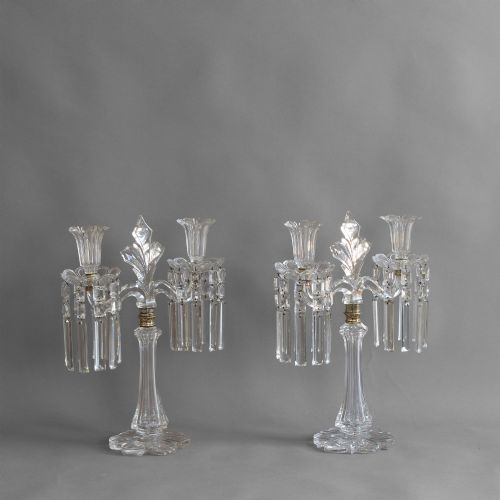
A vintage double candelabra provides two branches for candles, arriving in forms such as table candelabra, low two-branch table pieces, twin-light candlesticks, lustres, wall sconces, and converted table lamps. These items span the Victorian era, the nineteenth century, the Edwardian period, and twentieth-century movements including Art Nouveau, Jugendstil, Arts and Crafts, Art Deco, and George I Revival.
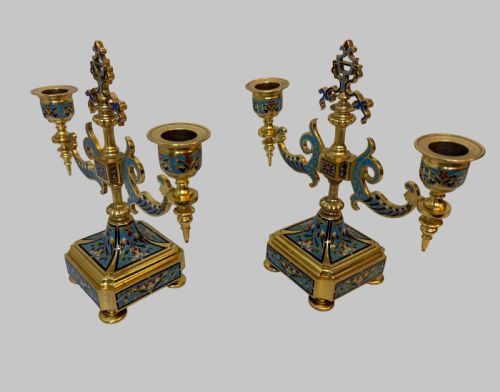
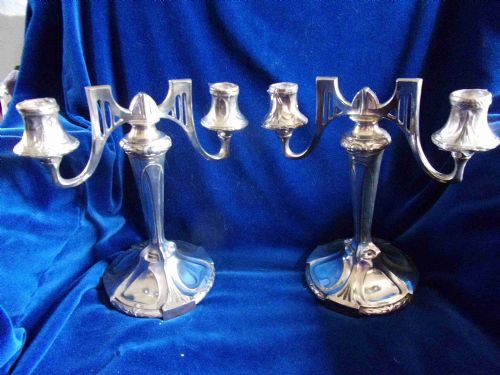
Buyers most frequently encounter silver plated and brass pairs dating from the late nineteenth century through to the mid-twentieth century. Alongside standard table pieces, the selection includes examples featuring cut glass, crystal, champleve enamel, gilt bronze, spelter, and sterling silver.
How they were made
Metals form the core of these pieces, utilising casting, plating, and smithing techniques across brass, silver plate, sterling silver, nickel silver, bronze, and spelter. Makers shaped molten metals into elaborate stems and arms, often incorporating structural mounts for secondary materials.
Decorative embellishment relies on specialised surface work, including champleve enamel detailing, applied gilt bronze, and hand-cut glass or crystal components. Lustres and sconces integrate these reflective elements to enhance the diffusion of light from dual candleholders.
Materials represented in the current selection include brass, silver plate, sterling silver, cut glass, crystal, gilt bronze, champleve enamel, and spelter.
What varies in quality
The sophistication of the casting and the crispness of the chased or engraved detail dictate the visual merit of a piece. Heavier gauge metals and complex stylistic execution, such as Jugendstil or Arts and Crafts motifs, generally indicate superior workshop standards.
The integrity of surface finishes, from the depth of silver plating to the vibrancy of champleve enamel and the clarity of cut glass, separates standard production items from finer decorative works.
The Vintage Double Candelabra Glossary
- Candelabra
- A branched candlestick designed to hold multiple candles at once. These pieces typically feature a central stem splitting into two or more arms.
- Lustre
- A decorative table ornament featuring glass pendants or drops hung around the bobeche. They catch and refract the candlelight.
- Champleve
- An enamelling technique where troughs or cells are hollowed out in the metal surface and filled with vitreous enamel before firing. It creates vibrant coloured patterns against a metal ground.
- Spelter
- A zinc alloy commonly used as a cost-effective substitute for bronze in decorative figures and bases. It is frequently given a bronze or metallic surface finish.
- Jugendstil
- The German variant of Art Nouveau popular around the turn of the twentieth century. It is characterised by flowing, organic lines and stylised natural forms.
Vintage Double Candelabra: Frequently Asked Questions
How do I style a double candelabra?
Place a matching pair at either end of a dining table or along a mantelpiece to create symmetrical balance and height. Their twin branches work well as a focal point during evening meals or gatherings.
Keep the surrounding decor simple so the metalwork and period details remain prominent. Ensure you use appropriately sized candles that fit securely into the twin sockets.
Were these candelabra used for dining?
These two-branch pieces were primarily designed to provide functional lighting on dining tables, sideboards, and drawing-room surfaces before widespread electrification. Their twin arms distributed light across a specific area without obstructing conversation across a table.
Over time, many found a secondary life as decorative mantel ornaments or were adapted into table lamps as lighting preferences shifted during the twentieth century.
What is the difference between brass and silver plate?
Brass candelabra display a warm golden metallic tone inherent to the alloy, often left polished or patinated through age. They suit traditional and arts-and-crafts interiors.
Silver plated examples feature a thin layer of silver bonded over a base metal foundation, offering a bright reflective sheen associated with formal Victorian dining wares.
How do I identify Art Deco pieces?
Art Deco candelabra from the 1930s often incorporate geometric forms, streamlined silhouettes, and figurative elements such as spelter female Hollywood figures. They contrast with the flowing organic curves of earlier Art Nouveau or Jugendstil designs.
Look for symmetrical lines and modern industrial influences that define the interwar aesthetic in these twin-branch pieces.