
Vintage Dog Statue
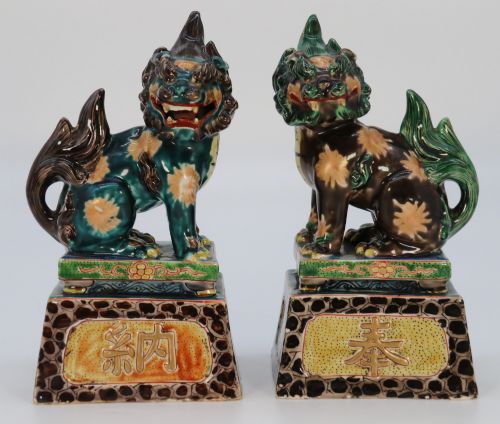
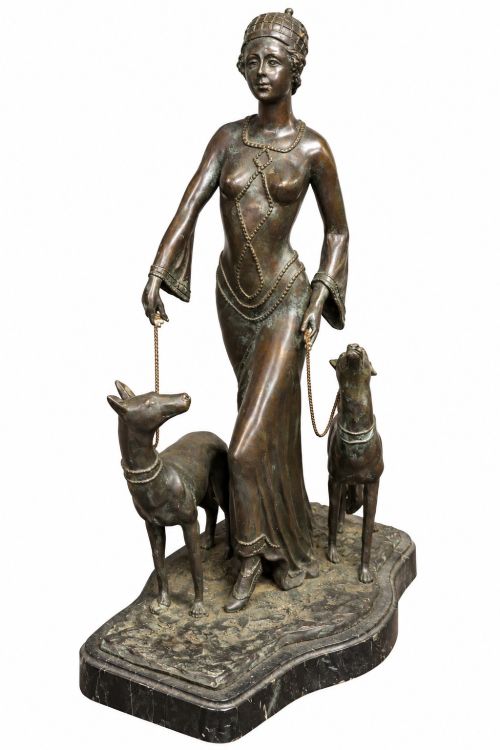
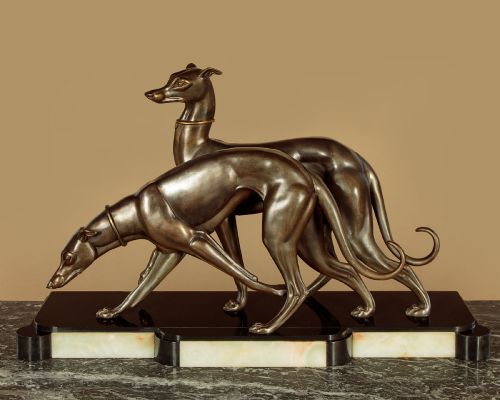
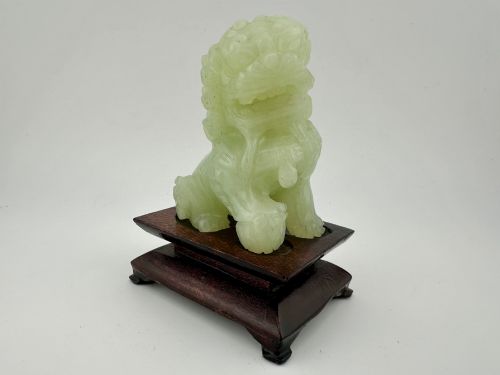
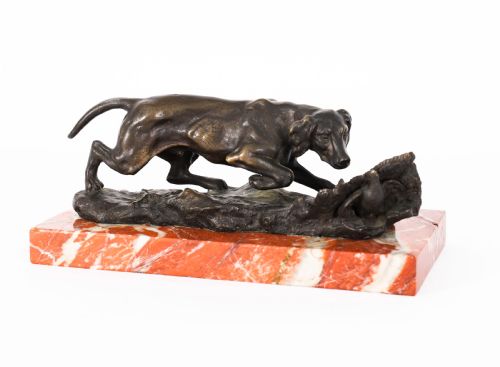
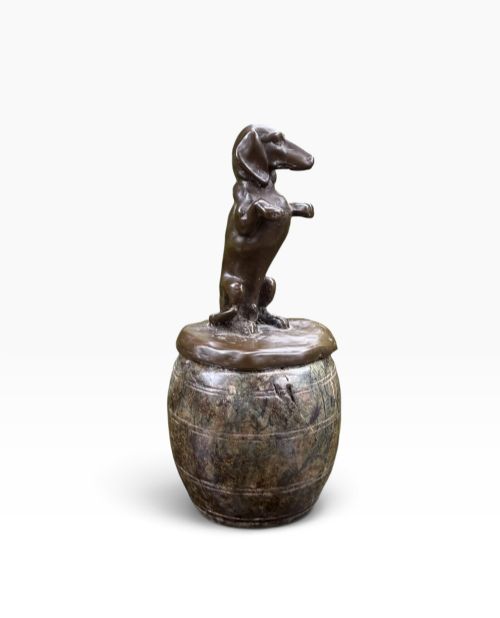
A vintage dog statue brings character and history into a room, capturing hounds, pugs, and terriers in bronze, pottery, and terracotta.
Vintage Dog Statue
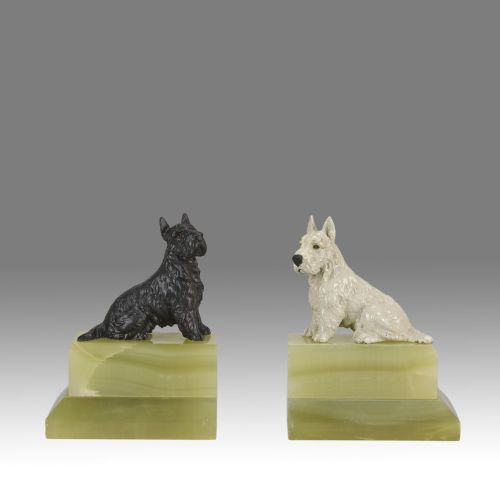
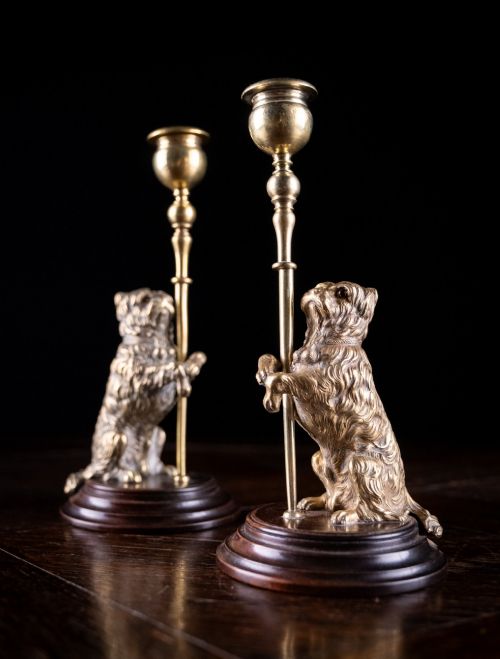
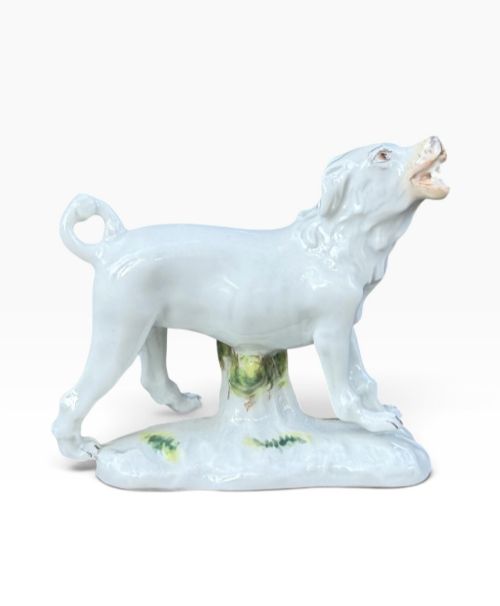
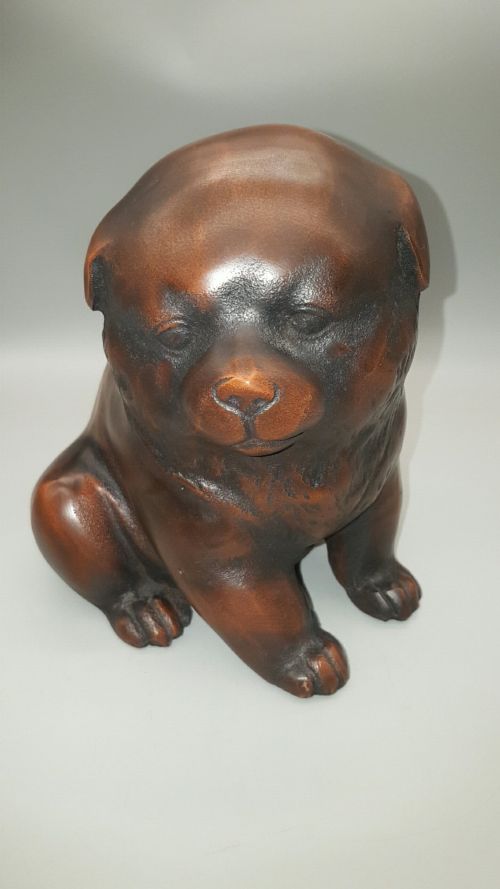
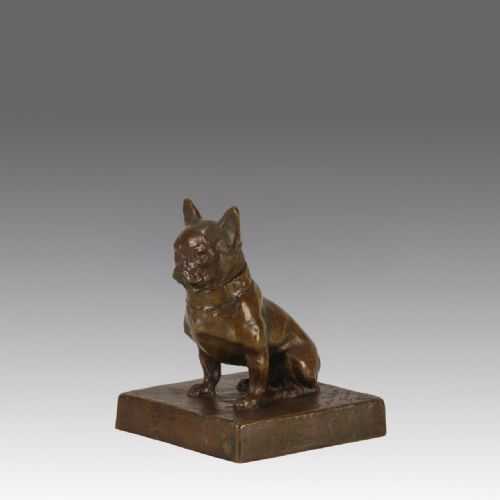
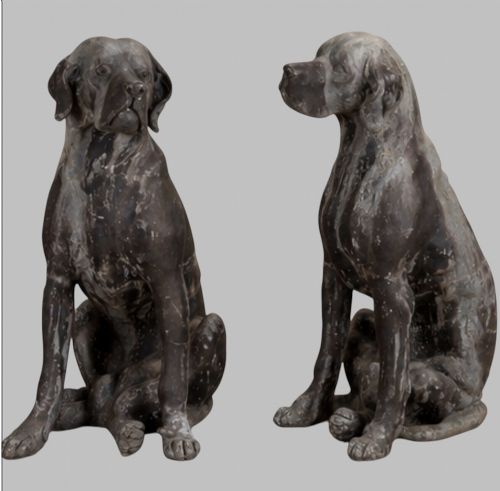
When you search for a vintage dog statue, you encounter an array of sculptural forms depicting hounds, terriers, pugs, and sporting dogs from the nineteenth and twentieth centuries. These pieces cross diverse categories, functioning as mantel ornaments, bookends, candlesticks, and paperweights rather than remaining strictly as fine art. Victorian Staffordshire pottery pairs sit alongside French Animalier bronzes and Austrian cold-painted terracotta models.
The versions you meet most frequently on this page span the Victorian era through the Art Deco period, utilising materials ranging from glazed ceramic to cast metal and carved wood. Domestic companions like dachshunds and poodles appear alongside working gun dogs and rescue dogs such as Saint Bernards. Makers captured these animals in resting poses, alert standing postures, and playful interactions with other objects.
Materials and Techniques
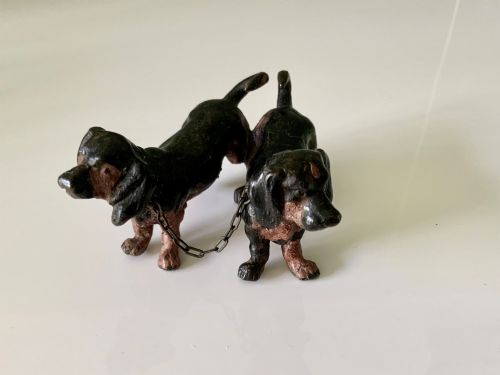
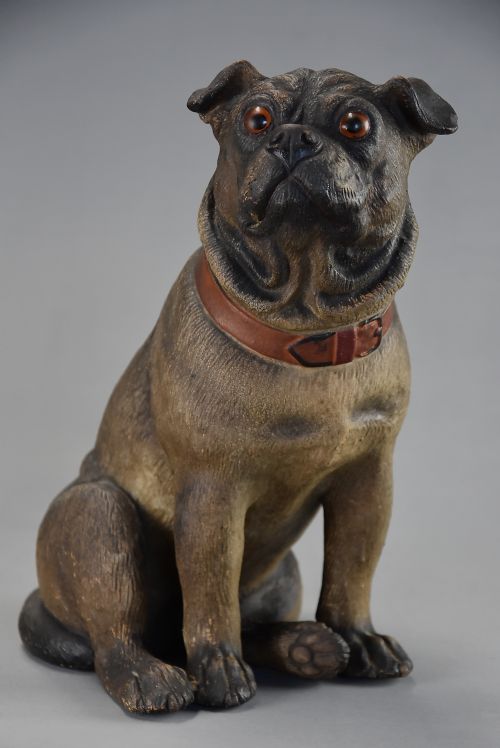
Foundry casting dominates the metal pieces, utilising bronze, brass, spelter, and cast iron. Many bronze and terracotta pieces employ cold-painting techniques to apply naturalistic colour directly onto the surface after firing or casting. Austrian workshops specialised in this detailed surface finish, particularly on small pug and dachshund studies.
Ceramic examples rely on traditional earthenware, porcelain, and Parian bodies, often enhanced with hand-painting or colourful glazes. Potters shaped Staffordshire figures and Meissen porcelain using moulds before applying cobalt, black, or natural tones by hand. Wood and boxwood carvings demonstrate detailed hand-chiselling, while composition and cast lead serve for larger advertising and garden figures.
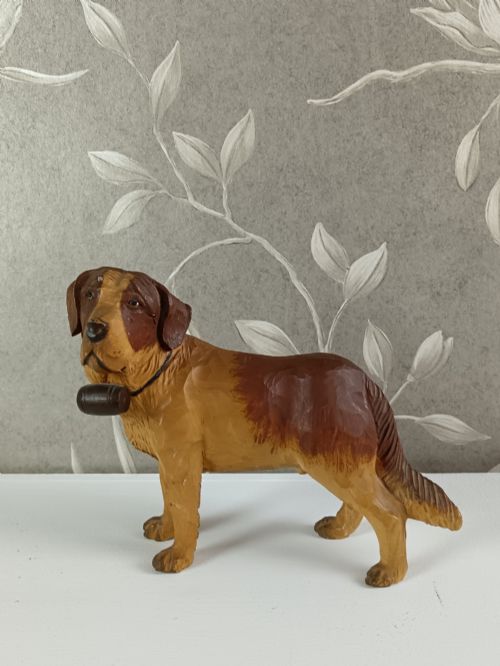
One determined Saint Bernard comes equipped for rescue work, while pug dogs appear in roles ranging from life-size doorstops to delicate bronze inkwells.
Judging Quality
For ceramics and pottery, the clarity of the underglaze painting, the crispness of the mould seams, and the absence of clumsy restoration determine the grade. Well-defined facial expressions on Staffordshire greyhounds and pugs indicate skilled studio production from period manufactories rather than later commercial reproductions.
Carl Kauba·Tsunemitsu·Dora Heber·Prosper Lecourtier·C Masson·Edith Parsons
The Vintage Dog Statue Glossary
- Animalier
- A nineteenth-century artistic movement focused on the realistic depiction of animals, particularly in bronze sculpture. French and Austrian founders produced many notable examples.
- Cold-painted
- A method where paint is applied to bronze or terracotta without being fired in a kiln afterwards. This delicate finish is prone to wear over time.
- Staffordshire pottery
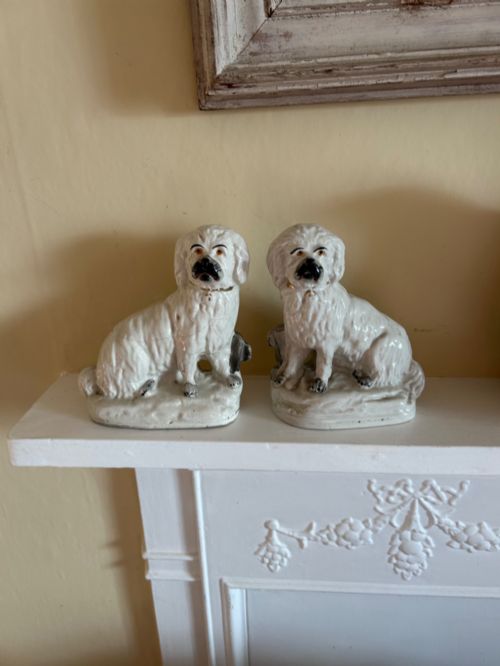
- Earthenware figures produced in the Staffordshire potteries of England, frequently depicting pairs of spaniels and greyhounds intended for mantelpieces.
- Vienna Bronze
- Small, highly detailed bronze sculptures produced in Austrian foundries during the late nineteenth and early twentieth centuries, usually finished with cold-painting.
- Spelter
- An alloy of zinc and lead used as a cheaper, lighter alternative to bronze in decorative figures, often painted to resemble genuine bronze.
Vintage Dog Statue: Frequently Asked Questions
How do I clean an old bronze dog?
Dust the surface gently with a soft, dry brush to remove settled particles without disturbing the underlying patina.
Avoid using abrasive metal polishes or harsh chemical cleaners, as these strip away historical finishes and cold-painted details.
What is the difference between bronze and spelter?
Bronze is a durable copper alloy that takes fine detail and holds a rich, stable patina over centuries of handling.
Spelter is a softer, lighter zinc-based metal that feels cooler and shows more brittleness, often requiring a painted bronze-effect finish.
Why do Staffordshire dogs face inwards?
Potters designed these earthenware figures as mirror-image pairs intended to sit at either end of a fireplace mantelpiece.
Facing inwards towards each other created a balanced, symmetrical arrangement that suited Victorian interior decoration.
How can I tell if a cold-painted bronze is genuine?
Examine the paint under magnification to check for microscopic wear and natural integration with the metal surface underneath.
Genuine pieces show characteristic chipping and thinning of the polychrome pigments rather than modern, glossy enamel coatings.