

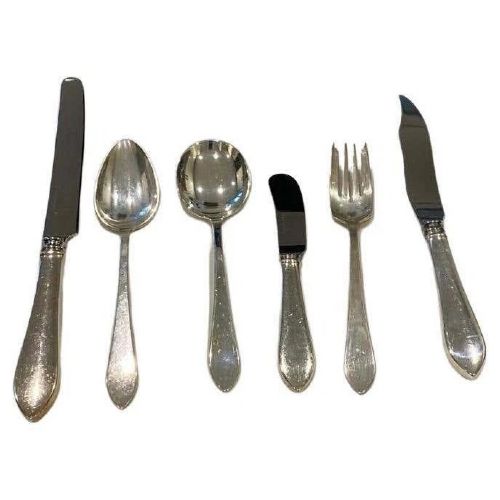
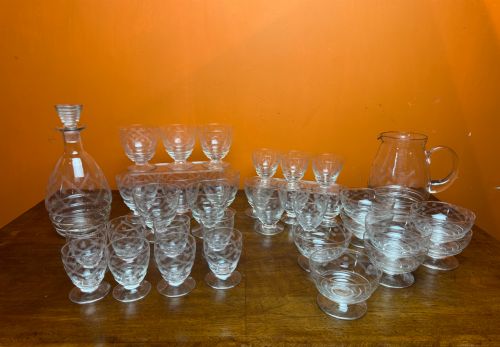


Vintage Dessert Set
A vintage dessert set gathers the table pieces required to serve sweet courses, bringing matched silver, porcelain, or glass together in a fitted box or service.
Vintage Dessert Set
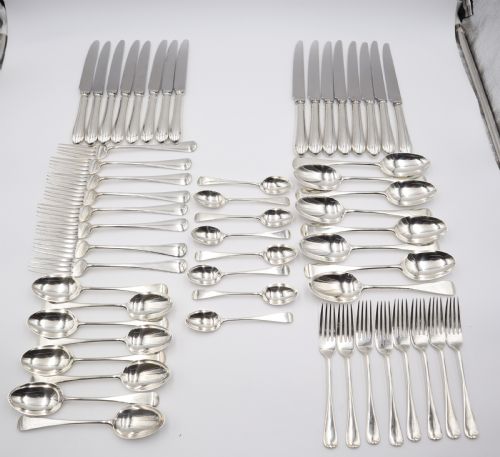
A vintage dessert set encompasses diverse table arrangements designed for fruit, puddings, and sweet courses across the nineteenth and twentieth centuries. These collections range from ceramic comports with matching plates to cased canteens of knives, forks, spoons, and serving implements.
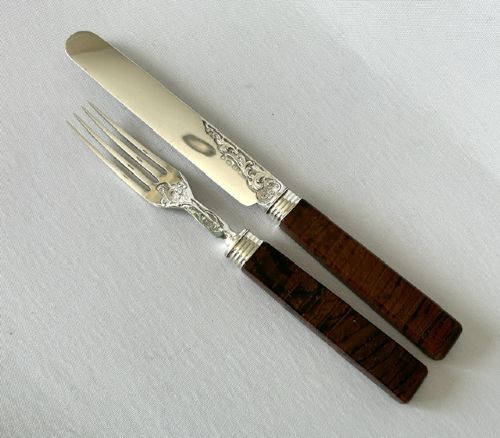
The materials and forms vary according to the period of manufacture, moving from Regency and Victorian porcelain services to Edwardian and Art Deco silver-plated cutlery with mother-of-pearl handles. Buyers encounter complete boxed sets containing specialised implements like grape scissors, nutcrackers, and berry spoons alongside glassware suites.
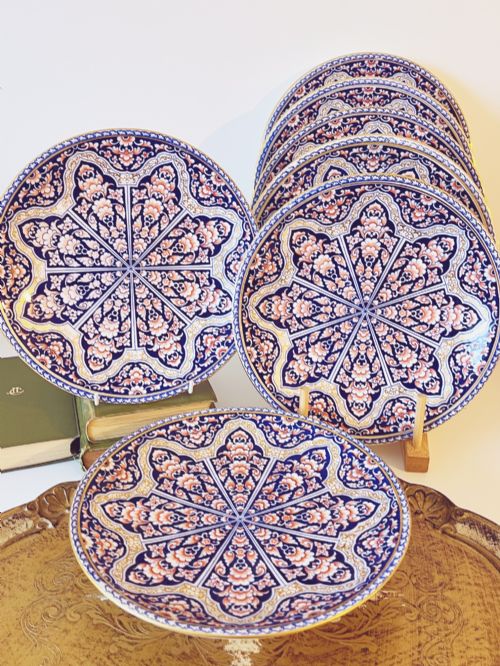
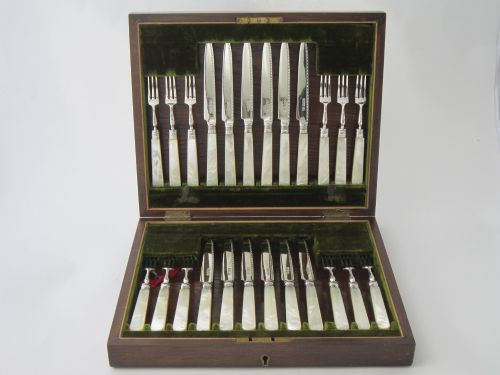
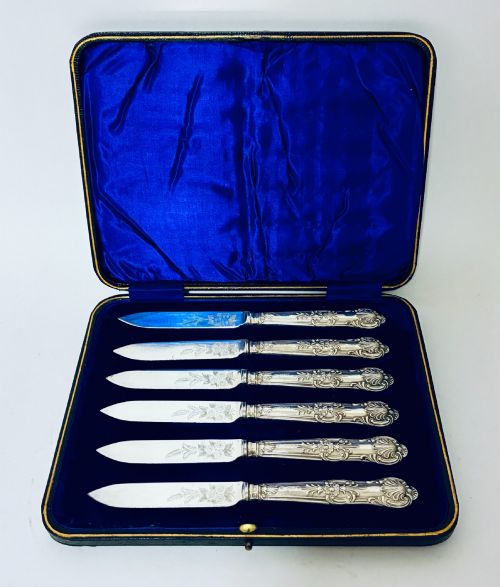
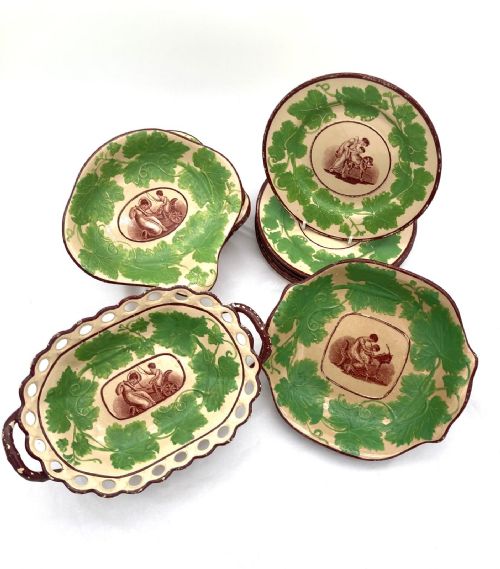
Ceramic services often pair a central comport with six or more plates, while metal sets rely on fitted wooden or velvet-lined boxes to house individual fruit knives and forks. The diverse object types reflect formal dining customs that required dedicated utensils for every stage of the meal.
Materials and Techniques
Metal components utilise sterling silver, silver plate, and steel, often combined with natural handles carved from mother-of-pearl or agate. Silversmiths applied detailed engraving and chasing to blades and spoons, while gilt finishes added decorative contrast.
Ceramic dessert services employ porcelain and earthenware decorated with patterns, gilding, and hand-applied enamels. Glass components rely on free-blown crystal, cut glass, and engraved decoration to achieve clarity and texture for custard cups and dessert wine glasses.
The listings on this page span the Victorian, Edwardian, and Art Deco periods, encompassing sterling silver, porcelain, and free-blown crystal glass.
Judging Quality and Craftsmanship
Quality rests upon the crispness of engraving on metal surfaces and the depth of cutting in crystal glass. Superior silver items retain sharp definition in their decorative motifs without excessive wear from cleaning.
The integrity of fitted presentation cases and the completeness of matched sets influence the standing of a service. Ceramic pieces demonstrate higher grade through the precision of pattern transfer, hand-painting, and gilding preservation.
Royal Crown Derby·Hamilton and Inches·Tiffany·Georg Jensen·Christofle·Hukin and Heath·Wedgwood
The Vintage Dessert Set Glossary
- Comport
- A raised dish or bowl used for presenting fruit as the centrepiece of a dessert service. It stands on a footed base to elevate the display above the table surface.
- Canteen
- A fitted box or chest designed to store a matched set of cutlery securely. These wooden cases often feature velvet or satin linings with designated slots for each spoon, fork, and knife.
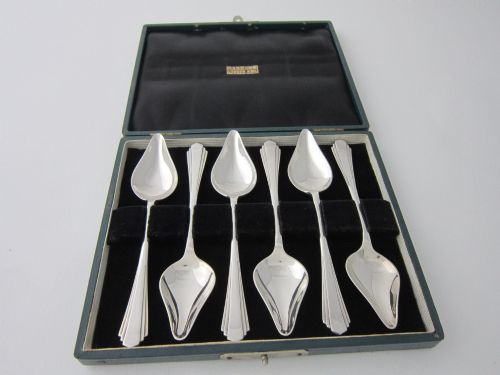
- Grapefruit Spoon
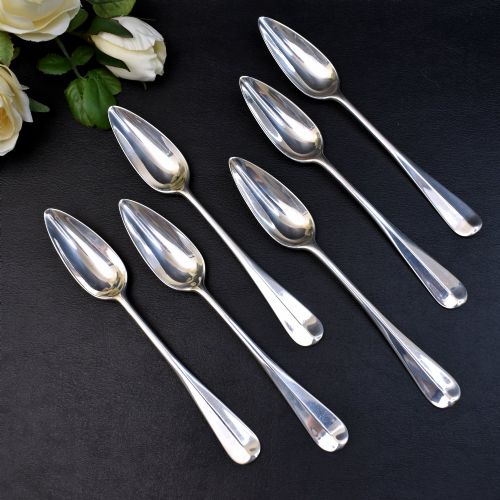
- A specialised spoon featuring a pointed or serrated tip designed to segment citrus fruit easily. These utensils became common during the early twentieth century.
- Custard Cup
- A small, handled or footed glass vessel used for serving individual portions of custard or cream. Victorian examples frequently exhibit heavy cut glass patterns.
- Finger Bowl
- A small bowl filled with water, placed beside a diner for rinsing fingers after eating fruit or messy puddings. They appear in clear glass and engraved crystal forms.
Vintage Dessert Set: Frequently Asked Questions
What is included in a dessert service?
A dessert service typically comprises a central raised comport accompanied by a matching set of plates for serving fruit or sweet courses. Some variations include specialised glassware such as custard cups or finger bowls.
Larger configurations incorporate porcelain plates produced by factories like Wedgwood or Royal Crown Derby, designed specifically for formal dining rooms.
How were cased cutlery sets stored?
Cutlery sets were housed in wooden canteens lined with velvet or satin to protect the silver, steel, and mother-of-pearl components. These fitted boxes kept specialised knives and forks organised and secure between meals.
Many retain their original oak or presentation cases, which often feature maker plaques or brass shields on the lid.
What is the difference between fruit knives and regular cutlery?
Fruit knives feature shorter, lighter blades made of silver, silver plate, or steel designed specifically to cut soft fruit without acid corrosion. They are frequently paired with natural materials like mother-of-pearl or agate for the handles.
Standard dining cutlery is heavier and built for cutting savory meats rather than delicate dessert courses.
How do I care for silver and mother-of-pearl sets?
Silver and silver plate require occasional cleaning with appropriate polishes to maintain their shine and prevent tarnish accumulation. Mother-of-pearl handles should be kept dry and washed by hand rather than placed in modern dishwashers.
Storing these items in their original lined canteens helps protect delicate handles and engraved metal surfaces from unnecessary friction.