




Victorian Silver Forks
When buyers search for victorian silver forks, they seek solid sterling or plated tableware spanning table, dessert, and serving forms.
Victorian Silver Forks
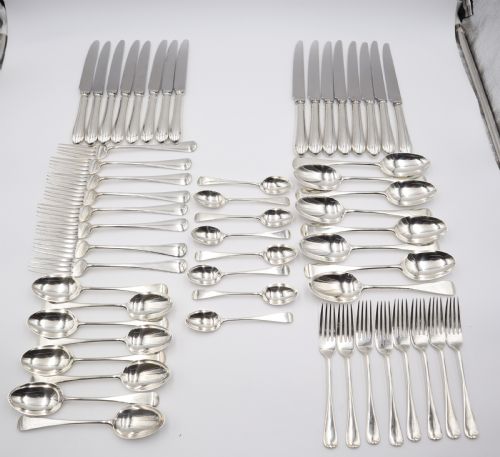
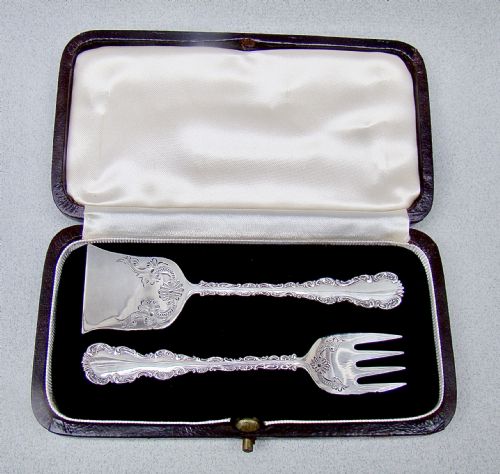
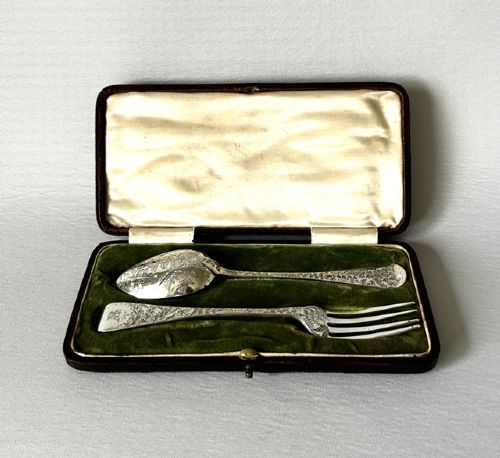
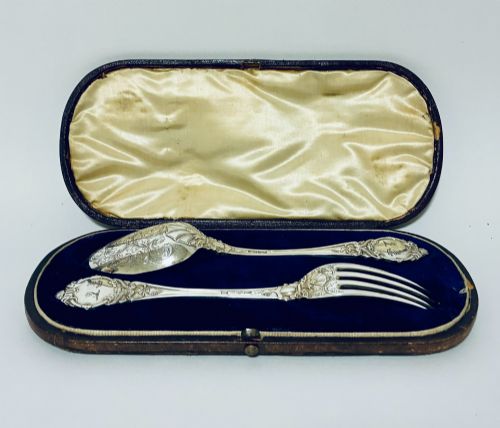
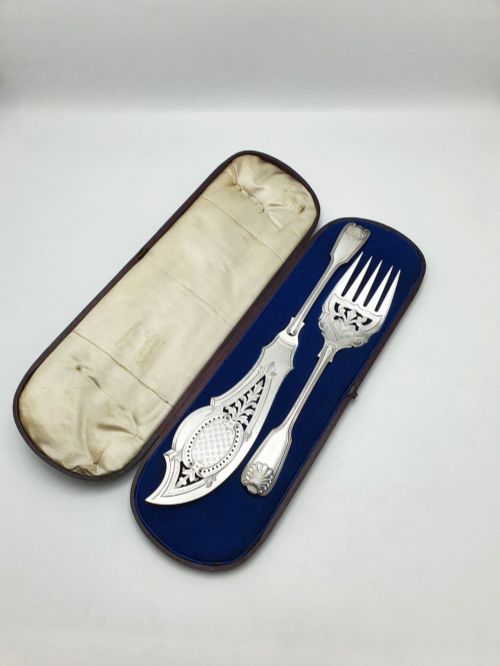
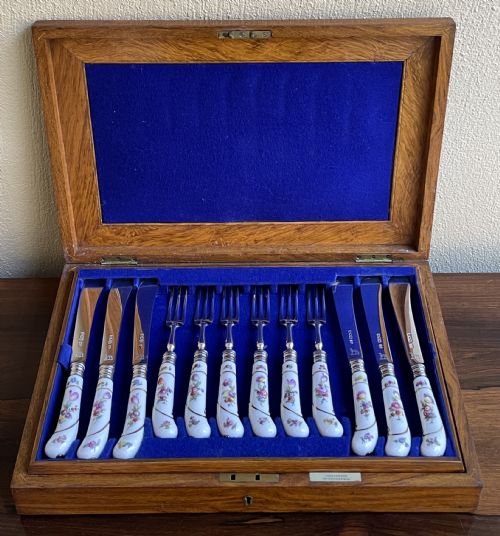
Victorian silver forks appear in numerous forms across the inventory, ranging from individual table and dessert pieces to cased sets for fish, fruit, and christenings.
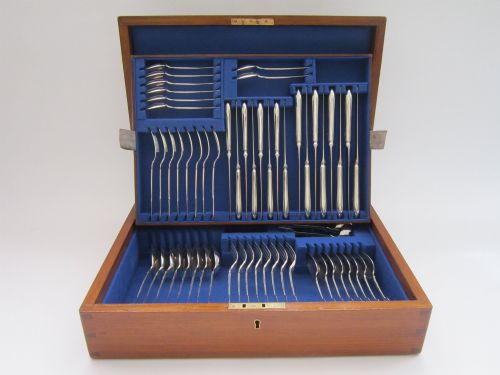
Table and dinner pieces occur frequently in matched sets of six or twelve, often adhering to traditional handle designs like Fiddle or King's pattern.
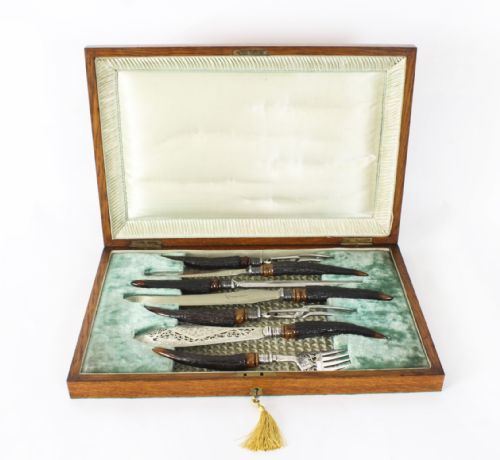
Specialised serving instruments emerge as cased pairs or fitted sets, incorporating materials such as mother-of-pearl, horn, and carved bone alongside the metal work.
Materials and Technique
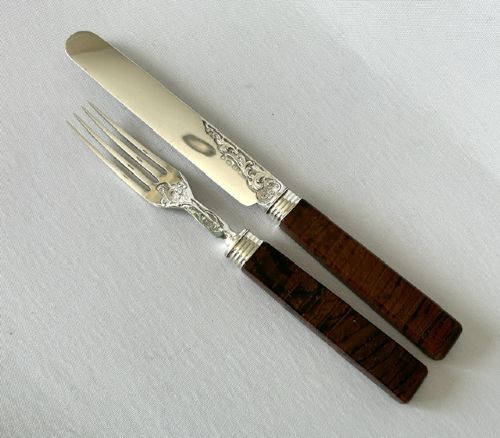
Silversmiths utilised sterling silver and silver plate for the tines and shanks, often pairing them with organic handles including antler horn, mother-of-pearl, and bone.
Many items feature hand-engraved detailing, floral motifs, or specialised gilding, while fitted presentation cases utilise leather, velvet, and silk linings.
Hunting and dog engravings decorate several serving tines, bringing Victorian sporting enthusiasm directly to the dinner table.
Craftsmanship and Weight
Quality separates through the substantial gauge of the silver and the crispness of the handle carving, distinguishing mass production from meticulous silversmithing.
The integrity of fitted presentation cases and the preservation of original gilding or engraved patterns further divide standard production from finer work.
Henry Wilkinson·Carrington·Walter and John Barnard·Alvin·John Round·Thomas Harwood and Co·Hayne and Cater·Aaron Hadfield·George Unite
The Victorian Silver Forks Glossary
- Sterling silver
- A silver alloy containing 92.5 percent pure silver by mass, widely utilised across Victorian cutlery manufacture. It provides the standard benchmark for solid metal pieces.
- Silver plate
- A layer of silver applied to a base metal core such as copper or nickel brass. This technique offered an accessible alternative to solid sterling for larger canteens.
- Fiddle pattern
- A traditional 19th-century flatware handle design featuring a distinctive tapered shape resembling a fiddle. It remains one of the most commonly encountered styles in the inventory.
- King's pattern
- An ornate, decorative flatware style featuring shell and scroll motifs along the handle border. It represents a more formal aesthetic favoured by Victorian households.
- Hallmark
- An official stamp applied to precious metals indicating the assay office, standard of purity, and year of manufacture. It serves as a primary tool for dating British items.
Victorian Silver Forks: Frequently Asked Questions
What is the difference between table and dessert forks?
Table forks are larger instruments traditionally laid for the main course of a formal meal.
Dessert forks are smaller in scale and were designed for the subsequent course or fruit service.
How were cased sets used?
Cased sets containing forks and matching knives were typically given as wedding or christening gifts.
Their fitted velvet and silk presentation boxes protected the pieces when not in active use on the dining table.
How do I identify a Victorian maker?
Makers stamp their initials or trade marks directly into the metal surface alongside the assay office mark.
These tiny punches correspond to registered makers working during the 19th century.
Can silver plated forks be used daily?
Silver plated items withstand regular domestic use provided they are washed by hand using mild detergents.
Avoiding abrasive cleaners preserves the underlying plate layer over decades of service.