
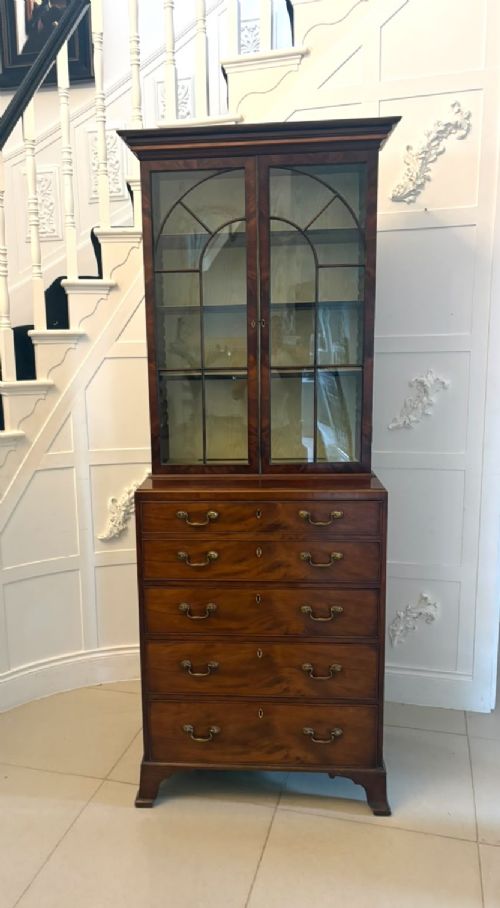
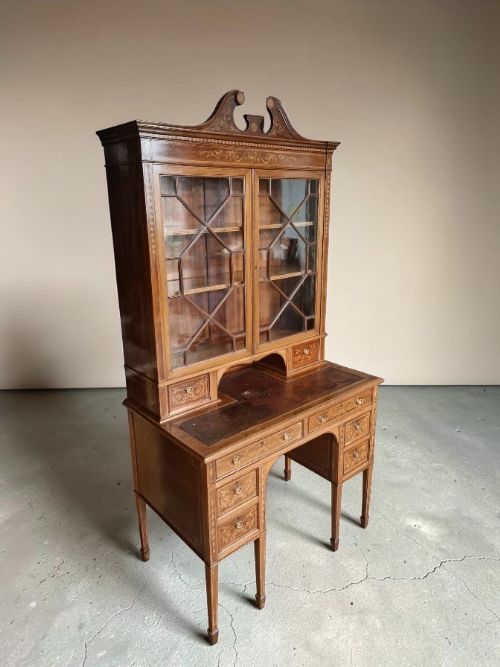

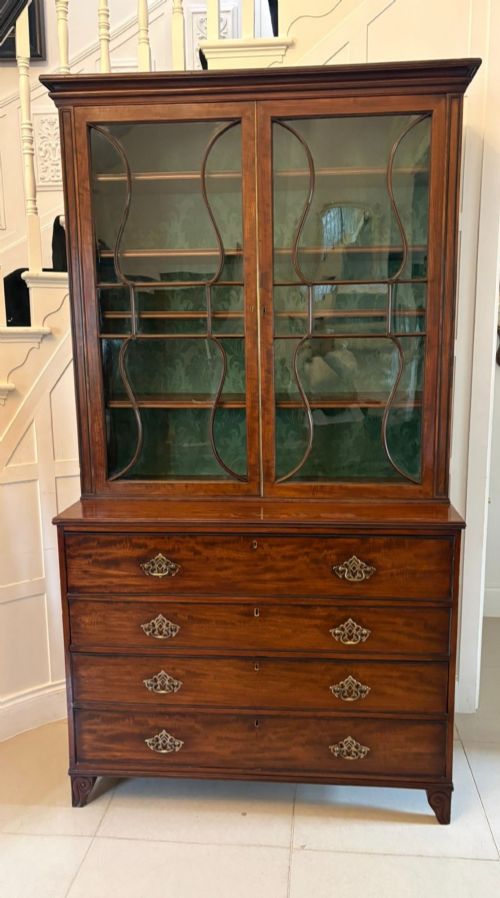
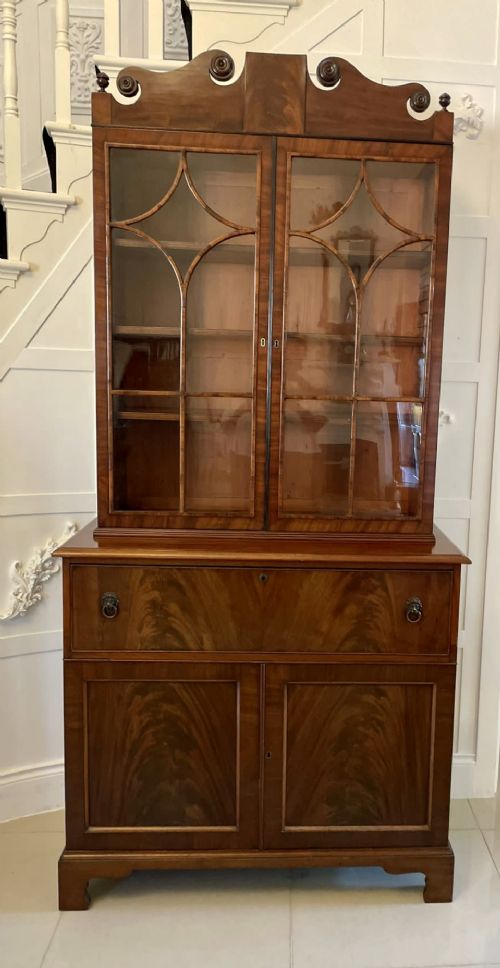


Vintage Desk Display Cabinet
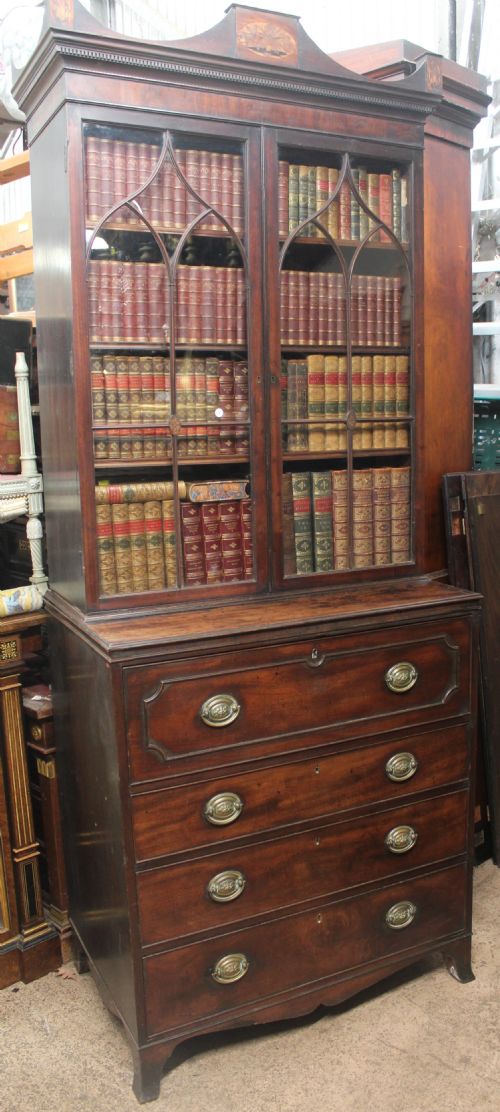
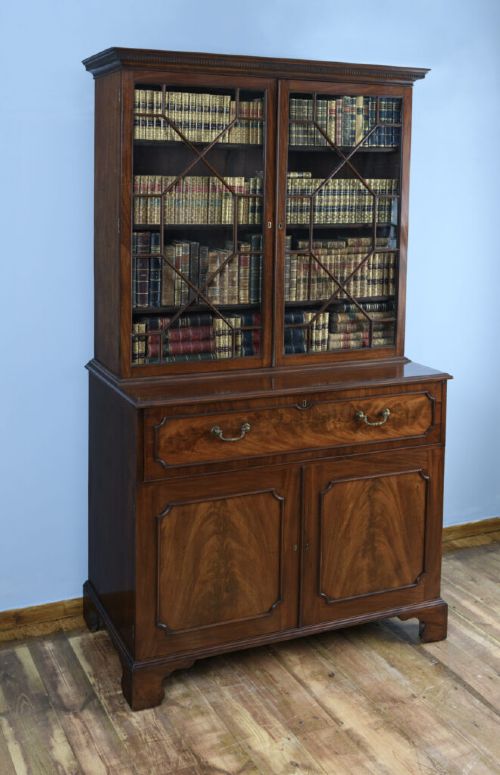
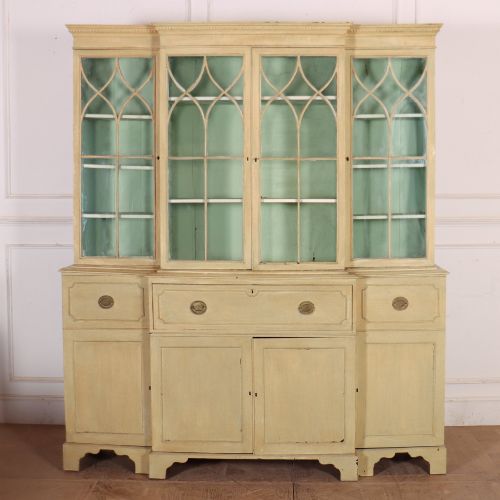
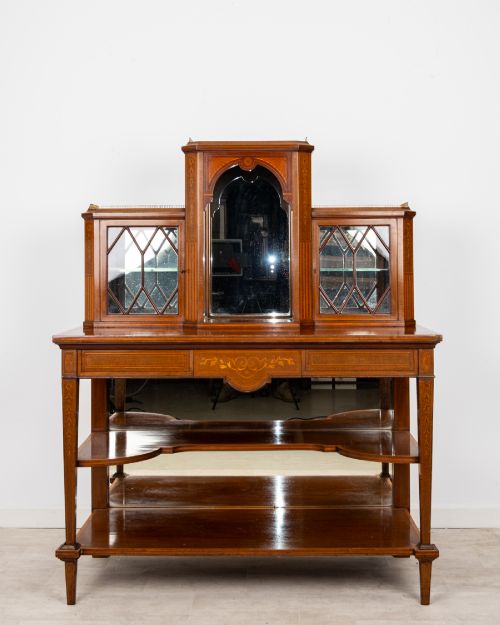
A vintage desk display cabinet combines a working writing surface with glazed upper shelving, offering a practical combination for storage and display.
Vintage Desk Display Cabinet
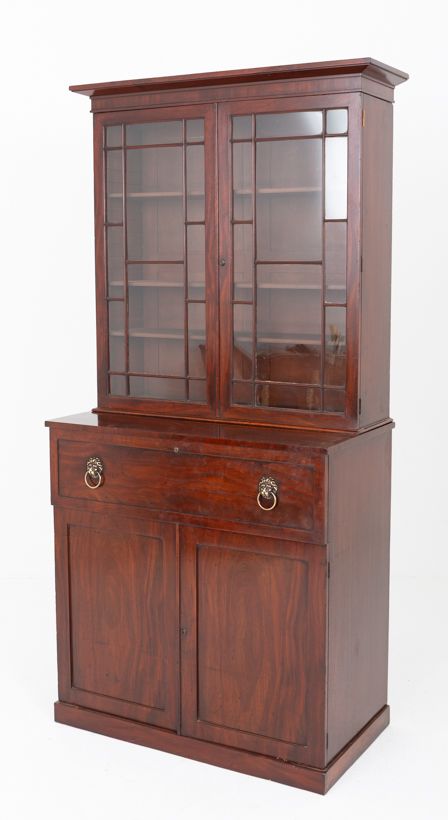
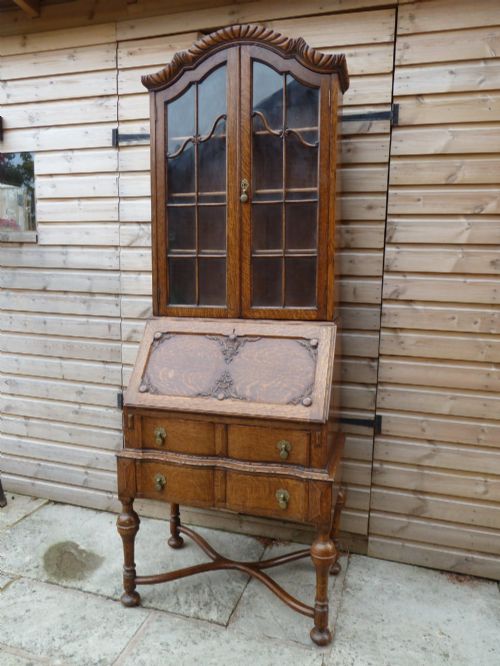
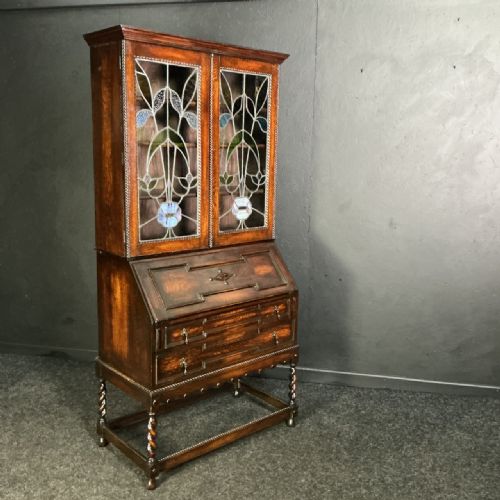
A vintage desk display cabinet primarily takes the form of a bureau bookcase or secretaire bookcase, uniting a drop-front writing surface with enclosed upper shelving. These pieces bridge the gap between a library cabinet and a writing desk, serving multiple functions in a room.
The selections encountered here span from eighteenth-century Georgian designs through Victorian and Edwardian periods up to the nineteen-thirties. Bureau bookcases and secretaire bookcases dominate the choices, alongside occasional writing cabinets and display units.
Materials range from figured mahogany and satinwood to oak, walnut, pine, and yew wood, often accented with glass doors and brass hardware. Buyers encounter formal Georgian craftsmanship as well as later Edwardian and Art Deco interpretations.
How they were made
Cabinet makers utilised dense hardwoods such as mahogany, oak, walnut, and satinwood to construct the primary carcass and framework of each desk display cabinet. These timbers provided the structural stability needed for heavy upper bookcase sections and fitted interior compartments.
Glazed doors frequently incorporated individual glass panes held by timber glazing bars, whilst drop-front writing sections relied on sturdy hinges and internal pigeonholes or small drawers. Marquetry, inlay work, and mother-of-pearl details added surface ornamentation across various periods.
Brass fittings, handles, and escutcheons secured doors and drawers, completing the construction methods recorded across eighteenth, nineteenth, and early twentieth-century examples.
Listings feature woods including mahogany, oak, satinwood, walnut, pine, and yew wood across Georgian, Victorian, Edwardian, and Art Deco periods.
What varies in quality
The selection of timber grain and veneer quality separates standard utilitarian pieces from exceptional examples. Figured mahogany, flame mahogany, and detailed satinwood inlay indicate a higher tier of cabinet making.
Interior complexity and the refinement of fitted drawers, pigeonholes, and secret compartments demonstrate the maker's skill. Pieces with well-organised, fully fitted writing interiors command greater attention than simple drop-front shelves.
The crispness of glazing bar construction and the proportion of the upper bookcase relative to the lower desk section dictate the visual balance of the cabinet.
Gillows
The Vintage Desk Display Cabinet Glossary
- Secretaire bookcase
- A tall cabinet featuring a lower section with a pull-down writing drawer or fall-front desk, paired with an upper glazed bookcase.
- Bureau bookcase
- A piece combining a sloping front flap that opens to form a desk surface with enclosed shelving above.
- Astragal glazing
- Timber strips dividing glass panes within a cabinet door into smaller geometrical sections.
- Bonheur du jour
- A light lady's writing desk originating in the eighteenth century, often incorporating small drawers and shelves.
- Marquetry
- Decorative veneer patterns formed by fitting together contrasting pieces of wood or other materials.
Vintage Desk Display Cabinet: Frequently Asked Questions
How do I use a bureau bookcase?
The drop-front or pull-down writing flap opens to reveal a fitted interior of small drawers and pigeonholes for correspondence. The upper glass-fronted shelves store books or display collections.
Lower drawers provide concealed storage for household items, making the cabinet a compact workspace and display unit combined.
How do I date a mahogany cabinet?
Eighteenth-century examples often display solid mahogany frames, hand-cut dovetails, and fine astragal glazing bars. Nineteenth-century pieces frequently utilise heavier proportions and machine-sawn timber elements.
Edwardian and later twentieth-century cabinets introduce lighter satinwood inlays, walnut veneers, or alternative hardware styles characteristic of their respective decades.
Where should I place a display cabinet?
These tall cabinets require stable wall space away from direct sunlight to protect antique wood finishes and book bindings. A study, library, or living room provides an appropriate environment.
Ensure adequate floor clearance in front of the cabinet so the drop-front writing surface can open fully without obstruction.