

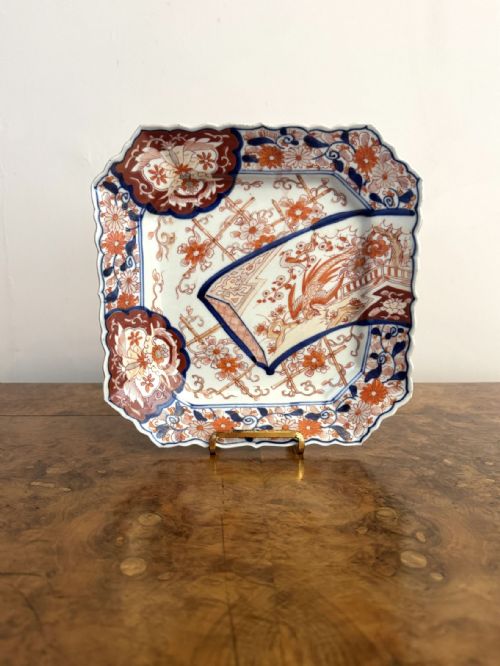


Vintage Decorative Display Platter
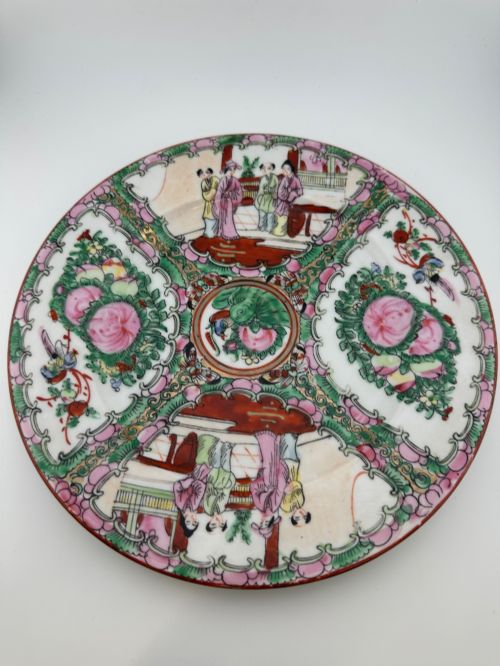
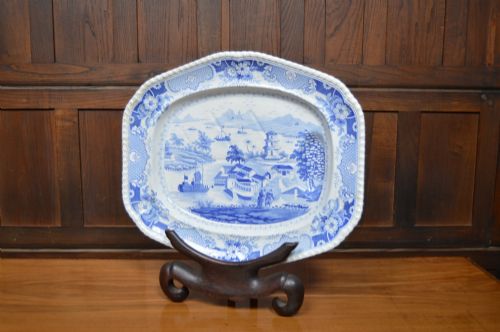
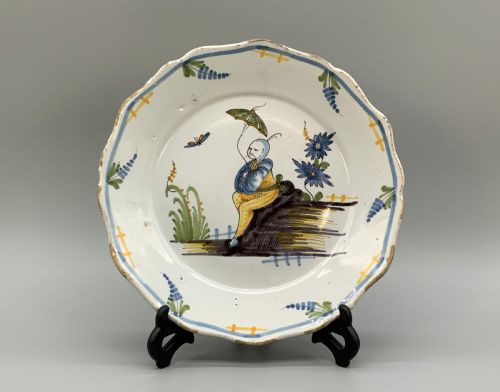
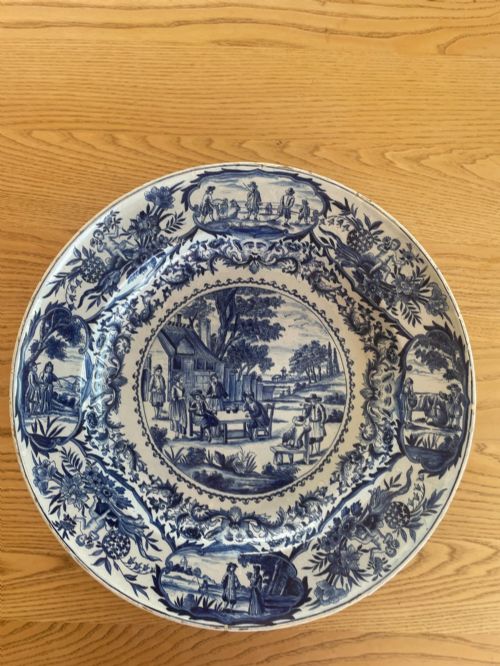
When searching for a vintage decorative display platter, collectors encounter large porcelain chargers, tin-glazed earthenware dishes, and cloisonné enamel trays spanning multiple centuries.
Vintage Decorative Display Platter
A vintage decorative display platter encompasses large plates, chargers, and shallow bowls intended primarily for visual exhibition rather than routine domestic service. These objects range from nineteenth-century Japanese Imari porcelain and intricate cloisonné enamel to eighteenth-century Dutch Delft and Victorian transferware.
The versions most frequently met on this page span the Victorian era, the Edwardian period, and the early twentieth century, alongside select eighteenth-century examples. Forms include square plates, circular chargers, and moulded glass salvers originating from British, French, Dutch, and Asian workshops.
Makers and makers' marks appear across various mediums, from Mason's ironstone to Liberty and Co pewter trays and signed Japanese cloisonné panels. Buyers select these items to mount on walls, display on cabinets, or place upon tables as focal decorative elements.
How they were made
Pottery and porcelain pieces rely on traditional throwing and moulding techniques before receiving hand-painted mineral pigments, tin glazes, or transfer-printed cobalt designs. Japanese Imari works employ characteristic iron-red and cobalt blue underglazes, sometimes heightened with gold leaf.
Cloisonné enamel items utilise fine copper or brass wire soldered to a metal base to form individual cells, which are subsequently filled with coloured vitreous pastes and fired. Glass salvers and plates by makers such as René Lalique involve press-moulding techniques combined with opalescent or sepia staining effects.
Owning a large Imari charger means sharing wall space with ducks, gods, and leaping koi that have observed centuries of household dinners.
What varies in quality
The distinction between ordinary and superior pieces rests upon the crispness of the hand-painted brushwork, the depth of the enamel or glaze colours, and the precision of the underlying metalwork or moulding. Early Japanese cloisonné and Imari examples demonstrate extraordinary control of line and pigment density.
Proportion, weight, and surface preservation dictate the standing of individual chargers and plates. Superior specimens retain intact gilding, unblemished tin glazes, and well-balanced compositions across large surfaces.
Rene Lalique·Liberty and Co·Mason
The Vintage Decorative Display Platter Glossary
- Charger
- A large decorative plate or dish, traditionally used for display rather than dining. These pieces often measure over thirty centimetres across.
- Imari
- A style of Japanese porcelain featuring a palette of cobalt blue, iron-red, and gold. Production centred on the town of Arita for export.
- Cloisonné
- A metalwork technique where wires create compartments filled with enamel paste. Artisans fire these vessels multiple times to achieve smooth, vitreous surfaces.
- Tin Glaze
- An opaque white ceramic glaze containing tin oxide, used on earthenware such as Delft and majolica. It provides a bright ground for painted pigments.
- Ironstone
- A type of durable earthenware developed in Britain as a robust alternative to porcelain. Mason's notably patented this heavy-bodied ceramic material.
- Grand Feu
- A ceramic firing technique executed at very high temperatures. This method fuses the glaze directly into the body of tin-glazed earthenwares.
Vintage Decorative Display Platter: Frequently Asked Questions
How do I hang a heavy charger?
Heavy chargers and display platters require specialist wall-mounting brackets that distribute weight evenly around the rim without causing stress fractures to the ceramic body.
Spring-loaded brass wire hangers or custom wooden wall mounts offer secure support for large porcelain and cloisonne items.
What is the difference between Delft and Imari?
Delft refers to tin-glazed earthenware produced primarily in the Netherlands and England, typically decorated in blue and white or manganese.
Imari denotes Japanese porcelain characterised by vibrant iron-red, cobalt blue, and gilt coloration applied over white porcelain bodies.
Are these platters meant for food?
Most antique display platters serve purely decorative functions and lack the durability required for modern dining or frequent washing.
Older tin glazes, enamels, and overglaze gilding can suffer permanent damage or chemical leaching if exposed to acidic foods or dishwashers.
How do I date a cloisonne plate?
Dating cloisonne enamel relies on examining the thickness of the wire grids, the composition of the metal base, and the subtleties of the colour palette.
Earlier nineteenth-century pieces often feature heavier brass wires and dense, muted enamel tones, while later items shift towards finer copper lines.