

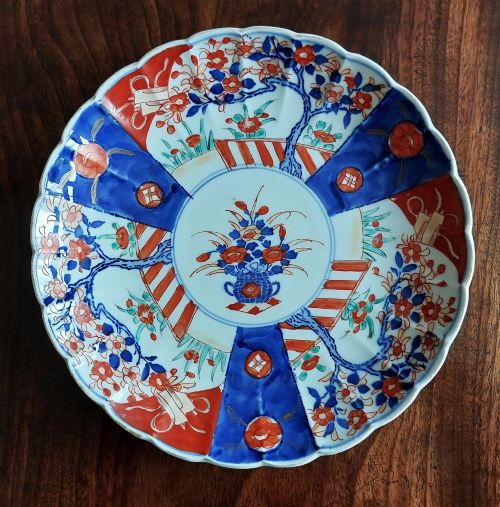

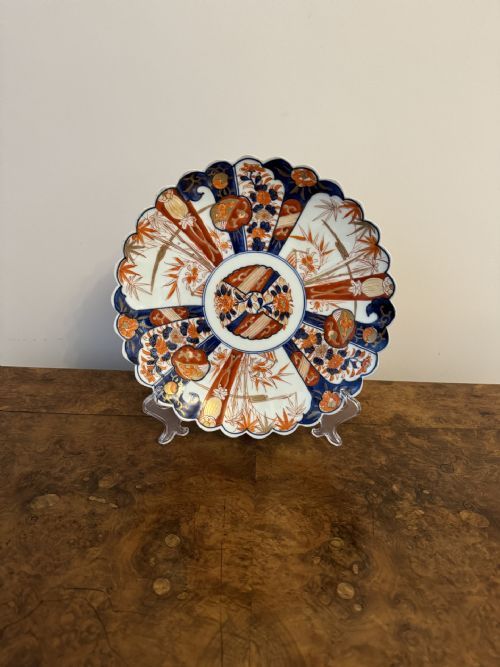
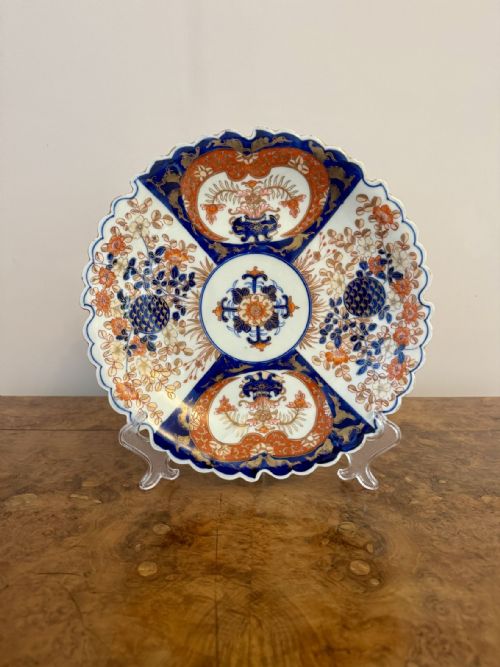


Traditional Asian Ceramic Plate
A traditional asian ceramic plate brings centuries of kiln craft to the table, offering the bold palette and hand-painted motifs collectors prize.
Traditional Asian Ceramic Plate
When you search for a traditional asian ceramic plate, you encounter a focused range of decorative plates, chargers, and platters spanning several centuries. The selection centres heavily on Japanese Imari ware alongside Chinese export porcelain, representing both domestic serving traditions and international trade wares.
Most items you will meet on this page date from the nineteenth century or around nineteen hundred, though earlier examples from the late seventeenth century appear. Forms vary from scalloped edge plates to large decorative chargers accompanied by storage boxes.
How they were made
Potters shaped these wares from porcelain and ceramic bodies before applying detailed glazes and pigments by hand. Many pieces incorporate enamel colours alongside gold leaf or gilding to highlight the intricate surface patterns.
Firing techniques in kilns across Japan and China achieved the durable finishes seen today, occasionally complemented by wooden storage elements or iron mounts in the broader category.
Traditional Asian Ceramic Plate Retail Price Guide 2026
Typical asking prices for traditional asian ceramic plate among the pieces listed under this phrase on Sellingantiques today, from the lower quarter to the upper quarter. They describe what is for sale here now, not the wider market.
Several plates come tucked inside their own dedicated wooden storage boxes, proving that ancient Japanese pottery appreciated a tidy bedroom just as much as we do.
What varies in quality
The distinction between standard domestic wares and superior examples rests on the crispness of the hand-painted brushwork and the richness of the enamel and gilding. Pieces displaying finer detail, balanced compositions, and well-preserved surface decoration command greater attention from collectors.
Condition and completeness also play a part, particularly when items survive in sets or retain original storage boxes that document their historical preservation.
The Traditional Asian Ceramic Plate Glossary
- Imari
- A style of Japanese porcelain decorated in underglaze blue and overglaze red, gold, and other colours. It originated in Hizen province and was exported through the port of Imari.
- Charger
- A large decorative plate or platter used historically for ceremonial service or display on a sideboard. These pieces measure larger than standard dining plates.
- Enamel
- Opaque glass-like material fused to the ceramic surface during secondary firing to add vibrant colours. It sits slightly raised above the clear glaze.
- Gilding
- The application of gold leaf or gold paint to highlight specific areas of a design. It adds a reflective quality to the finished ceramic surface.
Traditional Asian Ceramic Plate: Frequently Asked Questions
How do I date a traditional asian ceramic plate?
Dating relies on stylistic markers, potting techniques, and the characteristics of the glaze and pigments used. Pieces from the seventeenth century often show distinct body weights and pigment chemistry compared to nineteenth-century examples.
Examining the foot ring and the manner of application for underglaze blue and overglaze enamel provides further clues to the manufacturing period.
Were these plates used for dining?
While many plates served practical functions in households, large chargers and highly decorated examples were primarily intended for display. Their elaborate gilding and vibrant enamels made them status symbols in both Asian and European interiors.
Sets intended for formal use often survive with fitted storage boxes, indicating careful preservation over generations.
What is Japanese Imari?
Japanese Imari refers to porcelain produced in the Arita area and shipped from the port of Imari for domestic and export markets. The palette typically combines cobalt blue underglaze with iron red and gold overglaze.
This distinct aesthetic proved immensely popular in the West during the trade periods of the Edo and Meiji eras.
How should I display a large charger?
Large chargers require sturdy plate stands or specialised wall hangers designed to support their weight safely. Placement should avoid direct sunlight to protect vulnerable enamel and gold leaf details from fading over time.
Ensuring stable support prevents accidental slips while allowing the intricate surface patterns to remain visible.