





Vintage Damask Ottoman
These vintage damask ottoman pieces are upholstered seating designed to support the feet or provide low resting places, bringing period character to a room.
Vintage Damask Ottoman
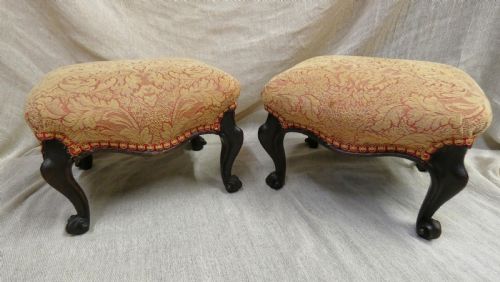
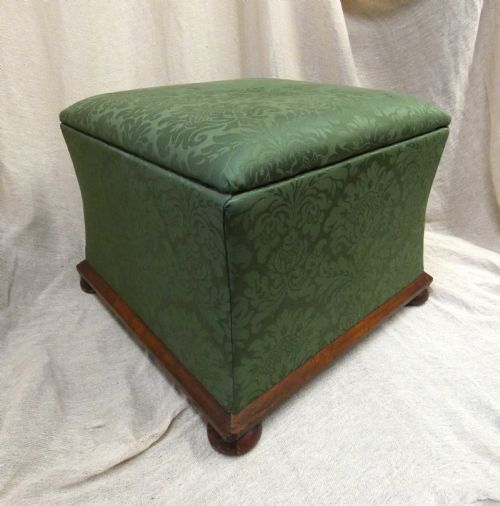
When you search for a vintage damask ottoman, you are looking at a selection of footstools, stools, and armchairs with matching footstools spanning the Victorian era through the early twentieth century. The forms range from simple footstools to large country house stools, carved giltwood styles, and long French stools.
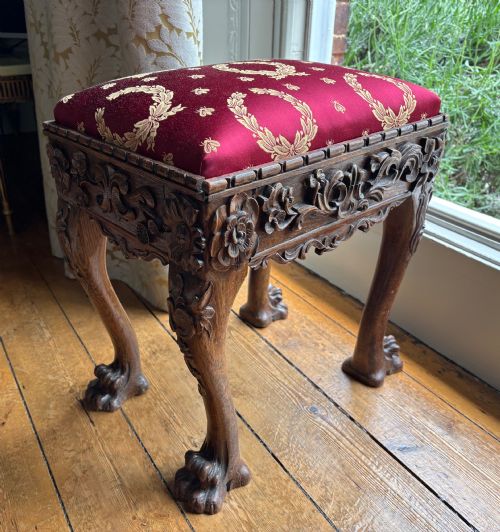
You are most likely to meet Victorian footstools and mahogany stools upholstered in fabric, alongside pieces featuring damask upholstery from the nineteenth century and nineteen-twenty. These items include carved Anglo-Indian teak and mahogany examples, Chippendale style stools, and Baroque revival giltwood pieces.
How they were made
The construction of these pieces relies on timbers such as mahogany, walnut, teak, and hardwood, shaped into frames through traditional joinery and carving. Giltwood frames appear alongside wooden structures.
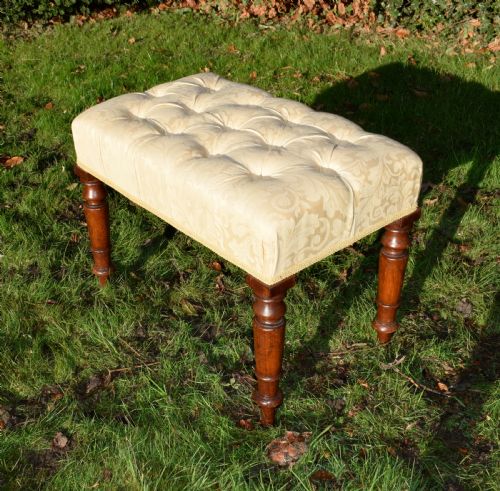
Upholstery involves fabric and damask, sometimes finished with buttoning, paired with carved wooden detailing that reflects styles from Chippendale revival to French neoclassicism.
Listings feature periods from the Victorian era up to nineteen-twenty, utilising mahogany, walnut, teak, giltwood, and damask fabric.
What varies in quality
The standard of carving on the wooden frames separates simpler examples from more elaborate pieces, with detailed foliage and moulding showing greater craftsmanship.
The quality of the timber, whether solid mahogany, walnut, or teak, influences the weight and longevity of the frame.
The Vintage Damask Ottoman Glossary
- Damask
- A reversible figured fabric with patterns woven into the cloth. It provides the traditional textured surface seen on period upholstery.
- Giltwood
- Wood that has been coated with gold leaf or gilt paint. This finish creates a decorative metallic sheen on nineteenth century frames.
- Chippendale Style
- A design style inspired by eighteenth century furniture maker Thomas Chippendale, characterised by carved mahogany and classical motifs. It reappears in nineteenth century revival pieces.
- Anglo-Indian
- Describing items made in India under British influence, typically featuring dense carved teak or hardwood details. These pieces combine British furniture forms with local carving traditions.
Vintage Damask Ottoman: Frequently Asked Questions
What is a vintage damask ottoman?
A vintage damask ottoman is a low upholstered seat or footstool covered in patterned damask fabric, dating from the Victorian period to the early twentieth century.
These pieces function as footstools or companion pieces to armchairs, constructed from woods like mahogany, walnut, and teak.
How do I style a period stool?
Period stools suit living spaces as flexible seating or footrests, pairing well with traditional armchairs and sofas.
Their carved wooden frames and patterned upholstery add texture and historical detail to a room without taking up excessive space.
How are different periods identified?
Periods are identified by timber choice, carving style, and upholstery methods, moving from solid Victorian mahogany to lighter nineteen-twenty French and Edwardian forms.
Revival styles draw on earlier furniture designs such as Chippendale and Baroque, adapted by nineteenth century makers.
What woods were used?
Makers utilised hardwoods including mahogany, walnut, teak, and giltwood for the structural frames of these stools and ottomans.
The choice of timber often reflects the origin and period of the piece, from British mahogany to Anglo-Indian teak.