

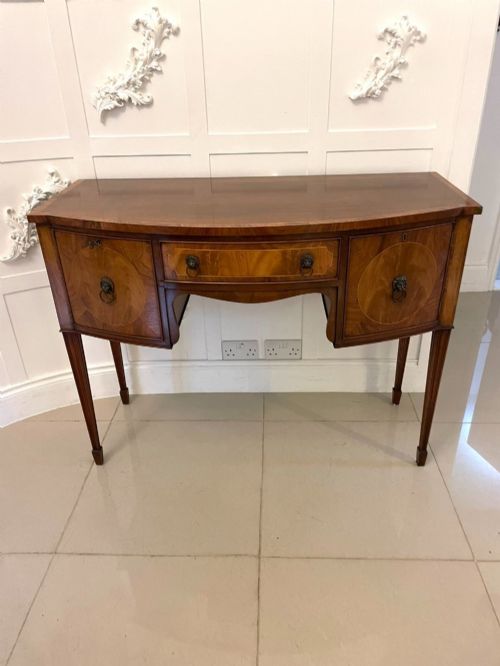
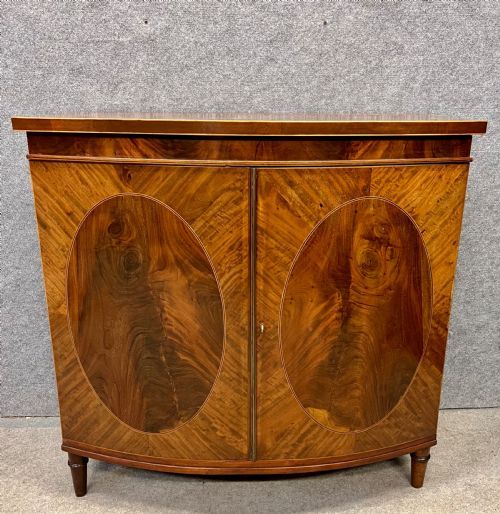
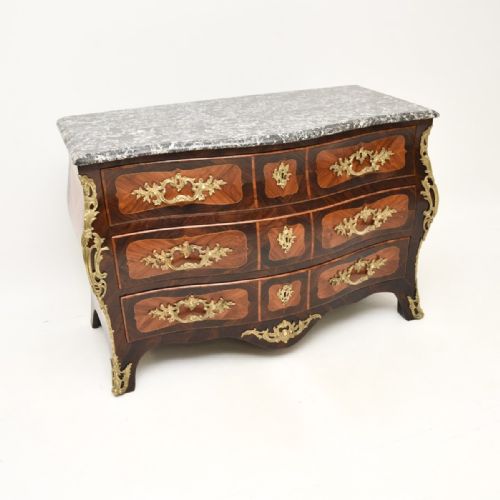
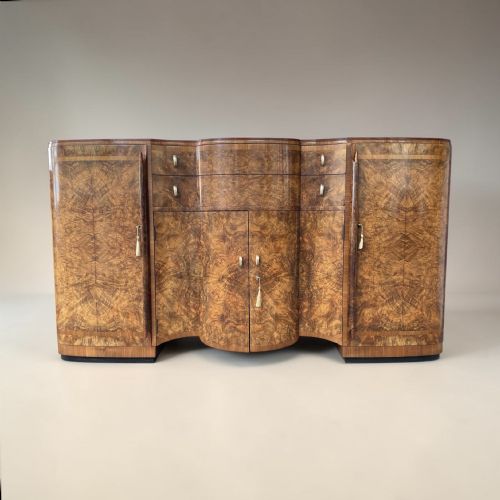
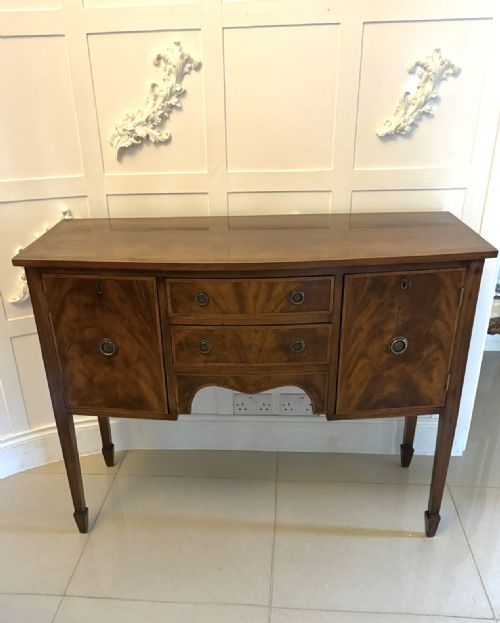
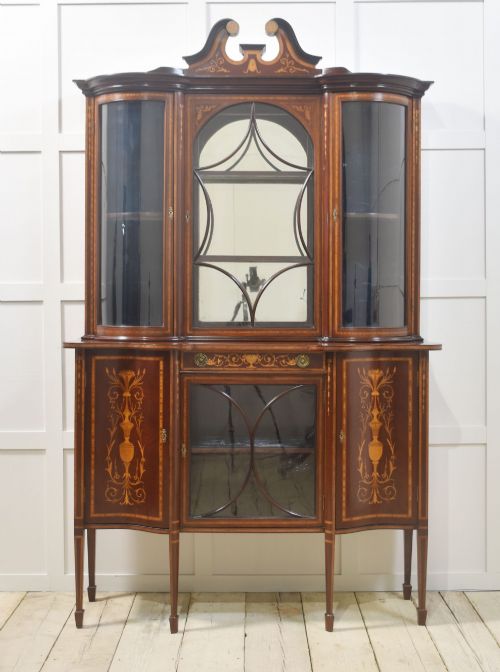
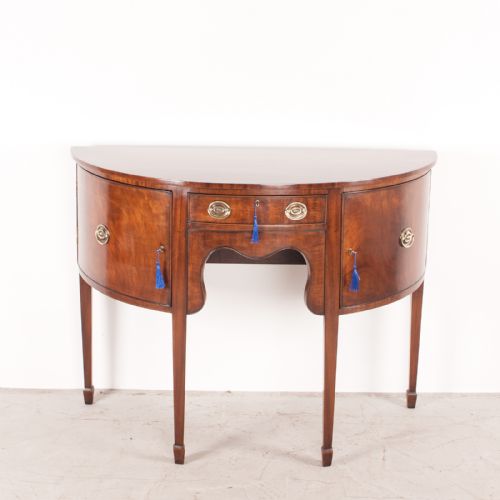

Vintage Curved Sideboard
A vintage curved sideboard brings architectural grace to a room, offering sweeping lines and generous storage through Art Deco and Georgian designs.
Vintage Curved Sideboard
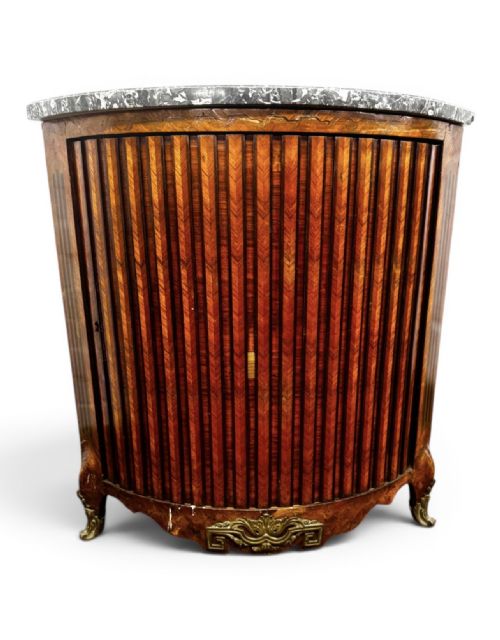
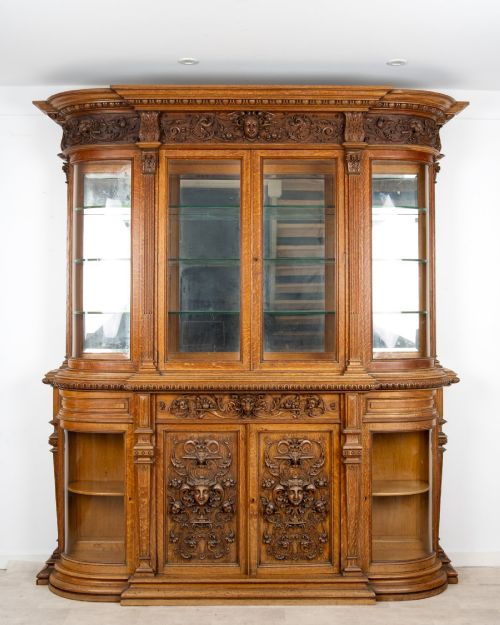
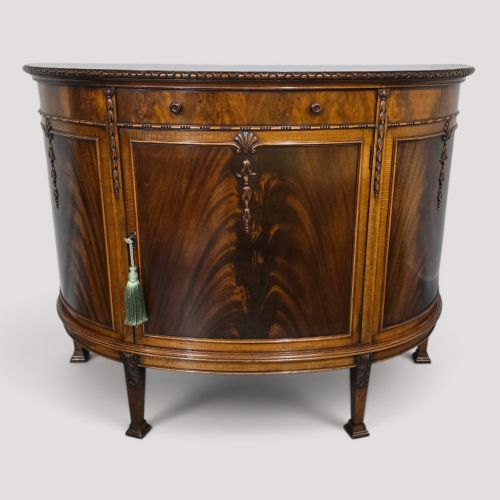
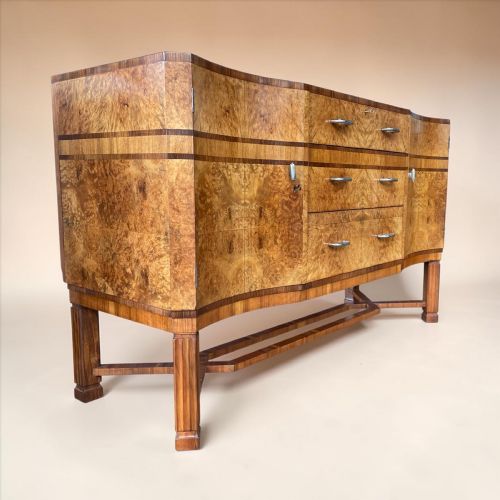
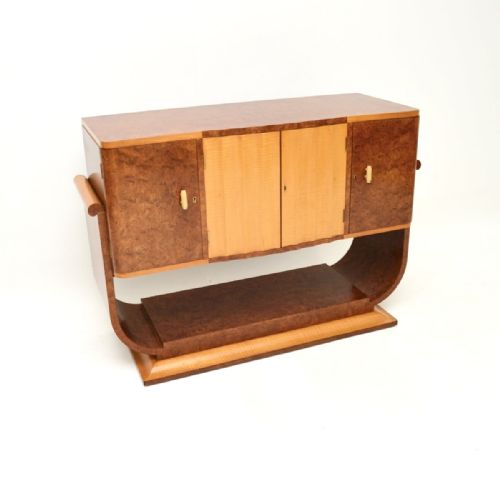
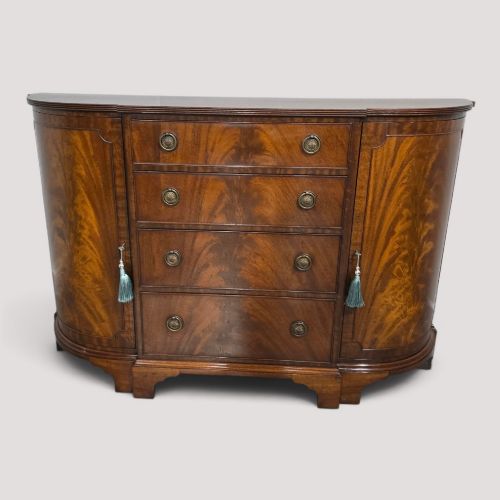
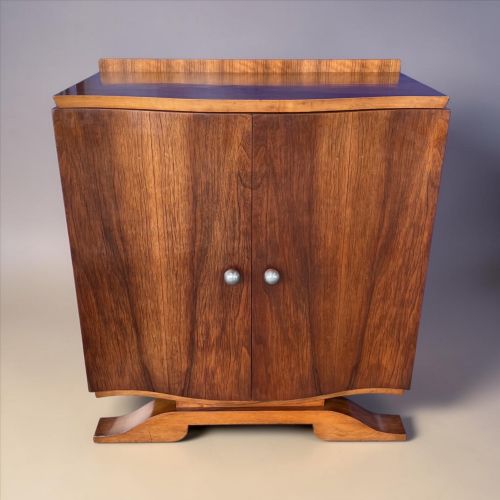
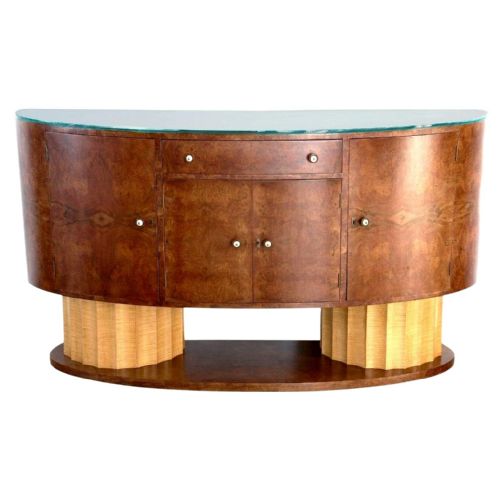
A vintage curved sideboard is a foundational dining or living room storage piece defined by its sweeping front, encompassing bowed, demi-lune, serpentine, and bombe profiles. These vessels serve practical storage needs while providing a strong visual anchor through their pronounced geometric or organic curves.
The pieces on this page span several distinct eras, with the Art Deco period from the 1930s representing a major portion of the selection alongside Georgian, Edwardian, and nineteenth-century examples. Alongside traditional sideboards, buyers frequently encounter related forms such as commodes, cabinets, and serving tables that share the same characteristic rounded silhouette.
Makers and workshops from London to France shaped these forms using local timber traditions, resulting in everything from English mahogany bowfronts to French marble-topped commodes. Selecting a piece involves weighing the specific curve of the front against the spatial requirements of the room it will inhabit.
Materials and Construction
Cabinetmakers constructed these frames using solid foundations of mahogany, oak, walnut, or pine, upon which they applied decorative veneers such as burr walnut, sycamore, and kingwood. The curved surfaces required skilled woodbending techniques and precise cutting to lay veneers smoothly over bowed and serpentine carcases.
Surface ornamentation often incorporates intricate marquetry, parquetry, and string inlay, complemented by brass handles, locks, and occasionally ormolu mounts. French examples frequently feature heavy marble tops fitted precisely to the contours of the wooden base below.
Vintage Curved Sideboard Retail Price Guide 2026
Typical asking prices for vintage curved sideboard among the pieces listed under this phrase on Sellingantiques today, from the lower quarter to the upper quarter. They describe what is for sale here now, not the wider market.
Measures of Quality
Quality in these curved forms rests primarily on the integrity of the timber selection and the precision of the veneering across difficult radiuses. Grain matching on burr walnut or mahogany doors demonstrates the maker's intent, ensuring the patterns flow naturally around the curves without buckling or lifting.
Internal construction details, such as dovetailed drawer boxes, secondary timbers, and original hardware, distinguish standard workshop production from master cabinetmaking. The weight and thickness of applied marble, the crispness of marquetry work, and the smooth operation of curved doors further separate the exceptional examples from the ordinary.
Maurice Adams·Gomme·Hille·Harry and Lou Epstein·Hamptons of Pall Mall London·Bowman Brothers·Jacques Bircklé·Otto Schulz for Boet
The Vintage Curved Sideboard Glossary
- Demi-lune
- A half-moon shape used for tables and sideboards designed to sit flush against a wall. This profile maximises floor space while providing a distinct curved front edge.
- Serpentine
- A shaped furniture front featuring a convex centre flanked by concave curves, or vice versa. This undulating line requires advanced woodworking skill to execute properly.
- Marquetry
- The art of applying decorative pieces of veneer to a structure to form intricate pictorial designs or patterns. Craftsmen use various coloured woods to achieve tonal depth.
- Ormolu
- Gilded bronze mounts applied to furniture for decorative effect, particularly prevalent on French pieces. The technique involves treating brass or bronze with a gold amalgam.
- Commode
- A low French chest of drawers or cabinet that often serves the same decorative and functional role as a sideboard in a reception room.
Vintage Curved Sideboard: Frequently Asked Questions
How do I style a curved sideboard in a modern room?
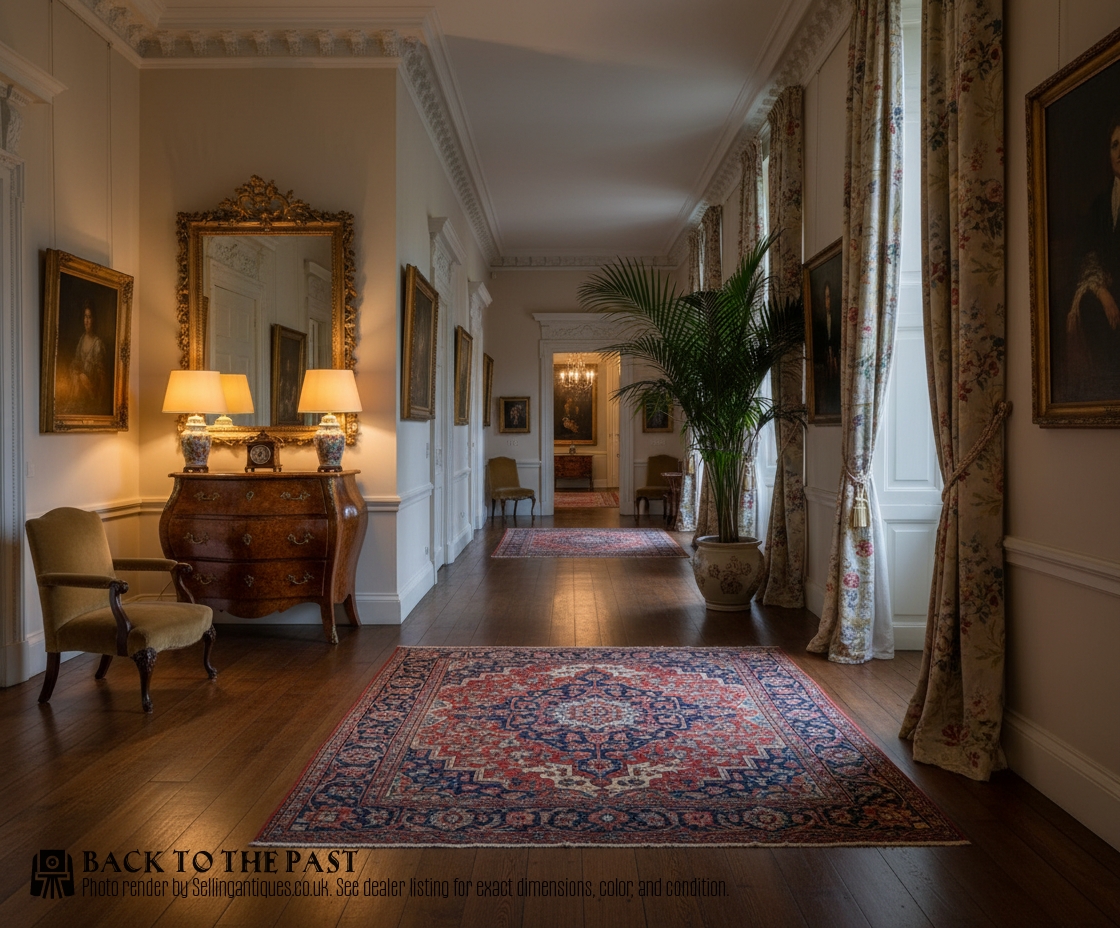
A curved sideboard works well against a flat wall where its rounded profile softens hard architectural angles. Position lamps or tall ceramics on top to balance the horizontal sweep of the timber.
Keep surrounding space clear to let the lines of the cabinet define the area without crowding the room.
Are marble top sideboards difficult to maintain?
Marble tops on antique commodes and sideboards require basic care to prevent staining from acidic liquids or oils. Wiping surfaces promptly with a damp cloth keeps the stone clean.
Avoid harsh chemical cleaners that can dull the polished finish of the marble over time.
How do I identify an Art Deco curved sideboard?
Art Deco pieces from the 1930s typically feature bold geometric forms, contrasting veneers like burr walnut and sycamore, and streamlined silhouettes. They often lack traditional period carving in favour of clean, sweeping curves and polished wood surfaces.
Many examples from this era also bear maker marks or stamps from prominent workshops of the time.