



Rococo Curved Chest
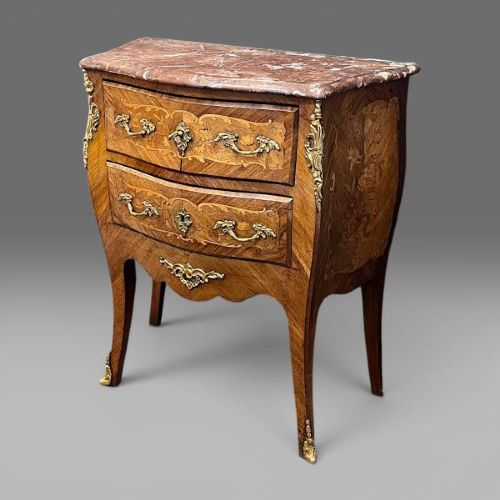
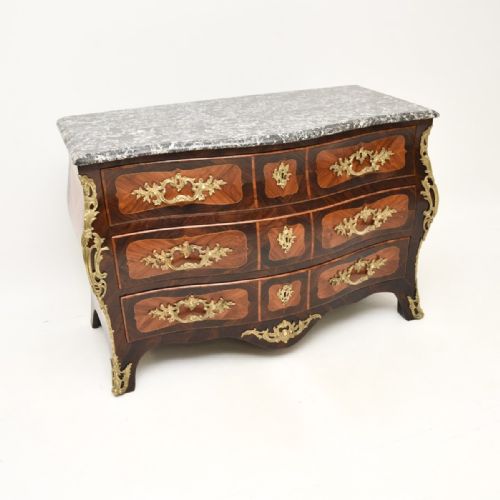
These rococo curved chest pieces combine sweeping serpentine and bombé forms with elaborate marquetry and marble tops.
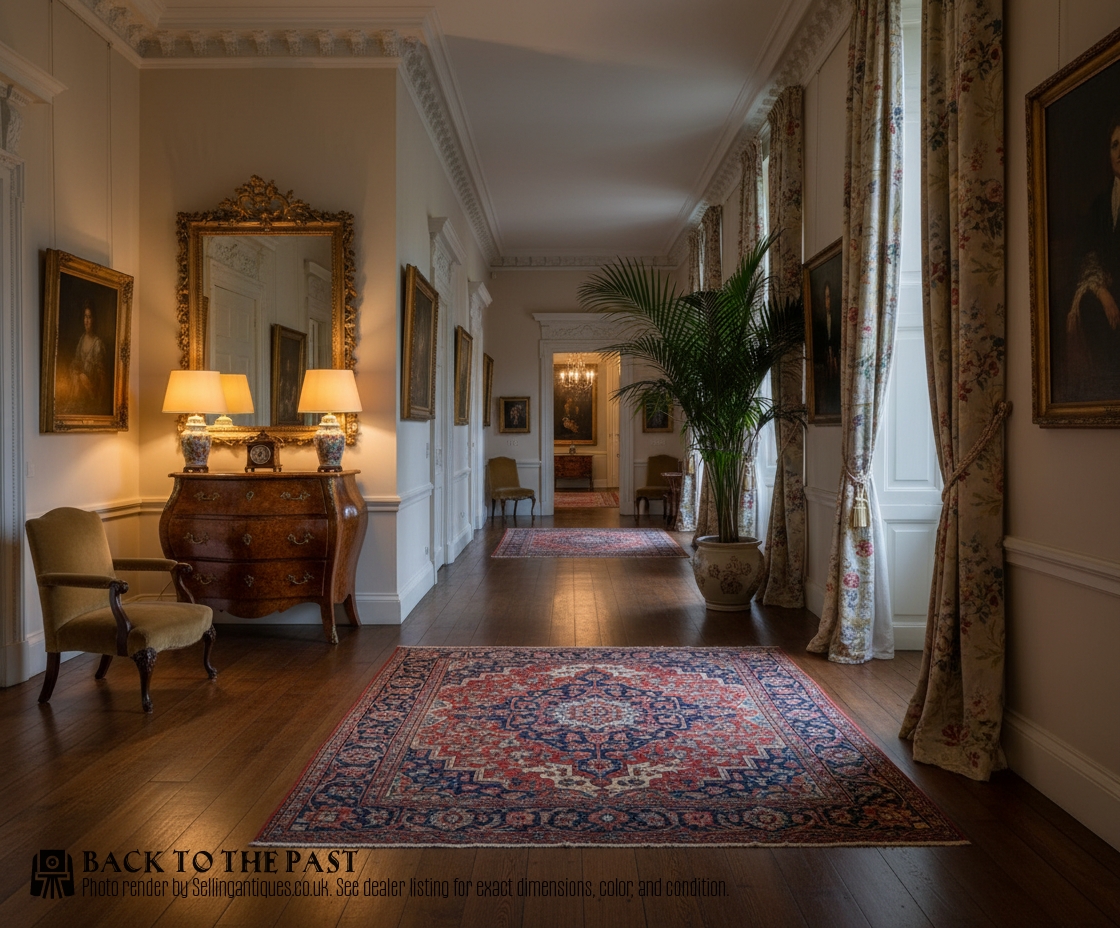
Rococo Curved Chest
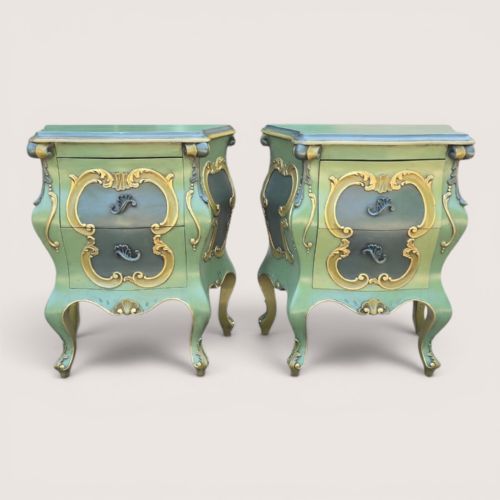
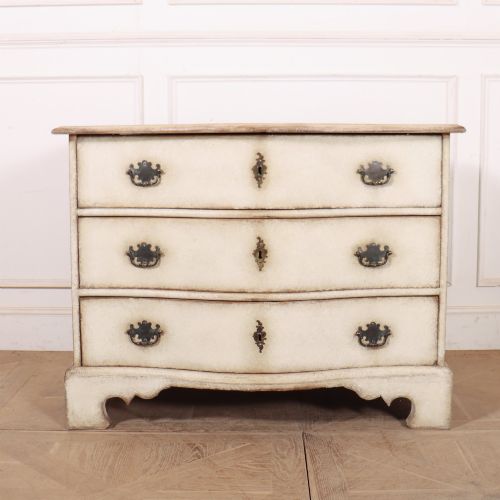
When you search for a rococo curved chest, you encounter continental commodes and bedside chests that showcase asymmetric flowing lines and bulging sides. The selection spans the eighteenth century through to later revival periods, bringing together French, Dutch, German, and Italian cabinetmaking traditions.
Most pieces on offer take the form of bombé or serpentine chests of drawers, often crowned with heavy marble slabs. Walnut, kingwood, and rosewood veneers dominate the surface work, frequently enhanced by intricate marquetry patterns or painted finishes.
Materials and construction
Cabinetmakers built these serpentine and bombé carcasses using native and exotic timbers such as walnut, kingwood, fruitwood, and oak, laying precious veneers over sturdy secondary woods. Complex curved shapes required exceptional skill in sawing and fitting wood to maintain structural integrity.
Surfaces frequently display elaborate marquetry inlay alongside cast brass and ormolu mounts that trace the undulating contours. Heavy marble tops, cut to follow the exact serpentine or bombé outline of the chest, complete the upper surface.
Rococo Curved Chest Retail Price Guide 2026
Typical asking prices for rococo curved chest among the pieces listed under this phrase on Sellingantiques today, from the lower quarter to the upper quarter. They describe what is for sale here now, not the wider market.
Some chests bulge so boldly they seem to hold their breath.
Judging quality in curved chests
Quality rests upon the precision of the curved carcase and the fluidity of the bombé or serpentine sweep. Superior examples display harmonious proportions where the swelling sides transition smoothly into cabriole legs without stiffness.
The sophistication of the timber selection and veneer matching defines the upper tier of pieces. Expert marquetry work and finely chased ormolu mounts elevate a commode far beyond plain veneered alternatives.
Jacques Bircklé
The Rococo Curved Chest Glossary
- Bombé
- A bulging, swelling chest shape characteristic of continental furniture. This prominent outward curve demands advanced woodworking techniques.
- Serpentine
- A furniture front or top curving inward centrally and outward at the ends. It provides a gentler movement than a bombé profile.
- Commode
- A decorative chest of drawers developed in France during the eighteenth century. It typically stands lower and wider than a standard chest.
- Ormolu
- Gilded bronze mounts applied to furniture for decorative accent. These metal enrichments follow the flowing contours of the woodwork.
- Marquetry
- Inlaid wood veneers forming pictorial or geometric patterns on the surface. Cabinetmakers utilise different coloured woods to create contrast.
Rococo Curved Chest: Frequently Asked Questions
What is a bombé chest?
A bombé chest is a storage piece featuring pronounced swelling sides and fronts that curve outward. This shape emerged strongly in continental cabinetmaking during the eighteenth century.
Craftsmen utilised complex framing to achieve these billowing contours while keeping the drawers operable. The resulting silhouette defines many classic commodes of the period.
How do I style a curved chest?
These chests function well as focal points in living spaces or bedrooms due to their sculptural silhouettes. Their decorative marquetry and marble tops require minimal additional surface styling.
Allowing sufficient space around the piece lets the curved outlines and ormolu mounts remain visible. They pair effectively with both traditional interiors and cleaner modern backdrops.
How do I spot a revival piece?
Revival pieces from the nineteenth and early twentieth centuries adopt eighteenth-century forms such as Louis XV serpentine designs. Examining the interior construction timber and secondary woods helps clarify the production era.
While eighteenth-century originals show period-specific hand tool marks, later revival pieces often exhibit nineteenth- or twentieth-century mechanical sawing techniques.
Why do many chests have marble tops?
Marble tops provided a durable, heat-resistant surface that complemented the wealthy interiors where these commodes originally stood. The stone was cut specifically to match the complex serpentine or bombé edge.
This heavy addition also anchored the piece and provided a contrasting texture to the polished wood veneers and metal mounts below.