
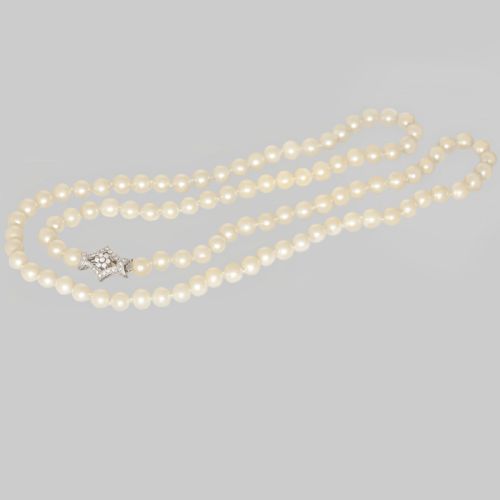
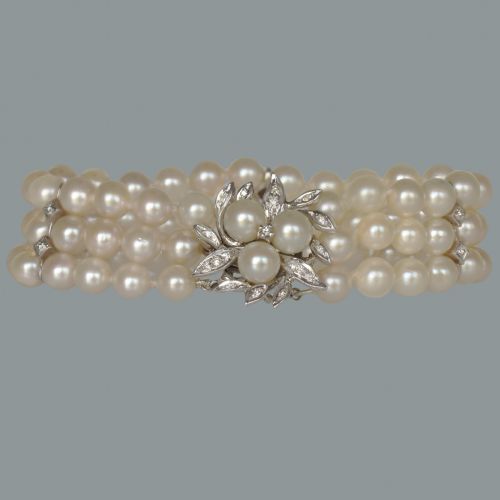


Vintage Cultured Pearl Strand
When you handle a vintage cultured pearl strand, you are holding a classic necklace that spans the Edwardian era through the mid-twentieth century.
Vintage Cultured Pearl Strand
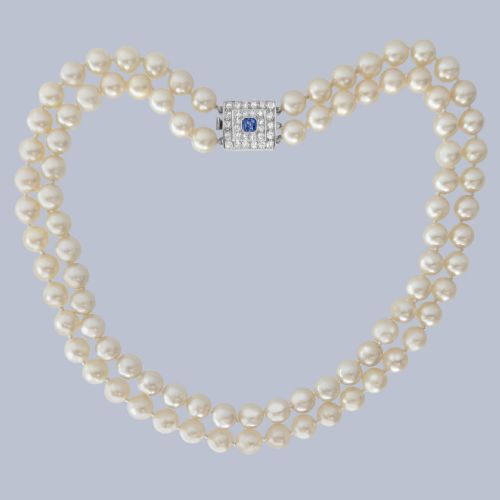
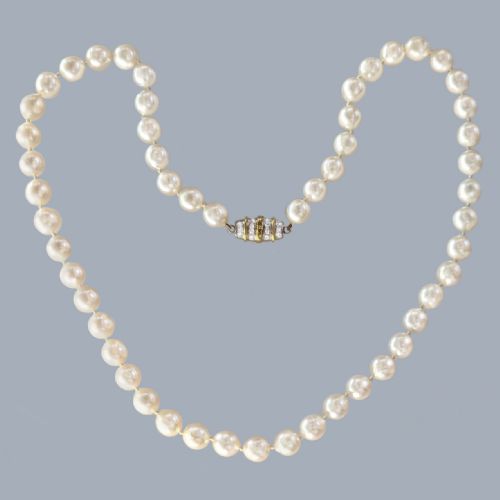
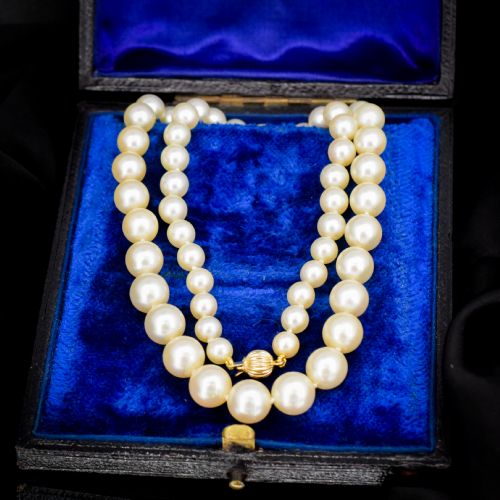
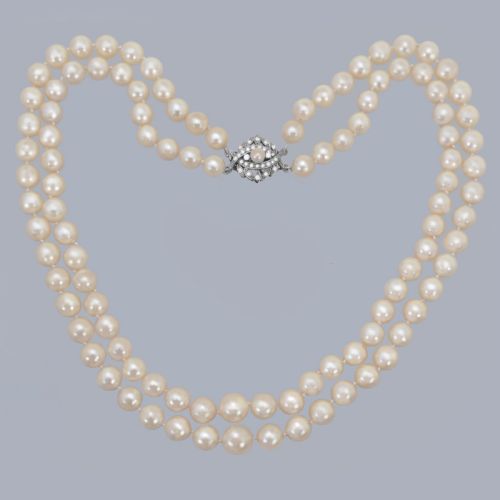
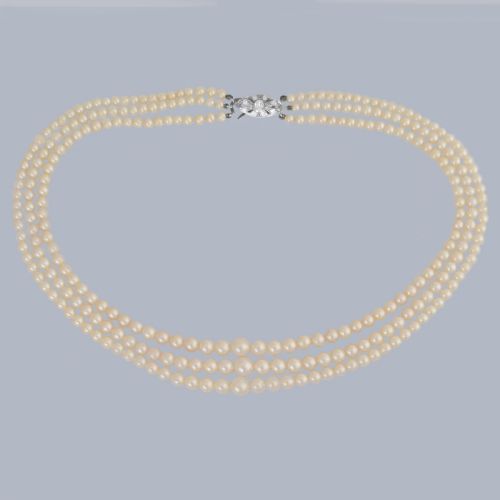
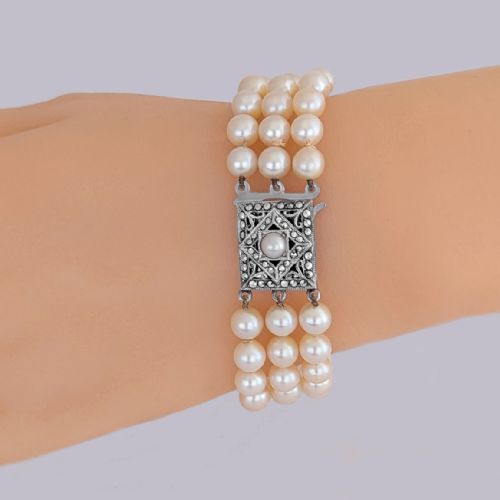
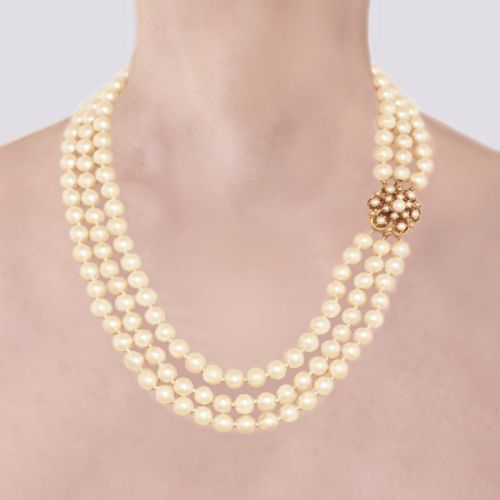
A vintage cultured pearl strand encompasses single, double, triple, and multi-row necklaces alongside matching bracelets originating primarily from the mid-twentieth century, the 1930s, and the Edwardian period. The most common version you encounter on this page is the 1950s or 1960s double or triple strand, secured with a decorative precious metal clasp.
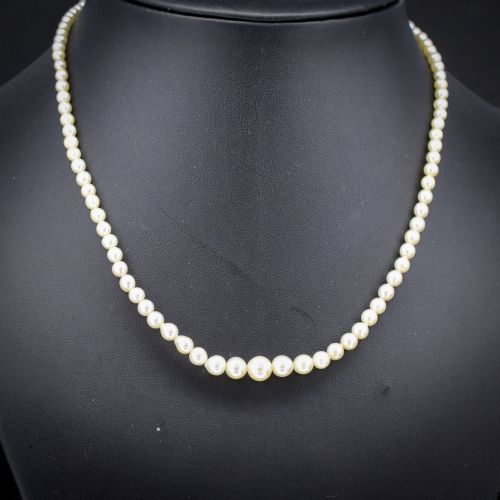
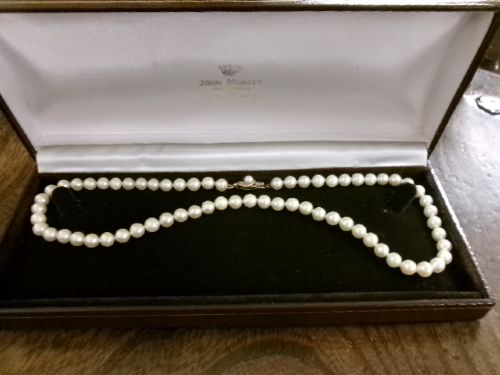
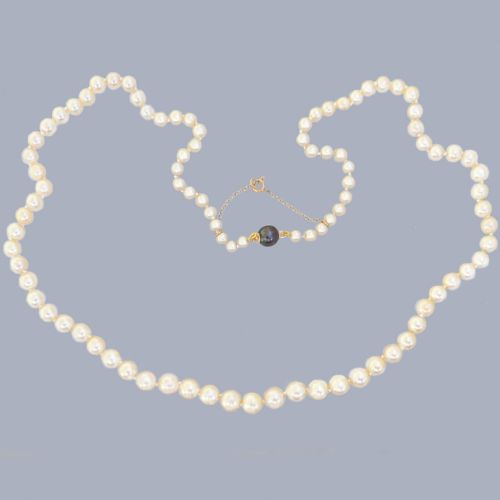
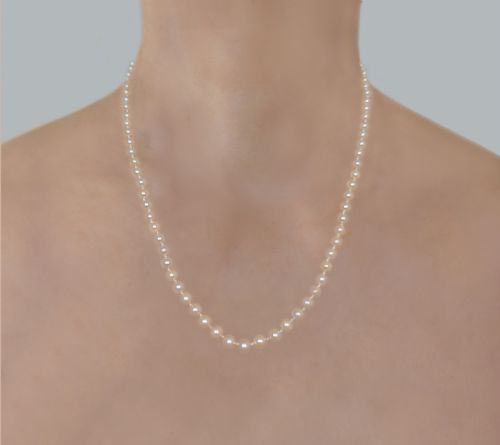
Makers utilised saltwater and freshwater cultured pearls, often arranged in graduated or uniform lengths ranging from standard chokers to longer multi-inch opera lengths. Many examples retain their original fitted presentation boxes or feature traditional hand-knotted silk thread between individual pearls to protect the nacre.
Materials and construction methods
The foundation of these pieces relies on cultured pearls strung on silk thread, frequently secured by hand-knotting between each bead to prevent loss if the strand breaks. Clasps were cast, forged, or set by hand using 9ct gold, 14ct gold, 18ct white or yellow gold, and sterling silver.
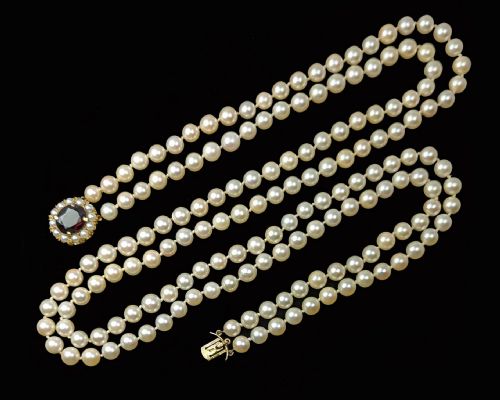
Goldsmiths and jewellers embellished the clasps with diamonds, sapphires, rubies, garnets, amethysts, and turquoises, often utilising floral, geometric Art Deco, or foliate cluster designs to finish the necklace.
Listings feature cultured pearl strands set primarily in 9ct gold, 18ct white gold, and sterling silver, spanning the Edwardian era through the mid-1960s.
Distinctions in quality and execution
Quality rests on the lustre, surface cleanliness, and matching of the cultured pearls themselves, where uniform orient and thick nacre separate superior strands from simpler commercial grades. The complexity and metal weight of the clasp also dictate the tier of the piece, with multi-stone diamond and precious gemstone platinum or gold mounts representing the upper range.
The integrity of the stringing influences the piece, as freshly restrung silk with secure knots preserves the alignment and safety of the pearls compared to slack, stretched historical threading.
Mikimoto·Cropp & Farr
The Vintage Cultured Pearl Strand Glossary
- Cultured pearl
- A pearl formed with human intervention by inserting a nucleus into an oyster or mussel, allowing the mollusc to coat it in layers of nacre.
- Graduated strand
- A pearl necklace where the beads increase progressively in size from the ends toward the largest pearl positioned at the centre.
- Nacre
- The organic-inorganic composite material secreted by pearl oysters that forms the lustrous outer coating of the pearl.
- Hand-knotted
- Individual knots tied in the silk thread between each adjacent pearl to maintain spacing and prevent rubbing or total loss.
Vintage Cultured Pearl Strand: Frequently Asked Questions
How do I care for my vintage pearls?
Wipe cultured pearls gently with a soft, damp cloth after wearing to remove oils and cosmetics, avoiding harsh chemical cleaners or ultrasonic baths entirely. Store them flat in a lined box away from other hard jewellery items to prevent scratching the delicate nacre.
Have the strand checked and restrung periodically if the silk thread shows stretching or fraying between the knots to ensure secure daily wear.
Were these necklaces worn differently in the past?
Mid-century strands were frequently worn tightly against the collarbone as short chokers or doubled up for formal evening events, reflecting the tailored fashion silhouettes of the 1950s and 1960s.
Longer opera-length variations allowed wearers to loop the pearls or knot them at the waist, adapting the same strand for daywear or evening galas.
How can I tell the period of a clasp?
Clasps offer reliable dating clues through their assay marks, metal types, and gemstone settings, such as geometric platinum-topped Art Deco motifs from the 1920s or textured yellow gold floral clusters from the 1950s.
Maker's marks and town hallmarks stamped into the gold or silver tongue of the box clasp provide direct confirmation of the Birmingham or London assay office and year of manufacture.
What does restrung mean in a listing?
A restrung description indicates that a professional jeweller has replaced the original deteriorated silk thread with fresh cord, securing the pearls safely for modern wear.
This process restores the correct tension and spacing, ensuring the hand-knots sit snugly against each pearl without compromising the vintage integrity of the clasp or beads.