


Vintage Crystal Scent Bottle
A vintage crystal scent bottle brings the tactile elegance of the dressing table, spanning Victorian opulence to Art Deco geometry.
Vintage Crystal Scent Bottle
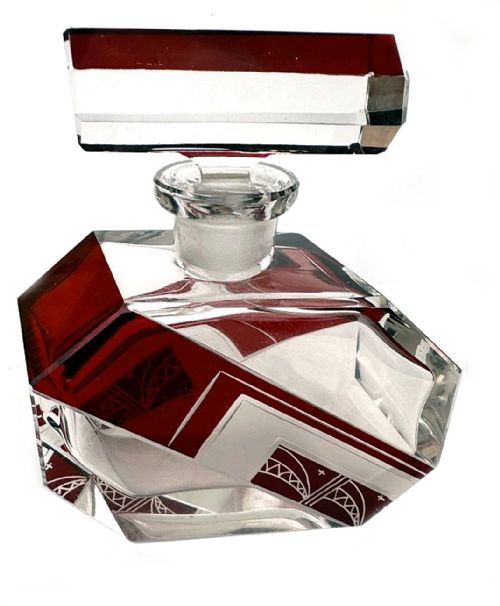
When you search for a vintage crystal scent bottle, you encounter portable vessels designed to hold perfume, cologne, or atomised fragrance. These pieces range from heavy cut glass examples of the nineteenth century to streamlined designs from the interwar period.
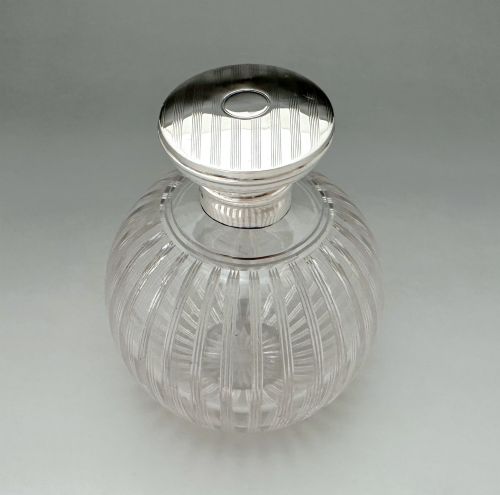
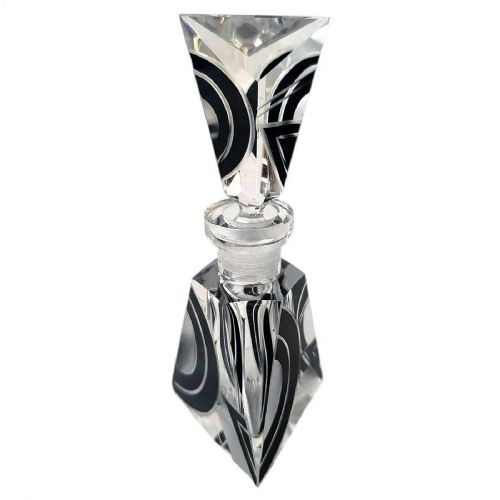
The pieces on this page are most commonly encountered in early twentieth-century forms, notably Art Deco works originating from Czech makers and English silver-mounted editions. Collectors also find French pieces by Rene Lalique alongside Victorian heart-shaped glass containers.
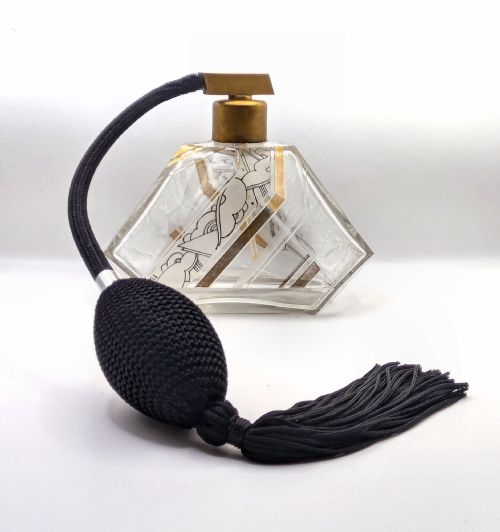
Vessels take various forms, including atomisers, decanters, globe bottles, and vanity set components. Many combine moulded or cut crystal bodies with fitted metal collars and stoppers.
How they were made
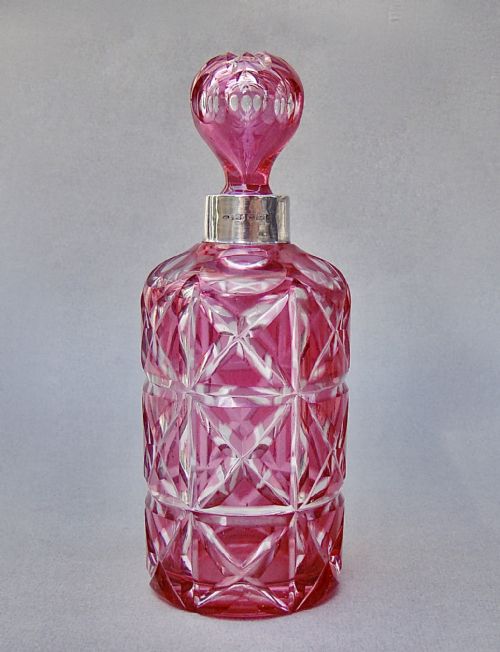
Glass bodies were produced through cutting, moulding, or pressing crystal and coloured glass. Artisans applied geometric facets or intricate surface patterns, occasionally incorporating stained details into the relief.
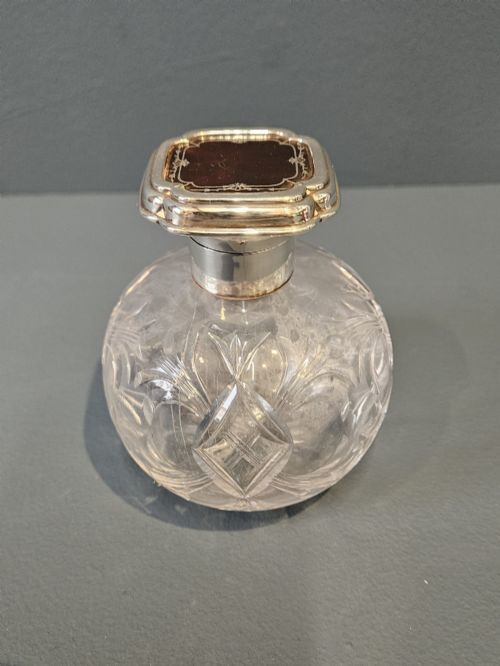
Mounts and lids utilise sterling silver, chrome, and tortoise shell, often paired with guilloché enamel work. Metal components were frequently hallmarked to record the assay office, year, and maker.
Atomiser mechanisms incorporated rubber bulbs and metal hardware to project fragrance in a fine mist. Stoppers ground to fit specific glass necks ensured an airtight seal for volatile perfumes.
Listings span the nineteenth century through the 1930s, featuring cut glass, sterling silver, enamel, and chrome.
What varies in quality
Quality rests in the precision of the glass cutting and the clarity of the crystal material. Superior examples display crisp facets and substantial weight, whereas standard production utilises simpler moulded forms.
The refinement of the metal mounts distinguishes finer pieces. Intricate guilloché enamel work, tortoiseshell insets, and clear silver hallmarks elevate the standing of an individual piece.
Attribution plays a role in distinction, with works bearing documented signatures or factory marks from recognised makers commanding greater attention from collectors.
Harold Bushell and Co·Karl Palda·Rene Lalique·Barnsley and Co
The Vintage Crystal Scent Bottle Glossary
- Guilloché enamel
- A decorative technique where a precise geometric pattern is mechanised into metal beneath a translucent layer of coloured enamel. This process was widely utilised on Edwardian and Art Deco vanity items.
- Atomiser
- A spray mechanism fitted to a perfume bottle that disperses liquid fragrance into a fine mist. These often feature rubber bulbs connected by metal tubing to a siphon tube inside the vessel.
- Hallmark
- A series of official marks stamped onto precious metal items indicating the standard of purity, the assay office, and the year of manufacture. British silver mounts frequently carry these diagnostic stamps.
- Cut crystal
- High-clarity glass containing lead oxide, shaped and faceted using abrasive wheels to refract light. The resulting deep cuts create the characteristic brilliance seen on Victorian and Edwardian pieces.
- Collar
- The metal ring secured around the neck of a scent bottle to receive the stopper or screw cap. It often bears the hallmarks or maker marks associated with the piece.
Vintage Crystal Scent Bottle: Frequently Asked Questions
How do I date a vintage scent bottle?
Dating relies heavily on metal hallmarks found on silver collars and lids, which record specific assay years. Stylistic indicators, such as Victorian silhouettes or Art Deco geometric forms, also help place a piece within its correct era.
Changes in manufacturing techniques, like the transition from hand-cut lead crystal to pressed glass, offer further clues to the period of origin.
Were these bottles meant for travel?
Many smaller nineteenth and early twentieth-century examples were built robustly enough for dressing cases and reticules. Heavy glass walls and secure ground-glass stoppers or screw caps kept precious perfumes contained during transit.
Larger atomisers and shop display pieces, conversely, remained stationary on vanity tables and dressing trays.
How should I clean my scent bottle?
Careful dusting with a soft cloth preserves delicate metal mounts and enamel work. Submerging pieces with enamel or tortoise shell components should be avoided to prevent moisture damage.
Interior residue can be addressed with warm water, though harsh chemical cleaners risk dulling the historic glass surfaces and damaging internal fittings.
What is the difference between an atomiser and a standard bottle?
A standard scent bottle relies on a removable stopper that fits into the neck to release perfume manually. An atomiser incorporates a mechanical spray head operated by a bulb or pump to diffuse the liquid.
Atomisers generally feature more complex hardware mounted directly to the collar of the glass body.