
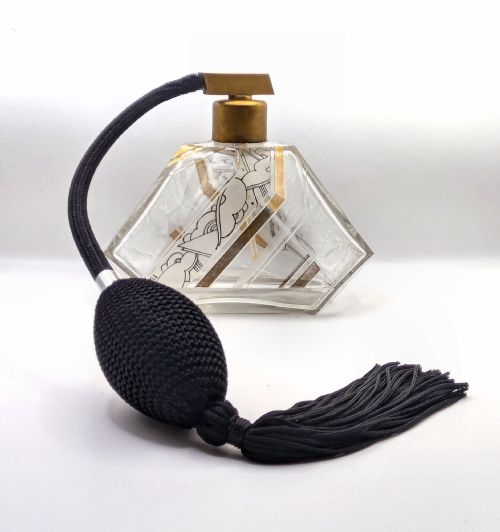


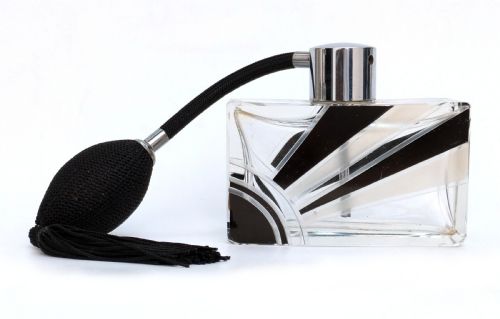

Art Deco Perfume Spray
An art deco perfume spray brings the geometric glamour of the 1920s and 1930s dressing table directly into your home.
Art Deco Perfume Spray
When you search for an art deco perfume spray, you encounter vanity items designed to mist fragrance through a bulb and mechanism. These pieces date from the 1920s and 1930s, capturing the distinct design ethos of the interwar period.
The most common versions on this page are glass bottles, including cut crystal and large Czech glass examples. Makers from France and Bohemia shaped these vessels into distinct geometric and sunray forms.
Some examples arrive as perfume atomisers mounted on stands, while others feature enamel or metal additions. Each bottle serves as a functional dressing table accessory from a specific modernist era.
Materials and construction
Glass and crystal form the primary body of these atomisers, often shaped through heavy cutting to create faceted surfaces that catch the light. Bohemian and French workshops utilised glassblowing and moulding techniques to achieve substantial, weighty vessels.
Manufacturers integrated chrome, brass, fabric, and bakelite into the mounts and spray mechanisms. Enamel decoration occasionally adds opaque colour and pattern directly onto the glass body.
Listings feature items exclusively from the 1920 and 1930 periods, executed in glass, crystal, chrome, brass, enamel, fabric, and bakelite.
Distinctions in quality
The sophistication of the glass cutting and the clarity of the crystal distinguish finer pieces from standard production. Heavy, substantial glasswork and precise geometric facets indicate superior manufacture.
The presence of named maker attribution, such as Karl Palda, Rudolf Hlousek, René Lalique, or Hermanova, separates standard workshop output from sought-after designer pieces. Furthermore, the complexity of integrated metal stands and enamel work elevates the standing of an individual atomiser.
Karl Palda·Rudolf Hlousek·René Lalique·Hermanova
The Art Deco Perfume Spray Glossary
- Atomiser
- A device used to emit a fine mist of liquid perfume via a squeeze bulb and internal tube. This mechanism sits atop the glass vessel.
- Cut crystal
- Glass containing lead oxide, cut with wheel-engraved facets to increase brilliance and refraction. It provides a heavy, resonant body for the perfume.
- Bakelite
- An early synthetic plastic utilised in decorative mounts and components during the interwar period. It offers a dense, durable alternative to metal.
- Sunray
- A geometric decorative motif featuring radiating lines mimicking the sun, characteristic of 1930s design. This pattern frequently appears etched into the glass bottles.
Art Deco Perfume Spray: Frequently Asked Questions
How do these atomisers work?
These atomisers operate by squeezing a bulb connected to a metal mechanism that draws liquid up a tube. The internal pressure forces the perfume through a fine nozzle to create a mist.
Over decades, the original fabric bulbs and rubber components often stiffen or degrade, meaning many surviving examples serve primarily as decorative vanity display pieces.
Where were these perfume bottles made?
The pieces originate predominantly from France and Bohemia during the 1920s and 1930s. Regional glasshouses produced distinctive styles ranging from French moulded glass to heavy Czech cut crystal.
Bohemian makers often employed colourful glass and elaborate metal stands, whilst French output frequently featured sophisticated artistic designs by prominent glassmakers.
How do I date an art deco perfume spray?
Dating relies on stylistic markers and manufacturing techniques associated with the 1920s and 1930s. Strict geometric lines, sunray motifs, and the use of chrome and bakelite point directly to this interwar window.
Signatures or moulded marks on the glass base help identify specific periods and individual workshops or designers from the era.
How should I display an art deco perfume spray?
These bottles suit placement on dressing tables, glass-fronted cabinets, or mantelpieces where light can pass through the faceted glass. Grouping several pieces together highlights the contrasting shapes of Czech glass and French crystal.
Direct, prolonged sunlight should be avoided to protect any remaining original fabric elements and coloured enamel work on the vessels.