

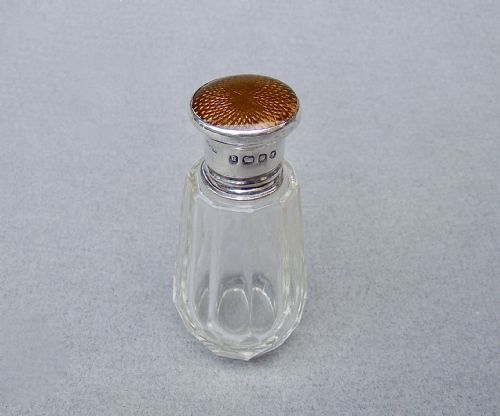


1930s Perfume Bottle
A 1930s perfume bottle captures the geometric grace of the interwar dressing table, offering collectors a striking blend of coloured glass and metalwork.
1930s Perfume Bottle
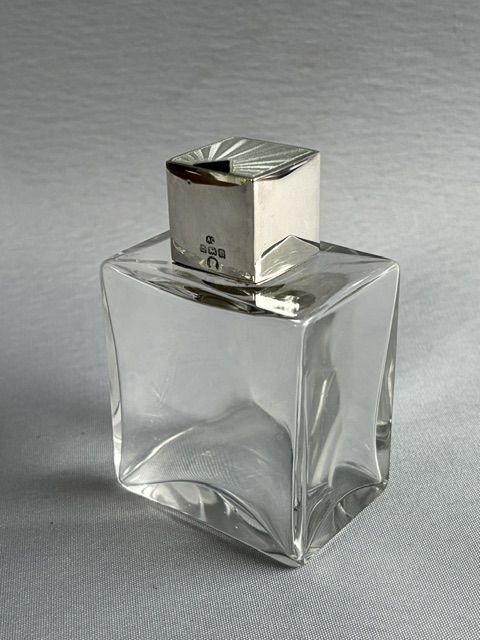
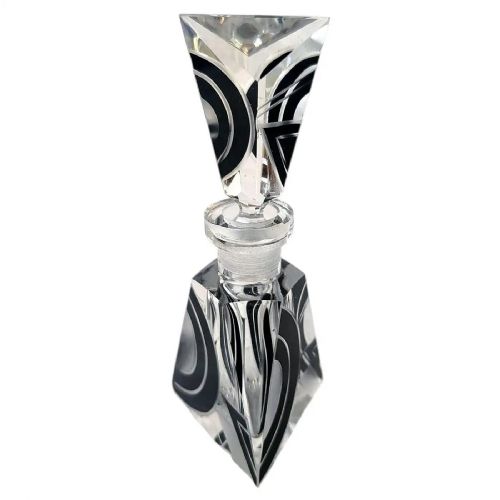
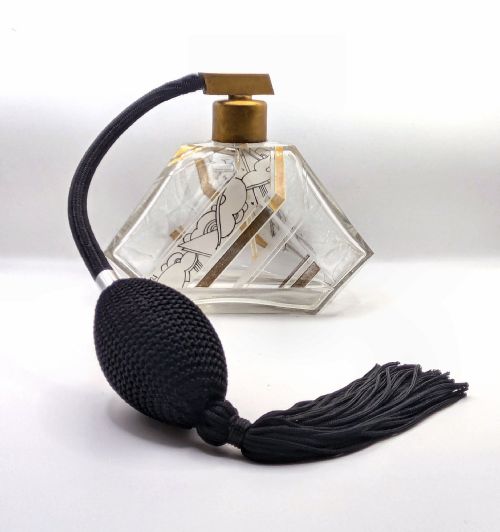
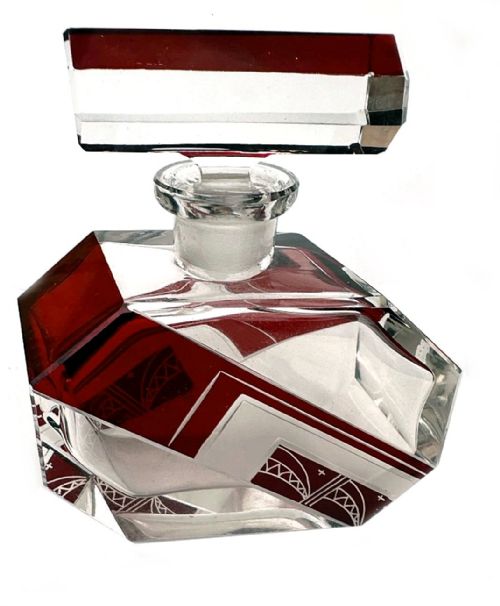
When searching for a 1930s perfume bottle, collectors encounter distinctive Art Deco forms originating predominantly from makers in Bohemia, Czechoslovakia, France, and Britain. The inventory spans straightforward glass scent vessels, atomisers with mechanical spray mechanisms, and larger vanity sets designed for the boudoir.
The most common examples on this page are Czech and French productions, often rendered in heavy cut crystal, opalescent glass, or vibrant hues like blue and amber. These pieces reflect the modernist design shift towards clean lines and architectural silhouettes.
Materials and Construction
Makers utilised heavy moulding, cutting, and pressing techniques to shape glass and crystal into geometric profiles, sometimes incorporating opalescent finishes. Enamelling, sterling silver mounts, and guilloche enamel details were frequently applied to accent the glass bodies.
Atomiser variants integrated functional metal hardware, often finished in chrome or silver, designed to house spray bulbs and fabric elements for dispensing scent. The combination of tactile coloured glass with contrasting metallic collars defines the fabrication standard of the period.
1930s Perfume Bottle Retail Price Guide 2026
Typical asking prices for 1930s perfume bottle among the pieces listed under this phrase on Sellingantiques today, from the lower quarter to the upper quarter. They describe what is for sale here now, not the wider market.
Current listings feature glass, sterling silver, enamel, and chrome across distinct Art Deco forms.
Distinctions in Quality
Quality diverges notably between mass-produced utilitarian containers and signed studio pieces attributed to prominent designers and glasshouses. The precision of the glass cutting, the depth and clarity of the colour, and the integrity of any enamel work separate standard items from superior examples.
The sophistication of the hardware also indicates grade, where heavy silver mounts, fully functioning atomiser mechanisms, and intact guilloche detailing elevate an object's execution. Maker attributions documented on the piece further distinguish the upper tier of the market.
Karl Palda·Henry Perkins·Rene Lalique·Rudolf Hlousek·Hermanova·Sabino·Goldsmith's and Silversmith's Co.
The 1930s Perfume Bottle Glossary
- Atomiser
- A perfume bottle fitted with a spray mechanism that disperses fragrance in a fine mist. These often include a flexible tube and a fabric-covered bulb.
- Guilloche
- A decorative technique where a precise, intricate pattern is mechanically engraved beneath a translucent layer of enamel. This finish frequently appears on silver caps and vanity jars.
- Opalescent glass
- A type of glass that displays a milky, iridescent quality, shifting in appearance depending on the angle of the light. It was favoured by French glassmakers for sculptural perfume vessels.
- Vanity set
- A coordinated group of dressing table accessories that typically includes perfume bottles, powder boxes, and atomisers sharing matching materials and design motifs.
1930s Perfume Bottle: Frequently Asked Questions
How do I identify a 1930s perfume bottle?
Look for characteristic Art Deco geometric forms, moulded or cut crystal bodies, and typical colour palettes like deep blue, amber, and opalescent white. Many pieces also carry maker signatures, silver hallmarks, or stylistic traits associated with Czech and French production from the decade.
Hardware details such as chrome collars and guilloche enamel caps further help pinpoint the interwar manufacturing period.
Are these perfume bottles still functional?
Many glass bottles with stoppers remain entirely usable for holding and dispensing modern fragrances safely. Atomiser mechanisms, however, often require restoration due to the degradation of internal rubber tubing and fabric bulbs over the decades.
Collectors generally treat vintage atomisers as decorative display objects rather than everyday functional items.
How should I display these glass pieces?
Position them on mirrored trays or glass shelves where natural light can pass through the cut crystal and coloured glass. Keeping them away from direct, prolonged sunlight helps preserve the vibrancy of tinted glass and any delicate enamel work.
Grouping matching vanity sets together creates a traditional boudoir presentation.